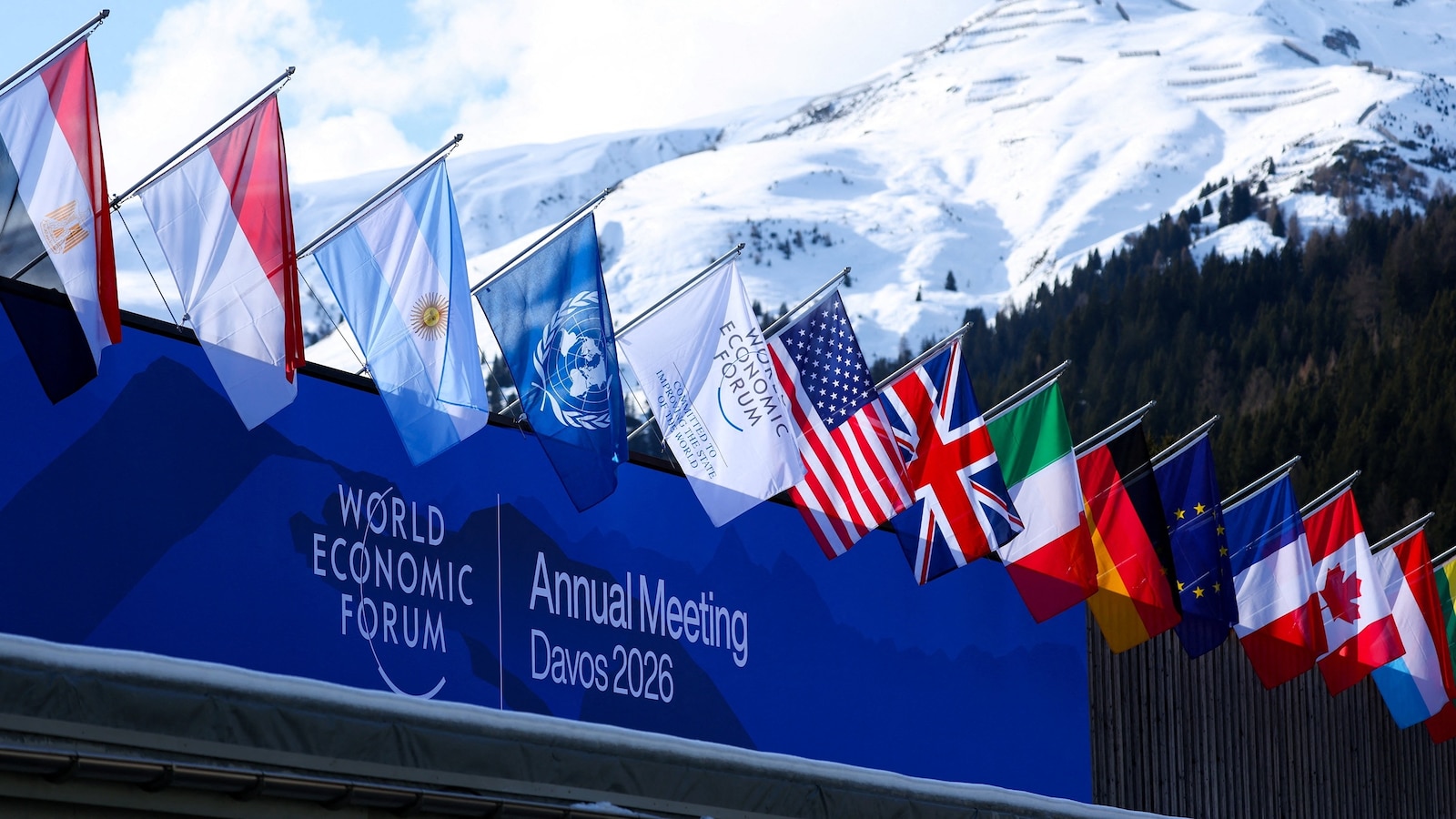
At Davos, allied leaders including Canadian PM Mark Carney and EU officials publicly pushed back against President Trump’s campaign to acquire Greenland, condemning threats to sovereignty and the use of tariffs as leverage. Trump announced new 10% tariffs on goods from eight European nations effective Feb. 1, rising to 25% on June 1, and said the measures would remain until the U.S. could purchase Greenland; NATO allies have increased Arctic deployments and Greenland’s prime minister warned of preparing for the worst. The standoff heightens geopolitical risk in the Arctic, risks trade escalation with EU partners, and creates uncertainty for security-sensitive supply chains and any markets tied to Greenland’s mineral resources.
Market structure: Immediate winners are defense and strategic-minerals players (pricing power for aerospace/defense contractors and rare-earth/uranium juniors) while exporters in the eight targeted European nations face margin pressure from announced tariffs (10% Feb 1 → 25% June 1). Expect higher bid on US defense names and ETFs (ITA, XAR) and upward pressure on rare-earths/critical-minerals (REMX, MP) as Arctic resource security premiums re-price; shipping and European exporters (autos, luxury goods) see demand rerouting and negative pricing power.
Risk assessment: Tail risks include a diplomatic breakdown with sustained EU counter-tariffs or a military incident in the Arctic — low probability but high impact (could knock 0.5–2% off EU growth in quarters). Timeframes: immediate (days around Davos/Trump speech) for volatility spikes, short-term (to June 1) for tariff pass-through to earnings, long-term (3–10 years) for Arctic strategic realignment. Hidden dependencies: accelerated supply‑chain re-shoring to Asia/US and Chinese/Russian moves to secure Arctic footholds; catalysts include EU retaliation, WTO rulings, or US policy reversal.
Trade implications: Tactical: overweight US defense (RTX, LMT via 2–3% position or ITA 2–4%) and REMX/MP (1–2%) as 6–24 month buys; short selected European exporters (VWAGY, BMWYY, DDAIF) 1–2% or buy Jul 2026 puts if tariffs are upheld. Use USD long (UUP 1–2%) and buy 3-month TLT protection (puts) as tail-hedge; enter ahead of Feb 1, trim half position after June 1 or on confirmed policy reversal.
Contrarian angles: Consensus overstates military seizure feasibility and underestimates legal/political obstacles — tariffs may be reversed or blocked, creating mean-reversion in beaten European names. Historical parallel: 2018 US-EU tariff threats produced short-term drawdowns then partial rebounds; therefore size positions modestly (1–3%) and favor option structures (paid spreads) to limit downside if policy escalates.
AI-powered research, real-time alerts, and portfolio analytics for institutional investors.
Request DemoOverall Sentiment
moderately negative
Sentiment Score
-0.30
