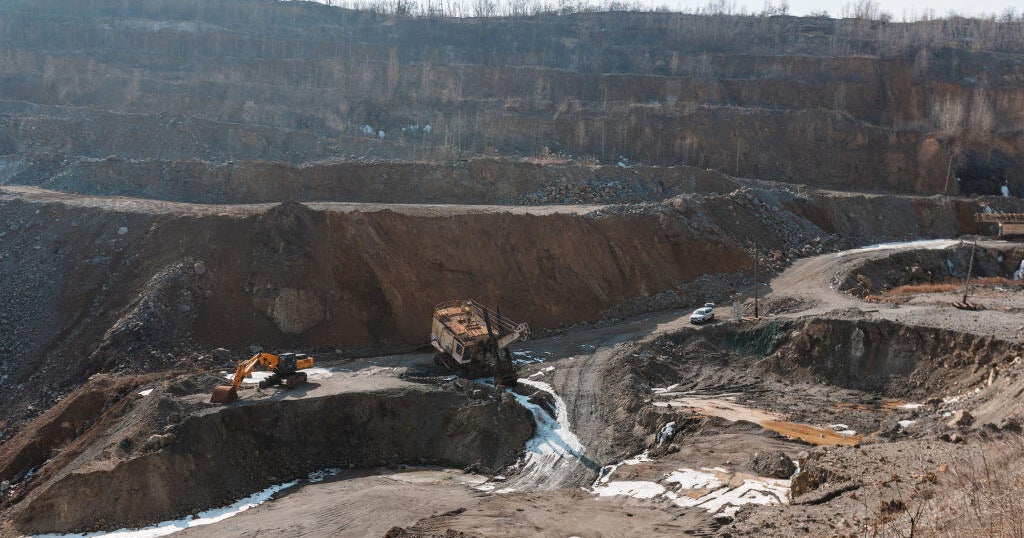
The administration unveiled a $12 billion U.S. strategic critical minerals reserve, dubbed "Project Vault," to stockpile non-military rare and critical minerals for civilian use, funded by a $10 billion Export-Import Bank loan and $2 billion in private financing. The initiative aims to reduce U.S. reliance on Chinese supplies—citing that in 2024 the U.S. was fully import-dependent for 12 critical minerals and 50%+ import-dependent for 29 others—and targets supply chains for automakers, tech firms and manufacturers reliant on materials such as cobalt, lithium, nickel and graphite. The move may support domestic miners and downstream manufacturers while reshaping geopolitical leverage in trade talks with China and potential sourcing strategies globally.
Market structure: Project Vault creates an implicit floor to demand for a wide basket of critical minerals (cobalt, graphite, silicon, copper, nickel, titanium, lithium). Expect US-listed domestic miners and processors (MP Materials, Albemarle, Freeport) to gain pricing power over 6–24 months as offtake and processing premium builds; Chinese downstream processors face margin pressure. Warehouse/storage/logistics providers and battery recyclers (Li-Cycle) are asymmetric beneficiaries as the program monetizes inventory and creates long-duration contracts.
Risk assessment: Key tail risks include Chinese retaliation (export curbs or capacity dumping) and US political reversal/delays in Ex-Im approval — either could compress miner equity multiples by 20–50% in a stress event. Immediate market reaction (days) should be positive for miners; medium term (3–12 months) depends on RFP/tender transparency; long term (2–5 years) hinges on domestic processing build-out and capex execution. Hidden dependency: separation/refining capability is concentrated in China — stockpile buying without processing build-out mainly transfers geopolitical risk, not supply security.
Trade implications: Tactical trades favor domestic rare-earth and lithium exposure: long MP (MP Materials) and ALB (Albemarle) or ETFs REMX/LIT, using 9–18 month LEAPs to capture multi-quarter re-rating; size positions 1.5–3% each of portfolio with staggered entries over 6–12 weeks around procurement announcements. Hedging: use put spreads on the long positions and consider a 6–12 month short call overlay if implied vols compress after announcement; watch for procurement RFPs (trigger within 60–90 days) as liquidity events.
Contrarian angles: Consensus underestimates execution risk and China's pricing playbook — the market may be overpaying early for exposure; at the same time recyclers and domestic processing juniors are under-owned and could offer 3–5x upside if the US funds usable refining capacity. Historical parallel: SPR-style stockpiles often create temporary price lifts then mean-revert on eventual release or inefficient storage; position sizing and option hedges should anticipate 30–60% drawdowns if political winds shift.
AI-powered research, real-time alerts, and portfolio analytics for institutional investors.
Request DemoOverall Sentiment
mildly positive
Sentiment Score
0.28
