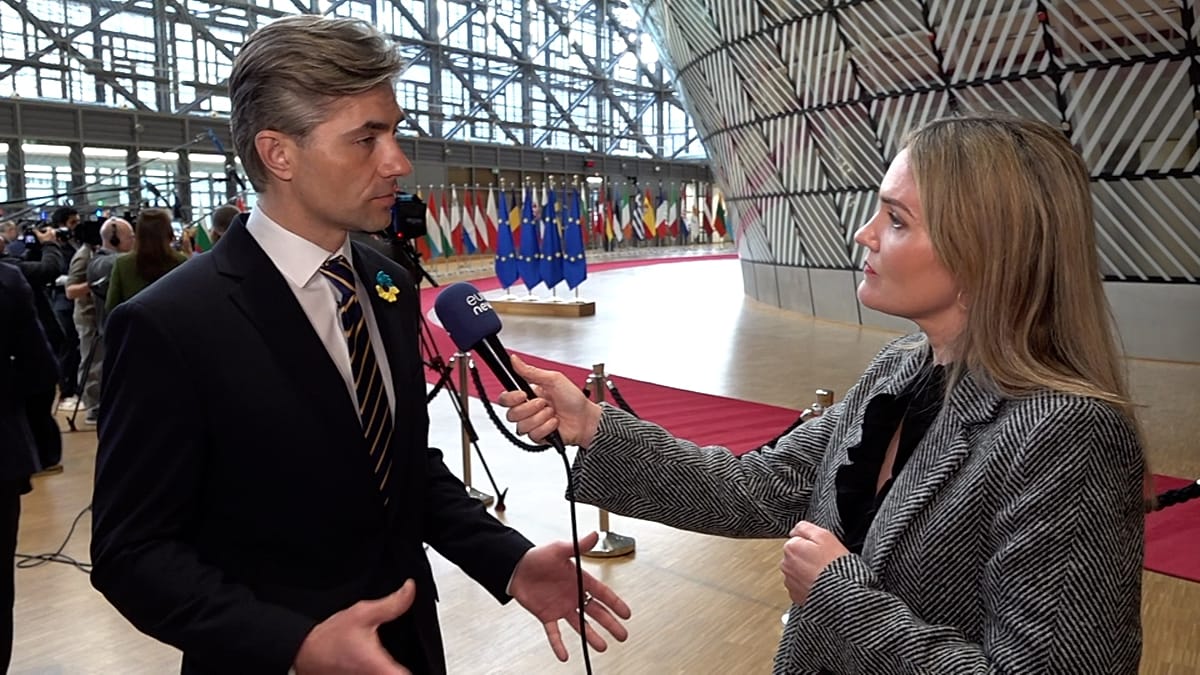
Hungary has announced it will block the EU's twentieth sanctions package and a previously agreed €90 billion loan to Ukraine, citing interrupted access to cheap Russian oil via the Soviet-era Druzhba pipeline. Lithuanian Foreign Minister Kęstutis Budrys urged a review of the EU's unanimity rule — proposing Qualified Majority Voting or use of Article 7 to suspend Hungary’s voting rights — warning that continued vetoes risk undermining the EU’s geopolitical role and leaving Ukraine short of funds as early as April.
Market structure: Hungary’s veto is a geopolitical shock that raises near-term upside risk to oil prices (Druzhba disruption risk) and re-rates European political risk premia. Winners: Russian energy exporters (spot oil +5-15% shock scenarios) and defense contractors; losers: EU cohesion-sensitive assets (peripheral sovereigns, EU banks with CEE exposure) and EUR. Expect rotation into energy and defense for 1–6 months, with flight-to-quality into Bunds and USD.
Risk assessment: Tail risks include (1) full suspension of Druzhba flows → regional oil shortages causing a 5–15% Brent spike within 0–3 months; (2) Ukraine fiscal collapse by early April triggering military escalation and broader sanctions → equity drawdowns >10%; (3) institutional reform (QMV) in 12–36 months that could centralize EU foreign policy and change regulatory risk. Hidden dependencies: Slovakia’s leverage, Kremlin willingness to use energy as bargaining chip, and EU internal politics (Article 7 thresholds).
Trade implications: Tactical plays: (a) short EUR/USD vs USD (target 1.02–1.05 in 1–3 months, stop 1.09), (b) 1–3% portfolio buys in energy (XOM/CVX or Brent call spreads) to capture a 5–12% upside, (c) 2–4% directional long in LMT/RTX or defense ETF for 6–12 months. Hedge with 1–2% allocation to long Bund futures or sovereign CDS to protect against contagion-driven equity drawdowns.
Contrarian angles: Consensus assumes a short-lived spat; however, if Budapest sustains vetoes, market pricing will understate persistent political fragmentation risk that could depress EU risk assets 8–15% over 12–24 months. Conversely, threat of QMV/Article 7 escalation is underpriced and, if pursued, would be bullish for long-term EU integration plays (defense consolidation, centralized fiscal instruments) — consider asymmetric option structures to capture both outcomes.
AI-powered research, real-time alerts, and portfolio analytics for institutional investors.
Request DemoOverall Sentiment
moderately negative
Sentiment Score
-0.50
