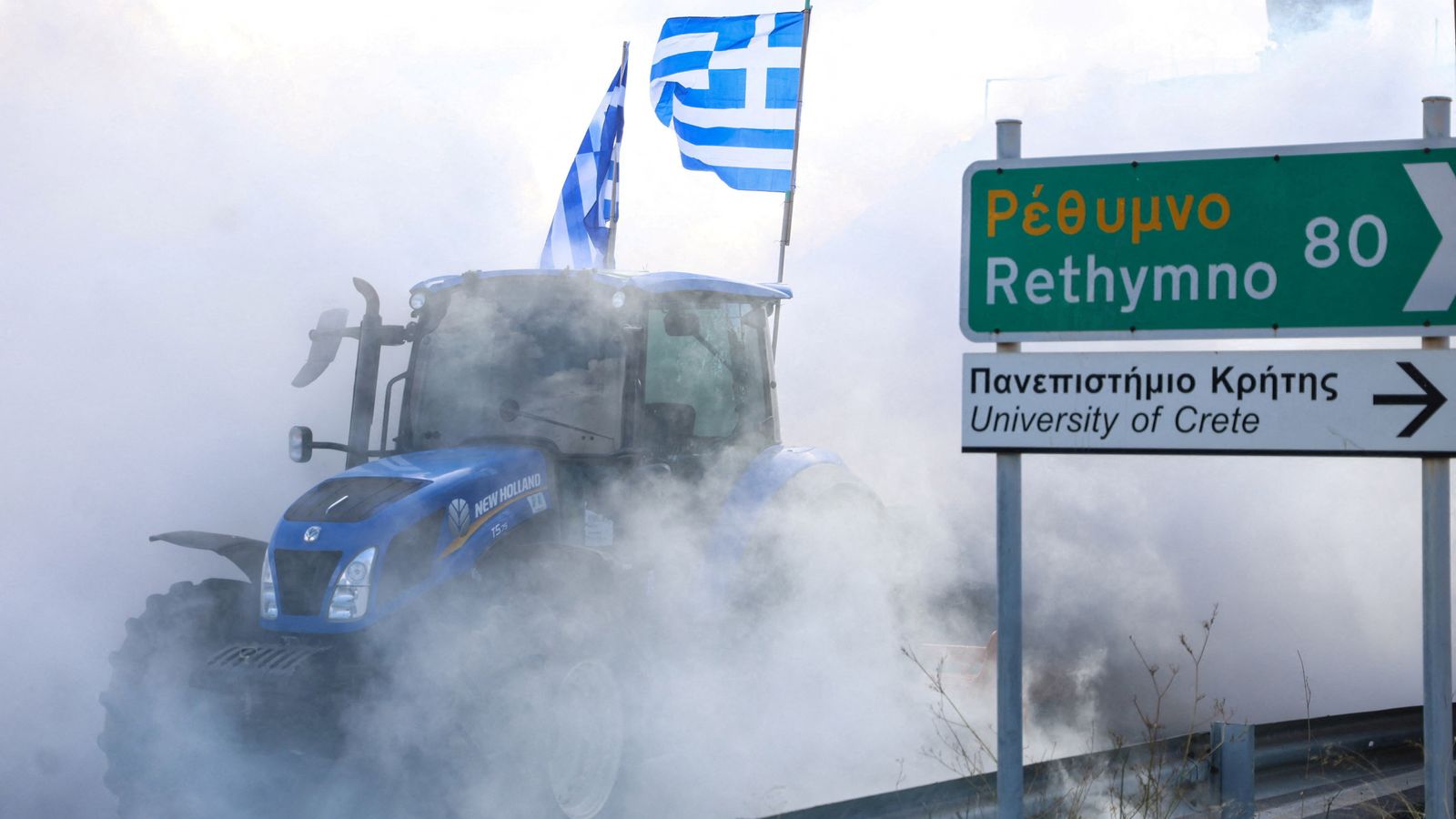
Greek farmers angered by delays in European Union‑backed subsidy payments — which followed a fraud review that has held up disbursements — forced a shutdown of Crete’s Nikos Kazantzakis International Airport in Heraklion, suspended flights and clashed with riot police (reports of injuries, tear gas use and an overturned patrol car). The protests, driven also by financial strain from a mass cull after a goat and sheep pox outbreak, have seen thousands of tractors block highways, ports, airports and border crossings, hampering truck traffic and raising risks to planting for the next season. While the government says it is open to talks, it has warned it will not tolerate major transit shutdowns; the immediate market implications are disruption to travel and logistics, potential hits to agricultural output and exports, and increased political and operational risk for transport-dependent sectors and tourism in Greece.
Greek farmers forcibly shut down Nikos Kazantzakis International Airport in Heraklion on 8 December 2025, prompting a suspension of all flights and violent clashes with riot police that included tear gas use, an overturned patrol car and reported injuries. The disruption at Crete’s largest airport occurred alongside coordinated blockades at highways, ports and northern border crossings with Bulgaria, Turkey and North Macedonia, and follows earlier attempts to block access roads to Thessaloniki.
Protesters cite delayed European Union-backed agricultural subsidy payments that are being reviewed after a fraud scandal, and industry stress from a mass cull due to goat and sheep pox; farmers warn these delays leave them unable to plant for next season. Thousands of tractors and agricultural vehicles deployed nationwide have already hampered truck traffic and export logistics, raising short-term supply-chain and seasonal crop-risk concerns.
The government says it is open to talks but will not tolerate shutdowns, creating a policy and operational risk that could produce intermittent escalations; sentiment metrics show moderately negative tone and a modest market-impact score (0.35). Immediate market implications are localized hits to Greek tourism, airport/transport operators and agricultural exporters, with upside catalysts tied to subsidy disbursement timelines and disease-containment progress.
AI-powered research, real-time alerts, and portfolio analytics for institutional investors.
Request DemoOverall Sentiment
moderately negative
Sentiment Score
-0.45
