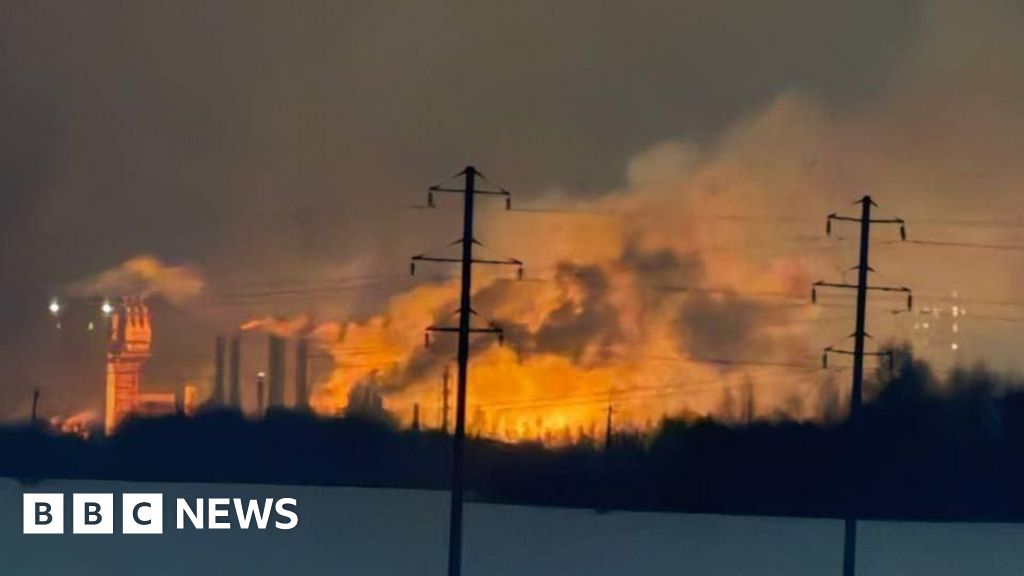
Ukrainian drone strikes hit a fertiliser plant in Dorogobuzh, Smolensk region, with Russian authorities reporting 30 drones, seven dead and at least ten injured; the facility produces ammonium nitrate and nitric acid, raising both safety and explosive-risk concerns and prompting local evacuations and school closures. The attack is part of a broader escalation of long-range Ukrainian strikes on Russian energy and industrial infrastructure — a recent strike on a Tatarstan pumping station forced Transneft to cut crude intake by about 250,000 barrels per day — signaling potential supply disruptions in fertilizer and oil flows that investors should monitor for commodity price and regional risk repricing.
Market structure: Deep-penetration drone strikes on Russian chemical and oil infrastructure raise risk premia across energy, fertilizer and logistics chains. Expect near-term tightening in regional refined product flows and nitrogen-fertiliser feedstocks (ammonium nitrate/nitric acid) with potential price moves of +5–15% in affected commodities if outages persist >4 weeks; ruble and Russian sovereign spreads should trade weaker on higher perceived operational risk.
Risk assessment: Tail risks include escalation that disrupts >250–500kbpd of Transneft flows (oil spike >$10–15/bbl) or contamination events at chemical sites causing multi-week evacuations and insurance losses; probability low but impact high. Immediate (days): volatility and basis dislocations; short-term (weeks–months): rerouting, insurance and inventory draws; long-term (quarters–years): reconfiguration of supply chains and higher structural capex in alternatives.
Trade implications: Tactical plays are in commodity optionality and select equities — long fertilizer producers with global distribution (NTR, CF) and targeted defense primes (RTX, LMT) to capture budget/demand re-pricing; use capped call spreads on Brent to express oil upside while limiting capital. Liquidity and volatility favors options hedges (3-month tenors); fixed-income impact is localized to EM/Russia paper, where hedge purchases of Russian risk should be incremental and size-constrained.
Contrarian angles: Consensus overweights crude directionality; downside is demand elasticity and immediate spare capacity from OPEC+/US shale that can blunt spikes. Fertiliser rebounds may be front-loaded and mean-revert within 6–12 months as alternate suppliers ramp; prefer relative-value (producers with distribution advantage) over outright commodity longs to avoid a crowded long risk.
AI-powered research, real-time alerts, and portfolio analytics for institutional investors.
Request DemoOverall Sentiment
moderately negative
Sentiment Score
-0.45
