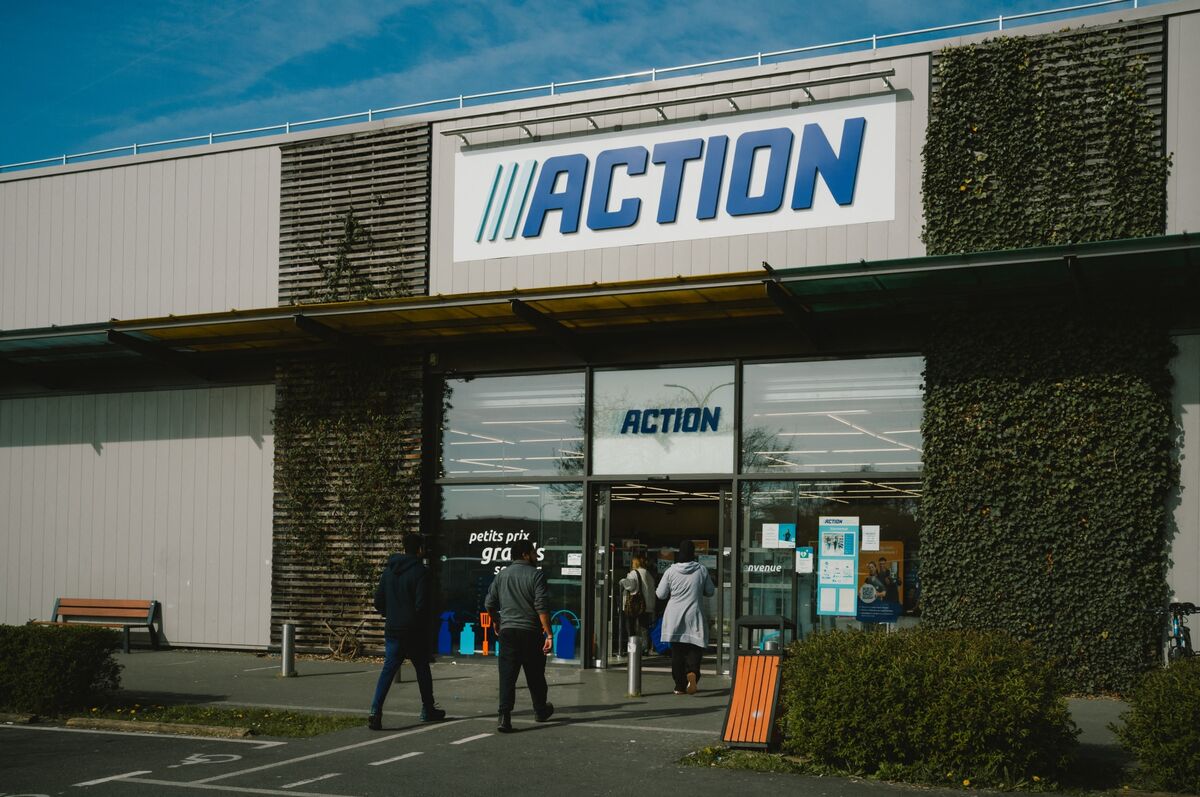
3i Group shares fell as much as 24% after the company warned of slowing sales at discount retailer Action, signaling pressure even in low-cost retail as inflation squeezes consumers. The move was the stock's sharpest drop since 2009. The warning points to softer consumer demand and likely near-term earnings risk for 3i's key portfolio asset.
This is less about one retailer and more about a late-cycle demand signal hitting the lowest end of the market, where investors usually assume resilience is highest. If value-oriented consumers are pulling back here, the second-order pressure lands on private-label suppliers, low-cost logistics networks, and adjacent discretionary chains that relied on trade-down behavior to hold share. The market is likely repricing the idea that “defensive retail” is still defensible when real wages are flat and household balance sheets are normalizing after a multi-year inflation shock. The immediate loser is any business model dependent on high inventory turnover and traffic-driven fixed-cost absorption. Slower sell-through can cascade into markdowns, working-capital drag, and tougher terms for vendors over the next 1-2 quarters, which usually shows up before top-line revisions do. Competitors with stronger sourcing power or more flexible inventory are positioned to take share, but only if they can avoid becoming the next source of price competition. The key catalyst is not whether this quarter is weak; it is whether management commentary forces a broader reset in forward assumptions across discount retail and consumer staples. If this is a one-off regional demand pocket, the move can stabilize quickly; if similar weakness appears in other geographies or channels over the next 30-60 days, the bear case expands into margin compression and guide-down risk across the sector. In that scenario, the market typically underestimates how fast “small” same-store sales misses become multiple compression events. The contrarian view is that the selloff may be too reflexive if investors are extrapolating a temporary spending pause into a structural demand break. Discount retail can regain traffic quickly if promotional intensity rises or food/fuel inflation cools, and the market may be overpricing permanent elasticity without enough evidence on basket mix. The real tell will be whether basket size falls while traffic holds—if so, the downside is more manageable than a full traffic collapse.
AI-powered research, real-time alerts, and portfolio analytics for institutional investors.
Overall Sentiment
strongly negative
Sentiment Score
-0.62
