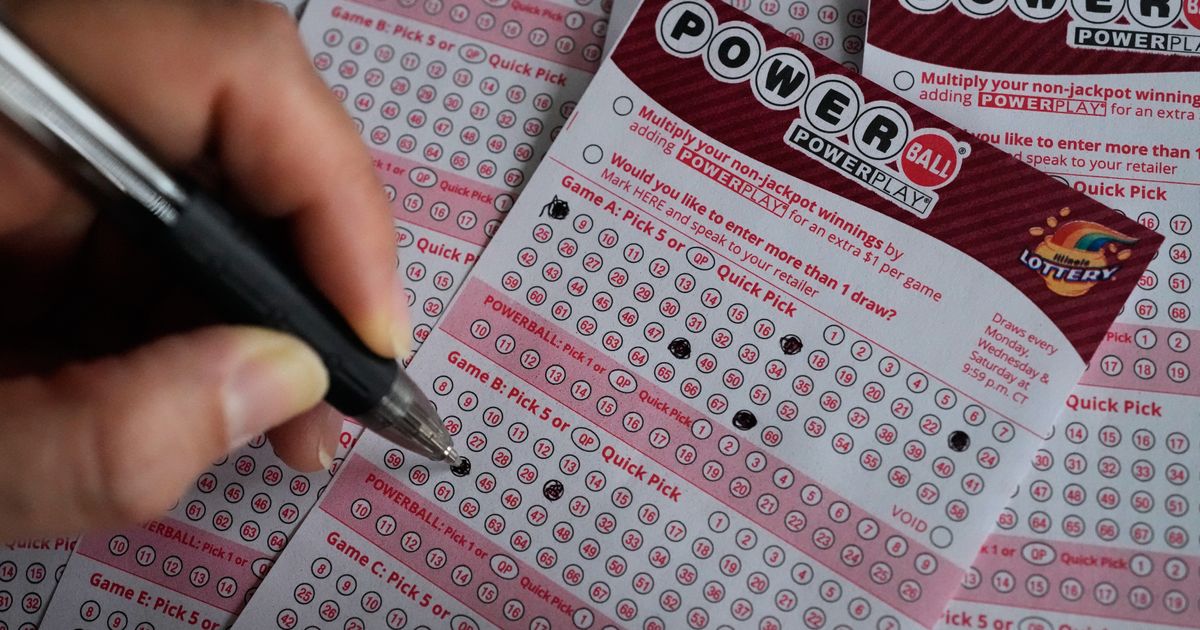
The Powerball jackpot has climbed to $1.5 billion annuity ($689.3 million cash), the fifth-largest Powerball and seventh-largest U.S. lottery prize, after no winner in Wednesday’s drawing; Saturday’s draw is the 45th in the run, a record for consecutive drawings. Odds remain 1 in 292.2 million; a North Carolina player won $50,000 (boosted to $200,000 by a 4X Power Play) on the same drawing via Online Play in Franklinton. This is the second-largest Powerball prize this year behind a $1.7 billion win in September, and ticket sales continue at retail and through the state lottery app/website.
Market structure: Large jackpots temporarily concentrate consumer demand on lottery operators, retail locations that sell tickets, and lottery-systems vendors. Primary beneficiaries are lottery systems suppliers (IGT, SGMS) and high-lottery-penetration convenience chains (Casey’s CASY) via short, measurable uplifts in transactions and foot traffic; broad retailers see negligible direct revenue impact. Competitive dynamics: online-play growth favors platform providers and payment processors (PayPal PYPL, Block SQ) that can process micro-transactions; state lotteries keep pricing power (fixed ticket price) so vendor share gains come from volume, not margin expansion. Supply/demand: supply (jackpot odds) is fixed; demand spikes are elastic and short-lived — expect a 3–20% transient sales bump concentrated in the 7–10 days before the drawing and immediate aftermath. Cross-asset: macro impact is immaterial — no directional FX or sovereign bond move expected; payment-processor equities/options may see intraday vols +10–30% around peak drawings.
Risk assessment: Tail risks include regulatory pushback on online sales or merchant commission caps, system outages on peak volume days, or consumer-protection litigation; each could erase the short uptick and repricing in vendor equities. Time horizons: immediate (days) = retail/transaction spikes; short-term (weeks) = measurable revenue/volatility for IGT/SGMS and select retailers; long-term (quarters+) = mean reversion to baseline. Hidden dependencies: state budget dynamics and legislative calendars (30–90 day windows) can trigger policy changes that materially affect recurring revenue; media attention magnitude drives the length of the demand pulse. Catalysts to watch: consecutive rollovers, multi-state regulatory hearings, and platform outages.
Trade implications: Tactical, short-duration plays on lottery-systems vendors and ticket-selling c-stores are highest-probability — aim for 2–8 week trades capturing volume-driven EBITDA beats and option gamma. Use directional option structures (call spreads) to limit capital at risk while harvesting elevated implied volatility and post-win mean reversion. Avoid leveraging broad retail exposure; instead prefer targeted exposures to IGT (IGT), Scientific Games (SGMS), Casey’s (CASY), and payment processors (PYPL) with clear exit rules tied to drawing dates and revenue prints.
Contrarian view: The market tends to overstate persistent benefits from a one-off jackpot; consensus may treat any sales beat as structural growth when it’s episodic. Options on IGT/SGMS often underprice short-term gamma around jackpot cycles — exploit with defined-risk long-call-spreads sized to 0.5–1.0% of portfolio. Unintended consequences: stronger scrutiny or legislation within 30–90 days could flip winners into losers quickly, so trade size should be small and time-boxed.
AI-powered research, real-time alerts, and portfolio analytics for institutional investors.
Request DemoOverall Sentiment
neutral
Sentiment Score
0.15
