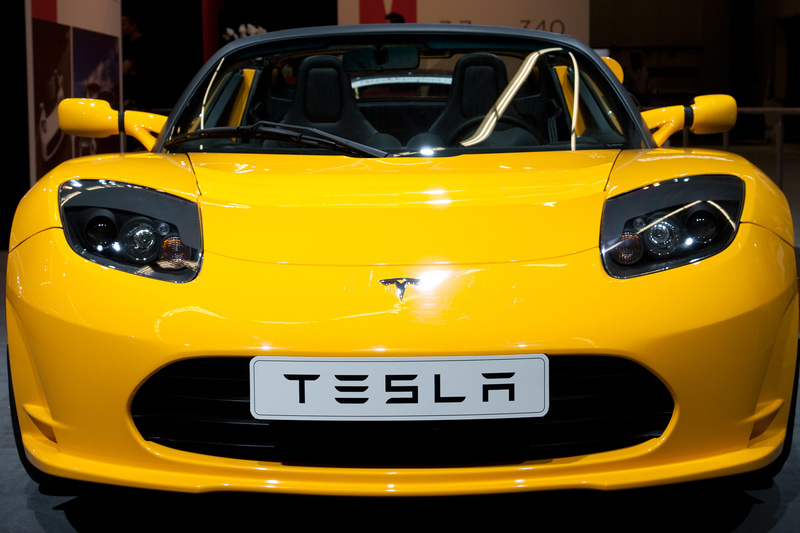
Barclays kept an Equalweight on Tesla with a $360 price target vs. the current share price of $367.96 and a $1.38 trillion market cap. Barclays flagged materially higher capex risk — suggesting spending could exceed $20B and potentially be many multiples above a $50B bull-case figure — while Tesla targets a 1-terawatt project funded alongside SpaceX/xAI. Regulatory risk escalated as the NHTSA upgraded its probe to a detailed engineering analysis covering ~3.2 million vehicles; GLJ reiterated a Sell citing Full Self-Driving recall risk. Offsetting items include Stifel’s Buy call on strong automotive margins (two-year high in Q4 2025) and Goldman noting progress on Optimus robot hardware; balance-sheet metrics show more cash than debt (current ratio 2.16, debt/equity 0.18).
Tesla’s stated move toward terawatt-scale power and humanoid robotics is not just a demand story for batteries and fabs — it is a multi-year capital allocation shock. Treat capex as a multi-decade liability: incremental spending that scales non-linearly (high fixed-cost, lumpy milestones) will compress free cash flow volatility and raise the probability the company will prioritize asset buildouts over near-term shareholder returns. That raises second-order winners in construction, industrial automation, and AI infrastructure where one-time capex orders and server purchases are sourced.
Regulatory escalation creates a conditional liquidity sink. An engineering-level probe typically unfolds over 6–18 months and can prompt recalls, warranty accruals, and reputational damage that hit margins and delay higher-return initiatives (robotaxi/Optimus). If capex overruns and regulatory costs converge within a 12-month window, funding pressure increases the chance of equity issuance or diverted internal transfers from related private entities, which would be asymmetric for shareholders.
Market positioning currently underweights the distributional risk: consensus seems willing to underwrite extreme multi-year optionality while underpricing near-term operational risks. That sets up asymmetric trade opportunities — hedge-able short exposure to capex/recall shocks funded by long exposure to AI/compute beneficiaries who win from the same strategic pivot. Time horizons matter: days-to-weeks for volatility trades around catalyst windows, 6–18 months for capital allocation / regulatory outcomes, and 2+ years for optionality on robotaxi/Optimus proofs of concept.
AI-powered research, real-time alerts, and portfolio analytics for institutional investors.
Request DemoOverall Sentiment
mixed
Sentiment Score
0.00
Ticker Sentiment
