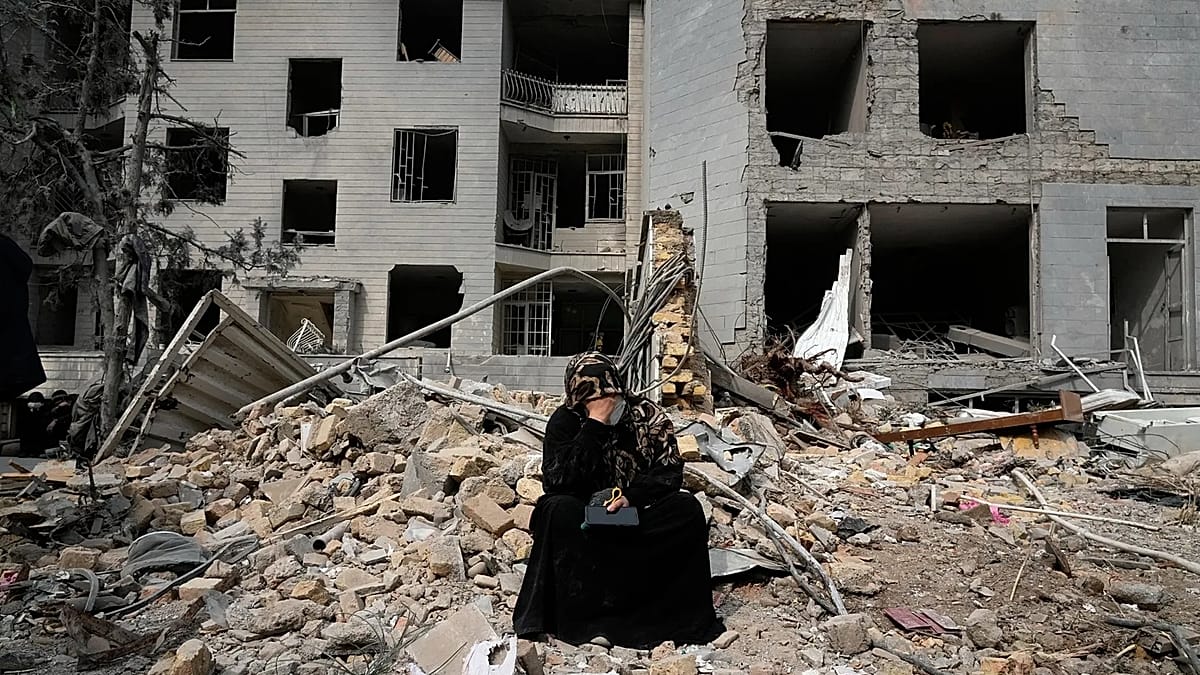
Key event: US Defense Secretary Pete Hegseth said the coming days will be "decisive" and declined to rule out US ground forces as a more-than-month-long US-Israeli campaign against Iran continues, while Iran demands guarantees to prevent repeated aggression. Energy risk: US average gasoline prices topped $4.00 (≈€3.48) for the first time since 2022, heightening the risk to oil flows through the Strait of Hormuz and creating upside pressure on global fuel prices and inflation; markets should adopt a risk-off stance given potential for further oil-driven volatility.
The market is pricing asymmetric tail risk around Middle East chokepoints and escalation probabilities, which amplifies energy and shipping premia well ahead of fundamentals — insurance rates, freight spreads and prompt crude differentials can reprice within days while production responses take months. Expect Brent/WTI volatility to stay elevated for 2–12 weeks as physical flows are rerouted and short-term inventory draws occur; structural responses (U.S. shale restarts, LNG cargo reallocation) play out over 3–12 months and blunt peak prices but cannot erase spike-level margin windfalls for producers.
Defense and logistics suppliers are on different time paths: tactical munitions, logistics, and mercenary/contractor services see order flow and revenue recognition within 1–3 months, whereas major platform upgrades and procurement cycles will take 12–36 months to translate into durable EPS growth. Insurers and brokers will report immediate underwriting income upside as war-risk premiums surge, but that revenue is lumpy and can revert quickly if talks resume — creating an ideal environment for event-driven two-way trades.
Political signaling (threat ambiguity over ground forces) raises a low-probability, high-consequence tail: a limited ground campaign or expanded strikes could sustain elevated oil for many months and trigger secondary supply-chain hits (chemicals, fertilizers) that depress industrial output and tilt central bank policy toward tighter real yields. Conversely, successful behind-the-scenes diplomacy can compress risk premia in days; option markets will overprice that two-way risk, creating opportunities to sell elevated near-term volatility with tight hedges.
The consensus is treating this as a pure energy shock; that underweights winners in logistics/insurance and overweights long-dated platform cyclicals. Position sizing should therefore be short-duration and layered — capture immediate repricing in energy/defense suppliers while hedging against rapid diplomatic de-escalation that would unwind spikes within a week.
AI-powered research, real-time alerts, and portfolio analytics for institutional investors.
Request DemoOverall Sentiment
strongly negative
Sentiment Score
-0.65
