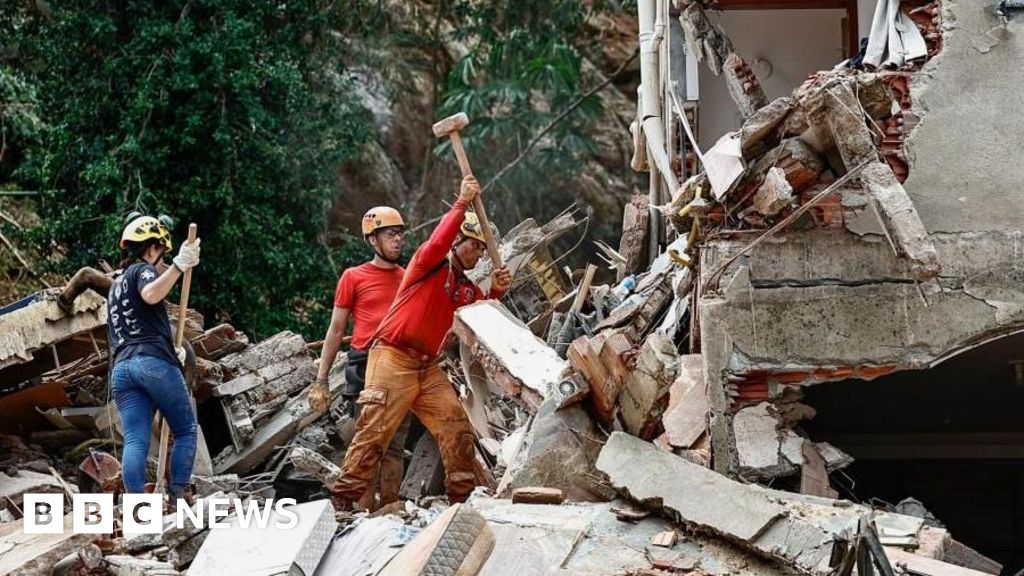
Severe flooding and landslides in Minas Gerais, Brazil have killed at least 32 people, left at least 38 unaccounted for and forced thousands into shelters; Juiz de Fora had 12 homes swept away while a river breach devastated Ubá, where more than 200 people were rescued. Meteorologists say February rainfall in the region is already double the monthly average and more rain is forecast, signaling ongoing damage to housing, local infrastructure and regional economic activity with potential short-term disruption to supply chains and reconstruction-related spending.
Market structure: Immediate winners include construction/repair materials and contractors (steel, cement, heavy equipment) as rebuilding demand will rise over 1–9 months; Gerdau (GGB, exposure to Brazilian steel) and housing developers should see incremental revenue. Direct losers are local SMEs, furniture clusters around Ubá, municipal utilities, and regional insurers (Porto Seguro PSSA3, SulAmérica) facing elevated claims in the next 30–90 days; limited national insurance penetration caps but does not eliminate near-term losses. Global reinsurers could benefit medium-term from higher pricing if losses push up reinsurance rates.
Risk assessment: Tail risks include dam or mining-related catastrophe (Minas Gerais hosts large tailings infrastructure) which could trigger broad regulatory action and multi-week production halts for VALE (VALE) — a >10% shock to iron-ore supply could reverberate across commodity markets. Near-term (days–weeks) the key risk is another 7–14 day rainfall spike (forecasters already flag >2x monthly average) that would amplify losses; medium-term (months–1 year) fiscal strain on municipalities could raise credit defaults for local banks. Hidden dependencies: furniture and light industry supply chains clustered in Ubá (single-node disruption) and municipal budget stress that could delay reconstruction purchases from national suppliers.
Trade implications: Favor tactical longs into reconstruction: 1–3% positions in Gerdau (GGB) and select Brazilian construction names, horizon 3–9 months; complement with 1–2% long positions in global reinsurers (Swiss Re SREN.S, Munich Re MUV2.DE) for a 6–12 month re-rate if premiums harden. Hedge macro/FX tail with a 3-month EWZ put spread (buy 1% notional of EWZ 3m puts, sell deeper OTM puts) or buy 3-month BRL put options sized to cover 0.5–1% portfolio risk. Short-select local insurers (PSSA3) tactically 0.5–1% if 30-day loss guidance rises >15%.
Contrarian angles: Consensus will likely underweight mining regulatory risk — Brumadinho (2019) produced multi-quarter valuation drag on VALE; monitor dam-inspection notices over next 14 days as a high-leverage trigger. The market may also underprice reconstruction-driven steel/cement demand; if municipal emergency spending >BRL500m per affected municipality, construction suppliers could re-rate. Unintended consequence: short-term imports to replace lost goods can inflate local commodity/transport costs, squeezing margins for small producers—prefer large-cap suppliers with national distribution.
AI-powered research, real-time alerts, and portfolio analytics for institutional investors.
Request DemoOverall Sentiment
moderately negative
Sentiment Score
-0.60
