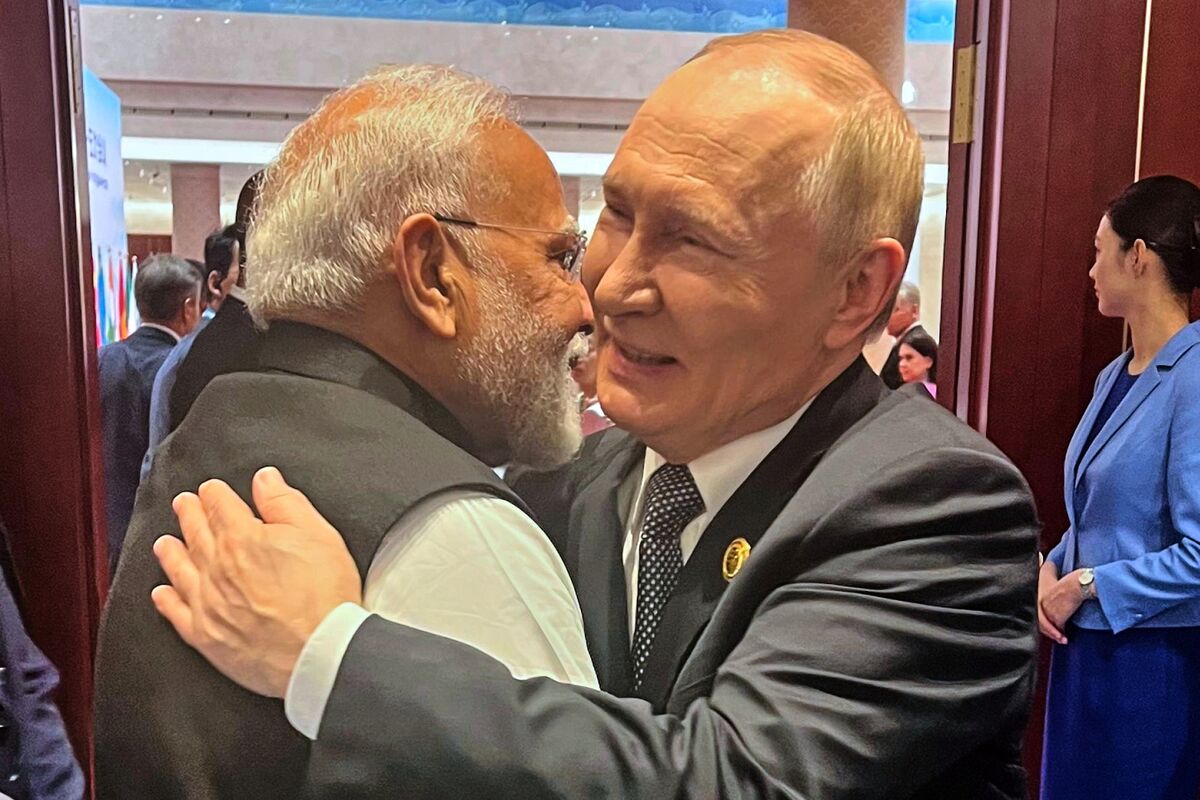
Indian Prime Minister Narendra Modi and Russian President Vladimir Putin publicly reaffirmed their strong bilateral relationship at a regional summit in China, with Modi highlighting their 'deep ties' through a shared car ride and embrace. This demonstration of solidarity comes amid ongoing criticism from Washington regarding India's continued oil purchases from Russia, underscoring New Delhi's independent foreign policy stance and energy security priorities despite Western pressure.
The public display of a strong bilateral relationship between Indian Prime Minister Modi and Russian President Putin at a summit in China serves as a significant geopolitical signal. This interaction, characterized by an embrace and a shared car ride, deliberately underscores the depth of India-Russia ties, occurring concurrently with US criticism of New Delhi's continued purchases of Russian oil. The event reaffirms India's commitment to strategic autonomy, prioritizing its long-standing partnership with Moscow and its energy security needs over alignment with Western pressure. While the neutral sentiment and low market impact score indicate this is not a new market-moving catalyst, it reinforces an established trend of a multi-polar global order where major economies are forging paths independent of Washington's foreign policy objectives. The location in China further highlights the continued cooperation among non-Western powers, a critical long-term theme for investors to monitor despite underlying complexities in their relationships.
AI-powered research, real-time alerts, and portfolio analytics for institutional investors.
Request DemoOverall Sentiment
neutral
Sentiment Score
0.00
