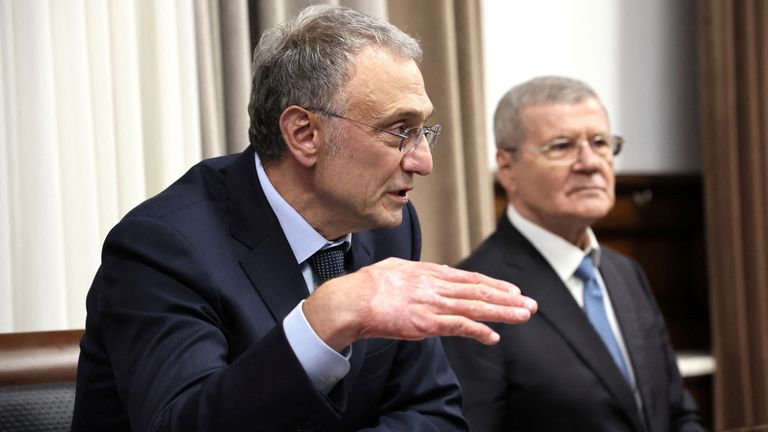
Russia's defence bill reached 15.5 trillion roubles (~£144bn) in 2025, prompting Vladimir Putin to solicit oligarch donations to stabilise the budget; billionaire Suleiman Kerimov pledged 100 billion roubles (~£922m) and Oleg Deripaska reportedly agreed to contribute. Falling energy revenues and an economic slowdown are reducing tax receipts, and the government is considering a possible 10% cut to 'non-sensitive' 2026 spending depending on the durability of an oil-price rise tied to the Iran war. Putin reaffirmed commitment to continue the war to seize remaining Donbas territory, keeping geopolitical and fiscal risk elevated.
A coming fiscal patch funded by private capital is structurally different from a sustainable revenue solution: one-off transfers preserve headline spending in the near term but do not close chronic budget shortfalls or shore up investor confidence in sovereign liquidity for more than a few quarters. Expect the state to pair such transfers with tighter control over capital outflows, tax reclassifications, and directed lending requirements for strategic sectors — mechanisms that compress private balance-sheet optionality and raise counterparty risk for foreign creditors.
On energy and commodity supply chains, the short-term effect will likely be stabilization of export discipline rather than an immediate increase in volumes. However, a mid-term retrenchment in upstream capex—accelerated by sanctions, skilled labor displacement, and redirected cash to non-commercial wartime spending—creates a plausible 12–36 month scenario of lower exportable volumes and higher price volatility, especially on geopolitical flare-ups or shipping-route disruptions.
Key market catalysts to monitor are (1) liquidity measures and legal steps converting voluntary transfers into mandatory obligations, which would signal a deeper fiscal stress; (2) oil-price trajectories that determine whether the fiscal gap narrows organically; and (3) visible asset disposals by private elites into Western markets, which would transmit balance-sheet stress into real estate, private equity, and bank risk on a 1–9 month timeline. Each catalyst has asymmetric outcomes: oil staying elevated props commodity suppliers and defense names, while a renewed price decline or successful diplomatic detente would rapidly unwind the risk premium.
AI-powered research, real-time alerts, and portfolio analytics for institutional investors.
Request DemoOverall Sentiment
moderately negative
Sentiment Score
-0.60
