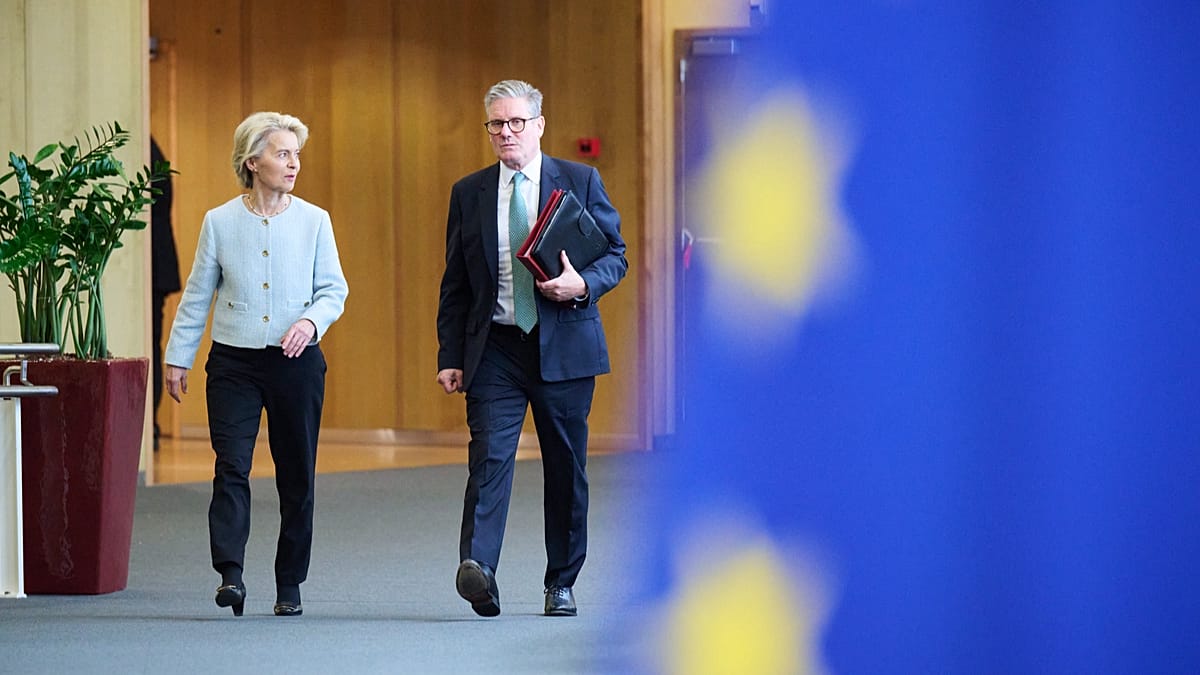
EU–UK negotiations are accelerating on trade, customs and defence integration, with UK PM Keir Starmer signalling willingness to align more closely with the Single Market and Brussels open to talks including potential customs-union reintegration. Key financing and defence items include the EU’s recently agreed €90 billion Ukraine loan (two-thirds earmarked for military assistance) and the stalled €150 billion SAFE defence scheme, where past talks collapsed over a large contribution gap (EU final offer ≈ €2bn vs UK estimate ≈ €100m). Markets should watch negotiation outcomes and political risk—Reform UK is polling strongly and a proposed “Farage clause” could require compensation if a future government exits any deal—while the EU plans to raise funds on markets and expects third-country contributions to help cover €2–3bn/year in interest costs.
Market structure: A UK-EU rapprochement would directly benefit UK exporters (financial services, legal/accounting, logistics), large UK-listed defence contractors and exporters while compressing trade friction premia embedded in UK domestic-focused small caps. Expect supply-chain re-linking to increase UK trade volumes by mid-single digits over 12–24 months, lifting GBP and narrowing UK equity risk premia relative to continental peers. Cross-asset: GBP appreciation vs EUR/USD (target +3–8% on confirmed deal), tighter 5–10bp gilt spreads on growth optimism but occasional spike risk if fiscal/leverage responsibilities are clarified unfavourably; defence metals and shipping demand could see 3–7% upside on higher procurement and trade flow assumptions.
Risk assessment: Tail risk is a Reform-UK victory or a collapsed negotiation that reverses any re-rating—model a 10–20% shock to UK equities, GBP -8–12%, and 50–150bp widening in 10y gilts within 48–72 hours. Immediate horizon (days): headline-driven volatility; short-term (weeks–months): negotiation milestones (EU legal text this week, SAFE talks) will re-price positions; long-term (quarters–years): structural integration hinges on acceptance of the EU’s “four freedoms” and durable political settlement. Hidden dependencies: EU insistence on financial contributions (Ukraine loan interest, SAFE) may cap upside for UK defence firms; the “Farage clause” makes any deal path-dependent and reversible.
Trade implications: Tactical portfolio actions — establish a 2–3% long position in EWU (iShares MSCI United Kingdom) funded by a 1–1.5% short in VGK (Vanguard FTSE Europe) to capture UK rerating potential over 6–12 months; take 1–2% long exposure to BAE Systems via BAESY (OTC) and 0.5–1% to Airbus EADSY to play defence procurement, size depending on SAFE compromise clarity. FX/options: buy a 3-month GBPUSD call spread (buy 1.28, sell 1.34 strikes) sized 0.5% of NAV to express GBP upside while capping cost; hedge tail political risk with 6–12 month put protection on UK 10y gilt futures sized 0.5–1% of NAV. Enter on confirmation (EU legal text release or a signed MoU) within 1–3 weeks; trim positions at +15–25% or if polls shift >5 points toward Reform.
Contrarian angles: The market may be underpricing reversibility — the EU’s “Farage clause” and SAFE negotiation friction imply any positive headline can be short-lived, so outright long-levered UK risk is premature. Defence stocks are priced for full access to EU procurement; if the UK resists meaningful contributions, order flow may disappoint and cap returns. Historical parallels (partial reintegration episodes) show initial rebounds can reverse if political durability is lacking — prefer option-defined exposure and small concentrated bets rather than large directional allocations.
AI-powered research, real-time alerts, and portfolio analytics for institutional investors.
Request DemoOverall Sentiment
mildly positive
Sentiment Score
0.25
