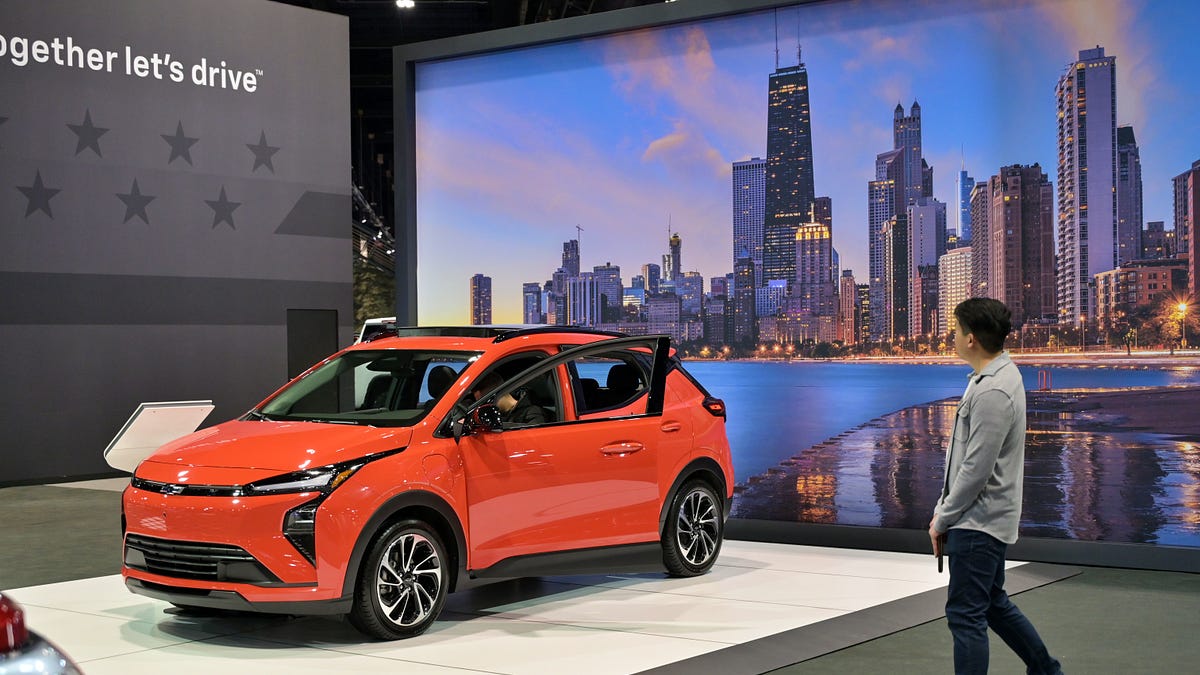
GM confirmed it will end production of the Chevrolet Bolt next year and convert its Kansas City plant back to internal-combustion vehicles, while Honda scrapped plans for three U.S.-built EVs. The article attributes the industry pullback largely to Trump-era rollbacks of EV tax breaks and tightened emissions standards, occurring as gas prices hover around $4/gal and consumer EV inquiries are rising. The net effect is a tightened domestic EV supply at a time of rising demand, increasing downside risk to U.S. automakers' EV market share and long-term competitiveness.
The immediate industrial consequence is not just fewer EV units but a higher share of modular ICE production capacity sitting behind long lead-times and capex that is lumpy to flip. That raises two measurable second-order exposures: (1) declining demand pull for battery cells, cathode feedstocks and cell-assembly capital equipment (pressure on lithium/nickel spot markets and tier-1 battery suppliers), and (2) persistent margin support for ICE powertrain suppliers and aftermarket parts vendors as OEMs extend ICE model cycles. Both channels show asymmetric timing — raw-material prices adjust within weeks, while factory retooling and supplier order-books take quarters to normalize.
Policy and energy-price shocks remain the primary catalysts: a sustained $4+/gal gasoline regime over 3-9 months materially shifts consumer replacement economics back toward ICE, compressing EV purchase elasticity and worsening EV inventory economics for OEMs. Conversely, a sudden restoration of aggressive ZEV standards or new federal/state purchase incentives (plausible within 9-18 months if consumer pain spikes) would re-accelerate EV buildouts and re-price stranded-capex risk. Operationally, watch GM Financial’s used-car LTV and inventory aging — a widening spread between wholesale and retail used prices would show stress to the auto OEM finance model weeks before headline margins move.
The consensus frames this as an irreversible strategic loss for domestic EV capability; that’s likely overstated. Large OEMs can economically pause and later re-scale electrification because a) gigafactory commitments are partially backstopped by JV supply contracts and b) ICE cashflows fund near-term returns. The market is mis-pricing optionality: short-term earnings and supplier pain are real, but long-term technology and regulatory cycles still favor incumbents who maintain balance-sheet flexibility. That creates asymmetric trade structures rather than naked directional bets as the most attractive P/L profile right now.
AI-powered research, real-time alerts, and portfolio analytics for institutional investors.
Request DemoOverall Sentiment
strongly negative
Sentiment Score
-0.60
Ticker Sentiment
