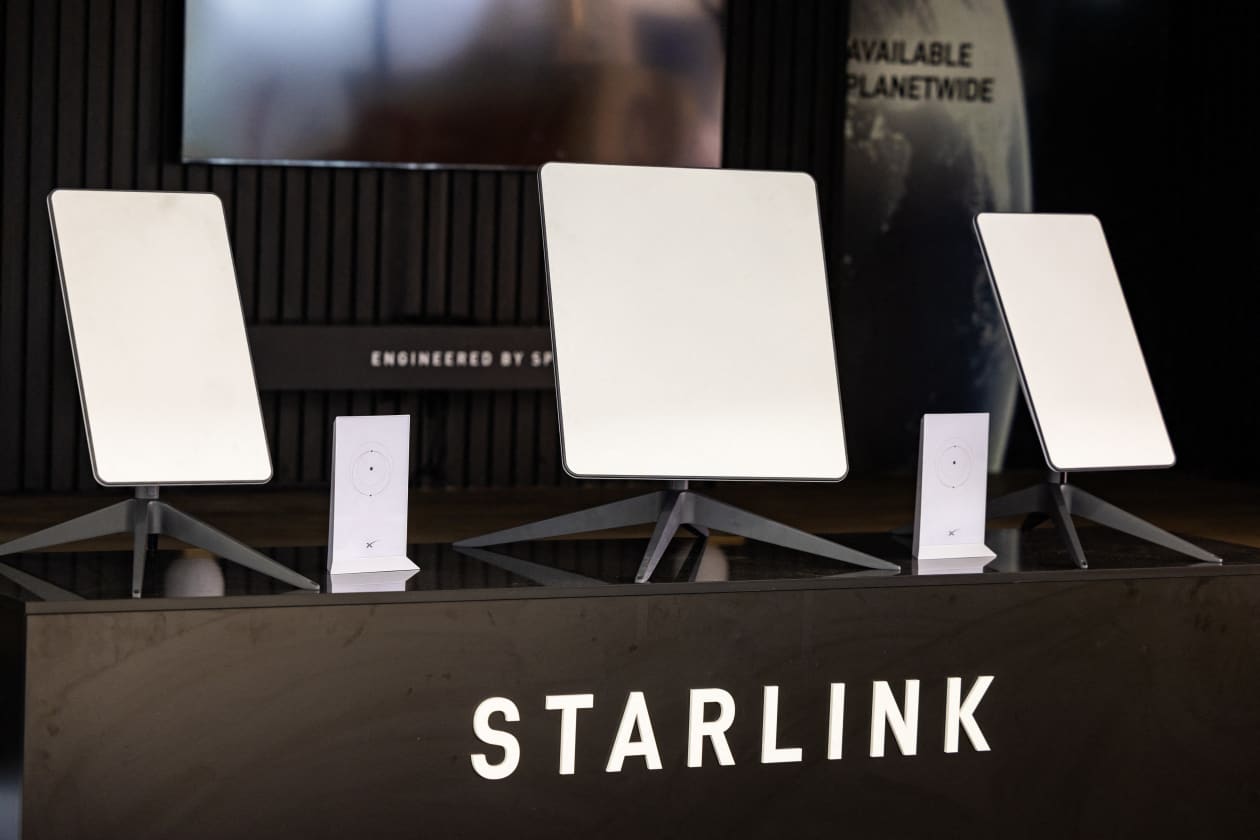
Tens of thousands of satellites expected to launch over the next several years should drive significant semiconductor demand, creating potential upside for select chip suppliers, according to Truist Securities analyst William Stein. While SpaceX's imminent IPO is attracting attention, analysts recommend investors consider exposure to lesser-known semiconductor companies that stand to benefit from the satellite buildout and related imaging and internet-access applications.
Specialized RF/GaN/GaAs front‑end suppliers and mixed‑signal vendors stand to extract disproportionate margin as satellite fleets scale because qualification and radiation‑tolerance create high switching costs; expect ~12–36 month revenue tails as design wins translate into production. Second‑order winners include wafer/fab partners with niche process nodes and OSATs that can handle high‑reliability packaging — they can charge 10–30% premiums versus commodity consumer flows.
Key catalysts are multi‑year procurement cycles and prime contractor supplier lists; a single multi‑year design win (12–24 months to convert) can create a predictable revenue stream and justify valuation re‑rating. Tail risks are concentrated: a major on‑orbit failure, spectrum/regulatory pushback, or a decision by a large systems integrator to vertically integrate could compress expected IRR quickly; those are binary events with outsized impact over weeks to months.
The consensus underprices the degree of supplier concentration and the pricing power of rad‑hard or qualified component suppliers — many smaller vendors can sustain 15–25% gross margins while the broader semiconductor group trades on secular cyclicity. That said, the trade is not “pure beta” on semiconductor demand: it’s credit‑like exposure to multi‑year contracts, so liquidity event timing will be uneven and 6–18 month volatility should be expected.
AI-powered research, real-time alerts, and portfolio analytics for institutional investors.
Overall Sentiment
mildly positive
Sentiment Score
0.25
Ticker Sentiment
