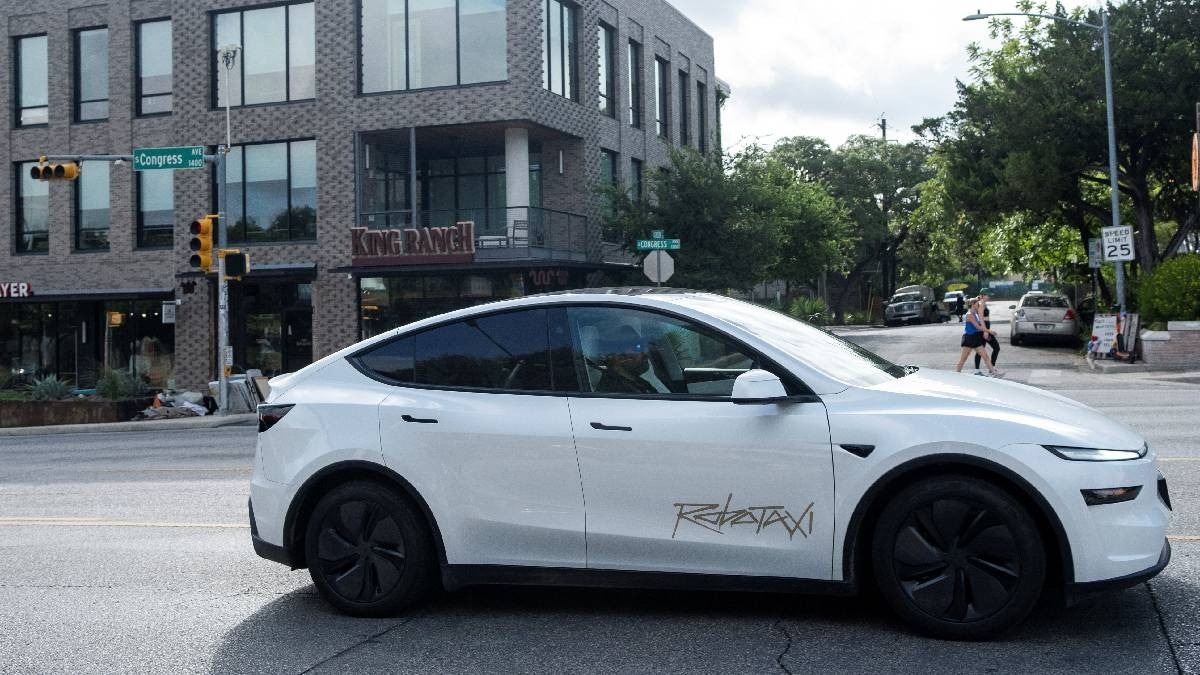
Tesla operates roughly 50 robotaxis and admitted remote operators can sometimes assume direct control of vehicles; remote control is allowed up to ~2 mph normally and up to 10 mph if software permits. The company said remote assistance is used when vehicles are confused, stuck, or in emergencies but refused to disclose frequency of interventions. Other AV firms also disclosed remote-assistance programs; safety concerns and network latency risks persist and the disclosure follows an NHTSA probe linked to Full Self-Driving crashes.
This admission crystallizes a structural bifurcation: firms that rely on remote human fallback increase recurring opex (remote-centre staffing, bandwidth, insurance) while firms that can demonstrate robust sensor-fusion and deterministic fail-safe automation preserve TAM and regulatory goodwill. Expect near-term geofencing and operational throttles (low-speed remote interventions) to compress addressable robotaxi miles by a meaningful fraction; conservatively model a 20–40% reduction in deployable urban miles in the next 12–24 months as operators limit service to low-complexity corridors.
Second-order winners include cloud/edge compute and low-latency comms providers plus cybersecurity vendors — the economics pivot from one-time vehicle CAPEX to ongoing per-mile OPEX tied to remote-assistance telemetry and secure connectivity. Nvidia stands to capture incremental margin if fleets accelerate onboard inference and sensor-fusion hardware; AWS/edge services (Amazon) and telco partners will capture recurring revenue from remote-ops telemetry and regional edge sites.
Key catalysts and risks are asymmetric in time: in days-weeks, tone from regulators and any forced disclosures of remote-assist frequency will swing equities sharply; in 3–12 months, insurance repricing and class-action filings could reset unit economics; over 1–3 years, mandated sensor redundancy (radar/lidar) or minimum safety KPIs could reallocate supplier share. The consensus downside on Tesla is credible but likely binary — much of the market reaction will center on disclosure of assistance rates and insurer behavior, not just technical capability.
AI-powered research, real-time alerts, and portfolio analytics for institutional investors.
Overall Sentiment
moderately negative
Sentiment Score
-0.35
Ticker Sentiment
