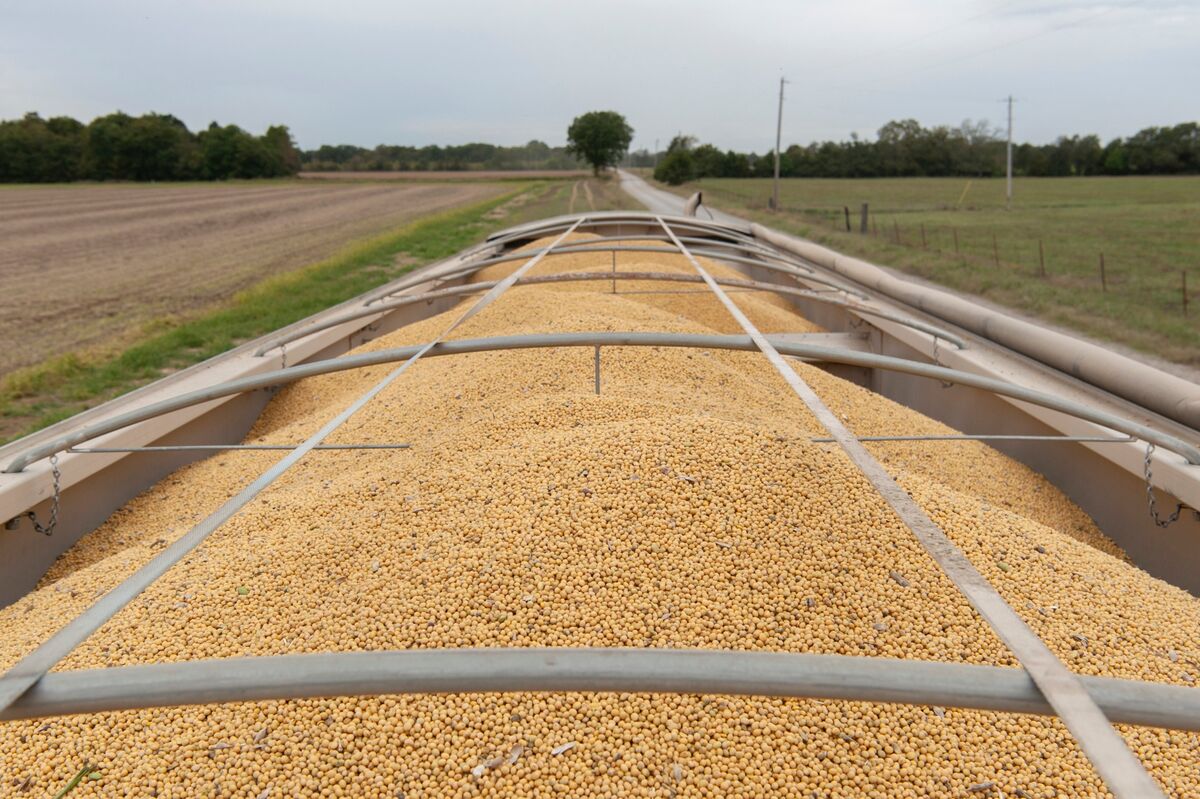
USDA planting figures showed soybean acreage at 84.7 million acres and wheat planting at 43.8 million acres, both below analysts' expectations. Chicago grain prices rose as weaker-than-expected US plantings compounded supply concerns tied to the Iran war, with soybeans extending gains. This is a sector-level supply shock likely to support higher agricultural commodity prices and increase volatility in grain futures.
The immediate beneficiaries are global grain exporters and upstream inputs — exporters capture widened relative spreads if Black Sea flows stay constrained, and fertilizer names get a multi-quarter demand kicker as farmers chase higher prices to rebuild yields. Rail and Gulf terminal operators also pick up optionality: tighter U.S. domestic availability increases intercoastal flow and export volumes, boosting freight and storage margins even if aggregate tons change only modestly.
Key catalysts to watch are short-dated weather and two policy/data events: the next USDA acreage/WASDE updates (near-term) and South American harvest progress (4–12 weeks). Re-opening of Black Sea corridors or a benign US weather pattern are high-probability reversal triggers in weeks, whereas structural acreage response and fertilizer restocking play out over seasons (3–12 months).
Trade mechanics favor directional exposure with controlled tail risk or cash-basis capture rather than naked outright longs. Volatility is likely to remain elevated until the next USDA and Black Sea clarity; that makes defined‑risk option structures and basis trades more attractive than naked futures. The market is vulnerable to a fast mean-reversion if export corridors reopen or South America’s yields beat expectations, so position size and gamma management are critical.
Contrarian angle: the current repricing may be overshooting the near-term fundamental gap because forward contracting and hedging by major merchandisers already locks away supply; hence a tactical fade of the initial spike using premium-selling or short-dated calendar work has favorable odds. Longer-term, persistent underplanting would still justify owning exporters and input names into the next planting cycle.
AI-powered research, real-time alerts, and portfolio analytics for institutional investors.
Overall Sentiment
mildly negative
Sentiment Score
-0.25
