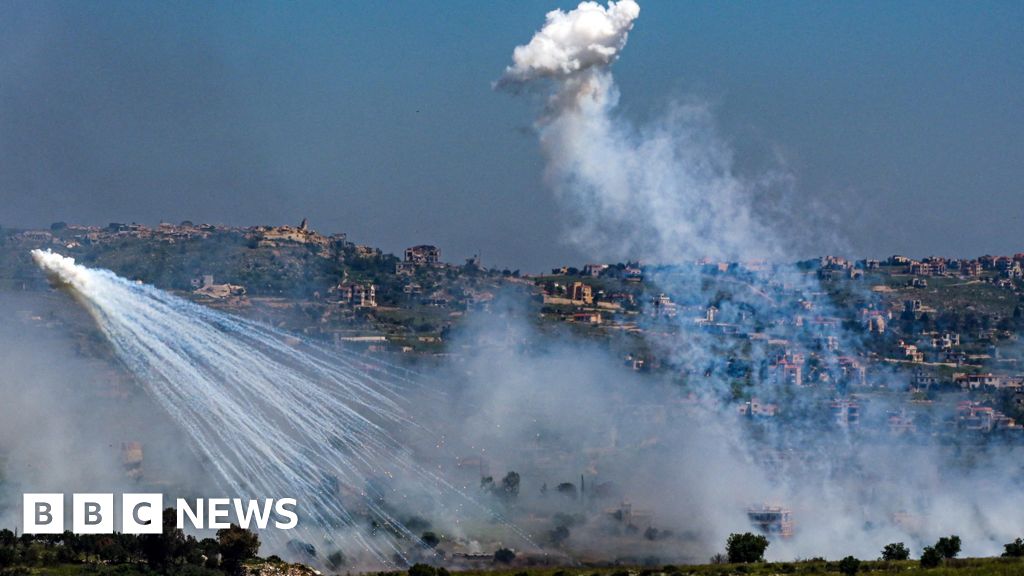
At least nine people, including two children, were killed and 23 wounded in Israeli strikes in southern Lebanon, despite a ceasefire in its second week. The violence remains active across southern Lebanon, with evacuation warnings for 15 villages and continued Hezbollah attacks on Israeli forces. The episode underscores a deteriorating security situation and rising risk of broader regional escalation.
The market implication is not the headline violence itself, but the erosion of the ceasefire’s credibility premium. Once a truce starts to look conditional on unilateral enforcement, the discount rate on any durable political settlement rises sharply, which tends to widen risk premia across the Levant rather than just Lebanon-specific assets. The immediate winners are defense contractors and ISR/munitions suppliers that benefit from sustained high-tempo air operations and replenishment cycles; the less obvious beneficiary is any logistics or energy infrastructure security name exposed to regional force protection budgets. The second-order risk is escalation drift: repeated “limited” strikes plus localized retaliation create a low-level conflict regime that can persist for weeks without a formal collapse, but still keeps shipping insurance, airline routing, and regional capex on edge. That matters because the most damage often comes from persistent uncertainty, not a single event—projects in Lebanon/Syria/Israel-linked corridors see delayed financing and higher contingency buffers, while neighboring sovereign spreads can cheapen even if broader oil markets stay muted. The civilian casualty profile also increases pressure on US diplomats, raising the odds of an externally imposed pause or enforcement mechanism within days to a few weeks if the optics worsen. Contrarian view: the consensus may be overestimating immediate spillover into a wider regional war and underestimating the probability of a managed, noisy stalemate. If that is right, the trade is not to chase broad risk-off into energy or global cyclicals, but to position for intermittent volatility spikes and headline-driven re-pricing. The cleanest setup is through options rather than outright equity exposure, because the distribution is skewed to gap risk but the base case remains contained escalation rather than open regional expansion.
AI-powered research, real-time alerts, and portfolio analytics for institutional investors.
Request DemoOverall Sentiment
extremely negative
Sentiment Score
-0.85
