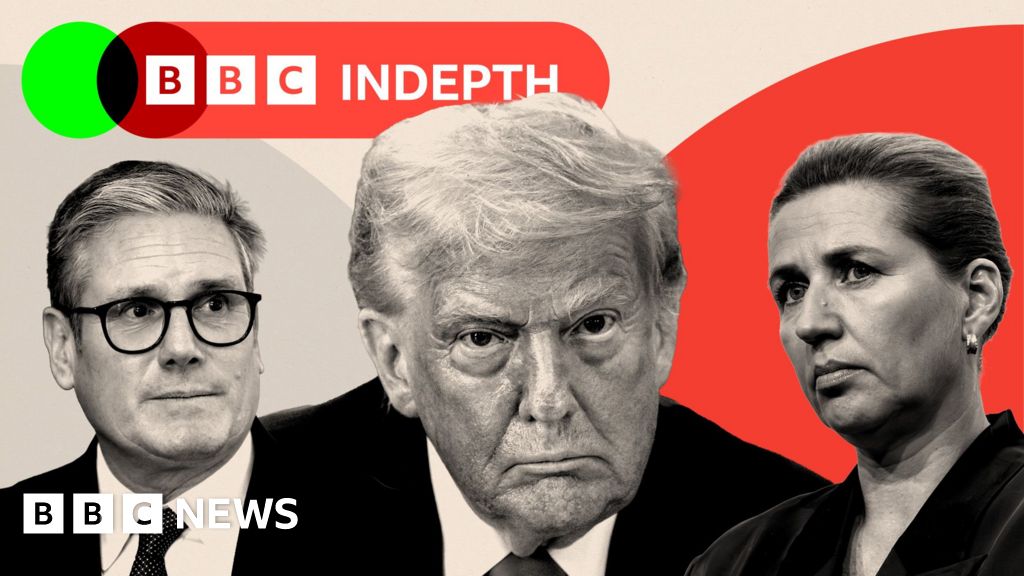
President Trump's renewed push to acquire Greenland and threats to impose punitive tariffs on allies have prompted EU officials to consider retaliatory measures — including up to €93 billion in tariffs and possible restrictions on US firms' access to the single market — raising the prospect of a damaging transatlantic trade dispute. The standoff threatens export-dependent European sectors (notably Germany's auto industry and Italy's luxury goods), could raise consumer costs in both markets, and increases geopolitical uncertainty given Europe's continued reliance on US security guarantees, factors that should be monitored for potential sectoral and macro volatility.
Market structure is shifting toward higher defence and security spending and away from cyclical, export-reliant European sectors if EU retaliation materialises (€93bn+ headline figure). Direct winners: aerospace/defence primes and defence ETFs; losers: German autos (VW/DAI/BMW), Italian/French luxury (LVMH/KERING) and export-heavy SMEs. Cross-asset: expect downside pressure on EUR (snap moves -2-4% vs USD on escalation), modest bid for US Treasuries as safe-haven, and higher gold (+3-6%) and defence equity vol.
Tail risks include a full US–EU trade war (low-probability, high-impact) leading to >€100bn tariffs, US restrictions on EU financial/tech market access, or NATO fracturing — any of which would widen credit spreads and hit EUR funding markets. Time horizons: headline moves at Davos/next 3 days, negotiation/retaliation risk over 1–3 months, structural defence/reshoring effects 6–24 months. Hidden dependencies: auto global supply-chains, EU decision-making lag (weeks) that creates knee-jerk repricing.
Trade implications: favour 3–18 month exposure to defence (equities and call spreads) and short/hedge export-heavy Europe via puts or ETF shorts; use FX forwards or UUP to express USD strength and GLD/VIX as tail hedges. Options are preferred to lever limited-duration political event risk (buy 3-month puts on Germany/Europe and 3–6 month calls on defence ETFs). Watch Davos statements and any formal EU tariff list as immediate execution triggers.
Contrarian view: markets may be underpricing EU cohesion — a coordinated €20–50bn retaliatory tranche is plausible within 4–8 weeks and would disproportionately hit autos/luxury equities already trading at high multiples. Conversely the scare may be overdone for long-term autos with diversified regional exposure; if US retreats, cyclical recovery in Europe could re-rate exporters. Historical parallel: 2018 US–China tariffs produced selective, sustained winners (defence, domestic manufacturing) but autos rebounded once phased negotiations resumed.
AI-powered research, real-time alerts, and portfolio analytics for institutional investors.
Request DemoOverall Sentiment
moderately negative
Sentiment Score
-0.45
Ticker Sentiment
