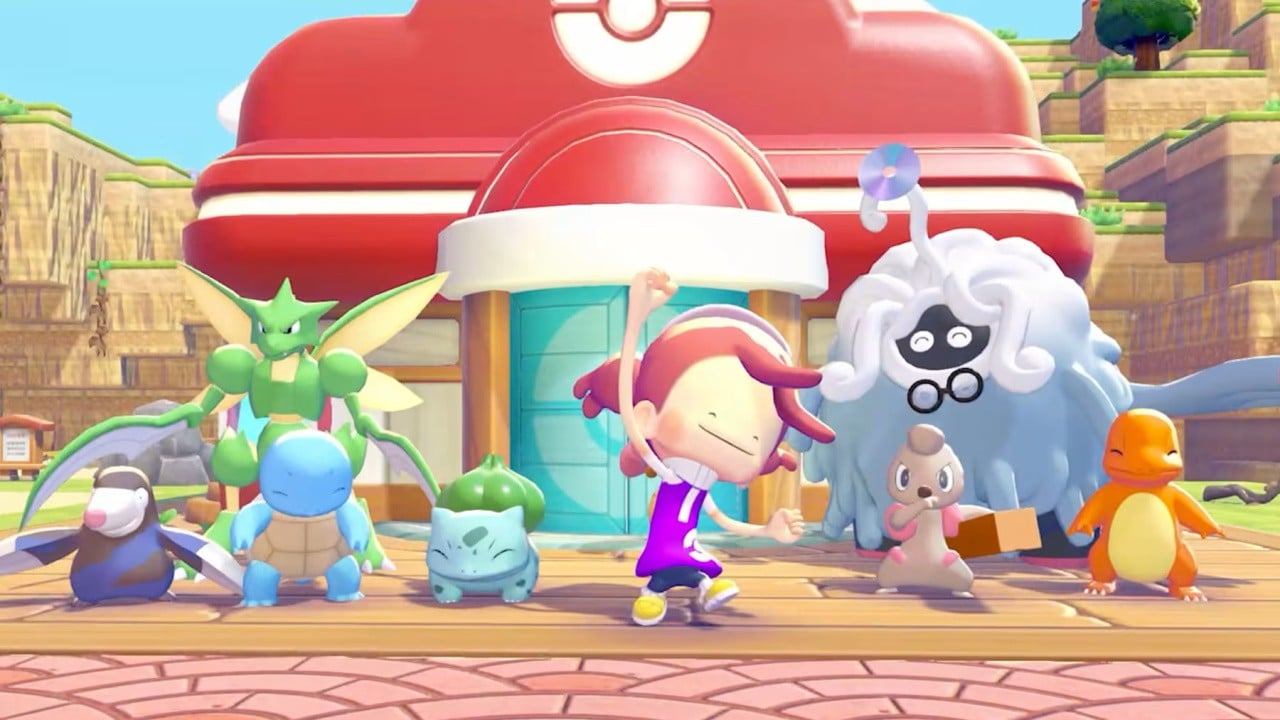
Pokémon Pokopia will launch exclusively on Nintendo's Switch 2 on March 5, 2026; select pre-orders at Amazon (US) and Best Buy (Canada) include a download code for an in-game decorative item ('Flat Leaf Plant'), a bonus previously offered on Amazon Japan. The item is reportedly obtainable through normal gameplay as well, suggesting the retailer incentives are a modest marketing tactic likely to influence retailer pre-order flows more than underlying demand or Nintendo's financials.
Market structure: The launch of Pokémon Pokopia (Switch 2, 5 Mar 2026) is a small but visible demand pulse for retailers tied to pre-orders and accessories—direct beneficiaries are Nintendo (NTDOY) as IP/hardware owner and retail distributors AMZN and BBY for incremental sales and customer traffic. Impact on pricing power is limited (digital codes have near-zero marginal revenue), but brick-and-mortar can monetize attach rates (controllers, merch, warranty) that boost gross margin per unit by an estimated +200–500bp vs base game sales. Cross-asset effects are negligible for bonds and FX; expect a 3–7% idiosyncratic move window in BBY/NTDOY equity and a 10–30% relative rise in short-dated options IV for BBY around release.
Risk assessment: Tail risks include a Nintendo hardware shortage or a poor critical reception that compresses sequel monetization (low-probability, high-impact); a delay to 1H 2026 would negate the retail bump. Time horizons split: immediate (days) — pre-order flows and web traffic spikes; short-term (weeks) — sales conversion and accessories attach; long-term (quarters) — franchise monetization and hardware halo effects. Hidden dependencies: hardware inventory allocation and regional digital-vs-physical mix (if >60% digital, retail lift is muted). Key catalysts: Nintendo supply updates, preorder sell-through data (two weeks pre-launch), and first-week user reviews.
Trade implications: Tactical, size-constrained trades around launch favor BBY exposure — Best Buy historically captures disproportionate accessory/warranty spend per unit. Consider a 1–2% portfolio long in BBY (ticker BBY) with target +8–15% within 30 days post-launch and a hard stop at -6%. For AMZN, prefer a small, defined-risk 60-day call spread (ticker AMZN) sized 0.5–1% notional to capture platform uplift without full equity exposure; alternatively buy BBY call spreads (Mar expiry) if IV is reasonable. Pair trade: long BBY (1%) / short AMZN (0.5% via OTM call write) to express retail foot-traffic beat while capping net market exposure.
Contrarian angles: Consensus underestimates BBY’s services margin tailwind—if attach rates rise +5–10% vs base, BBY EPS could beat by ~5–8% in the quarter, a mispricing opportunity. Reaction could be underdone given the modest headline nature of a cosmetic pre-order bonus; historical parallels (major Nintendo launches) produced single-digit outsized retailer reratings for 4–8 weeks. Unintended consequences: heavy retailer inventory buys ahead of demand could create markdown risk post-launch; set liquidity and stop-loss thresholds to guard against that outcome.
AI-powered research, real-time alerts, and portfolio analytics for institutional investors.
Request DemoOverall Sentiment
neutral
Sentiment Score
0.10
Ticker Sentiment
