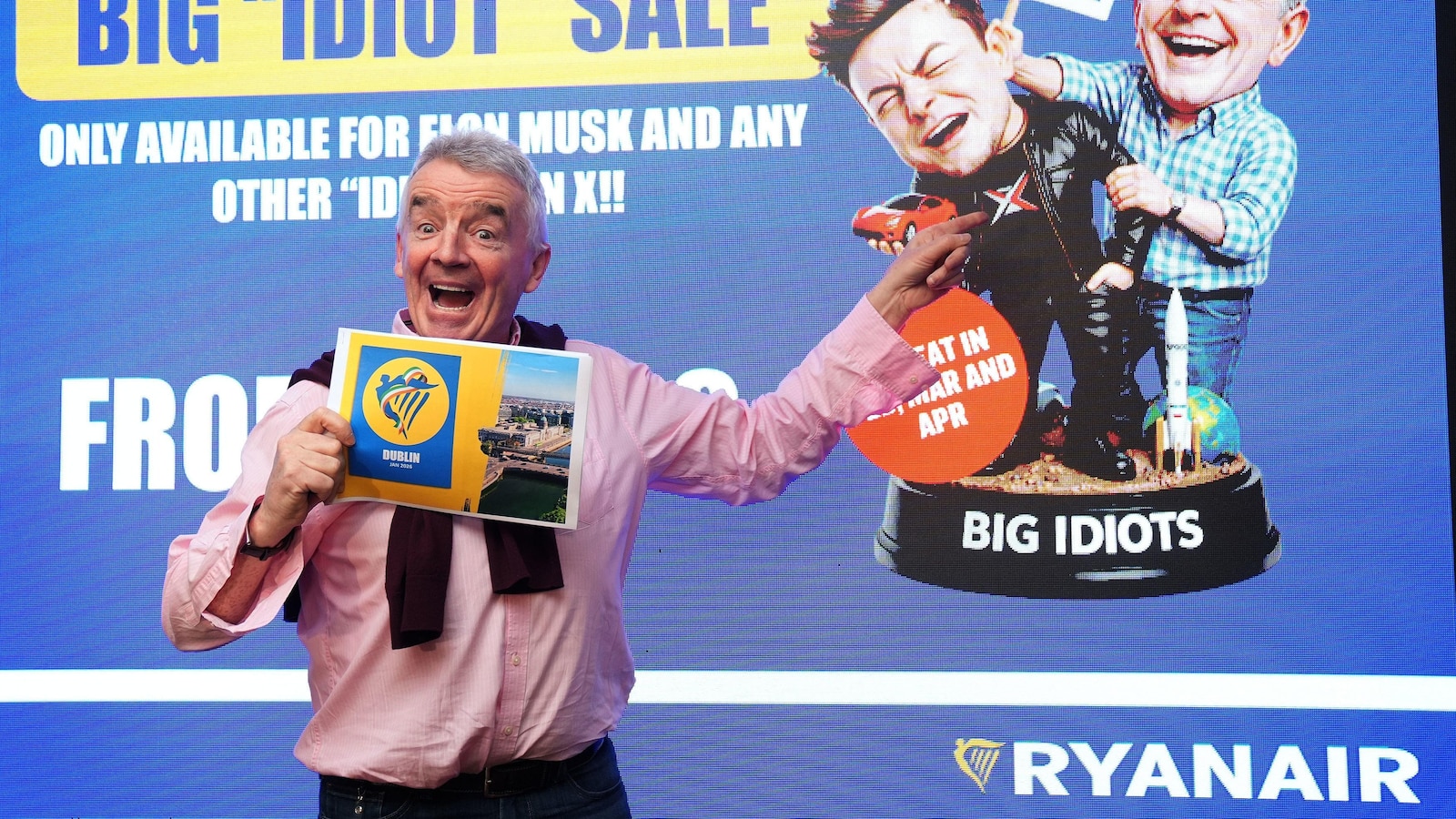
Ryanair CEO Michael O'Leary dismissed Elon Musk's suggestion to buy the carrier amid a dispute over fitting Starlink internet, saying Starlink would cost the airline about $250m a year — including roughly $200m in extra fuel from a 2% aerodynamic drag penalty and hardware to mount two antennas per aircraft — and that under 5% of passengers on its ~1h15m short-haul flights would pay for the service. O'Leary noted non‑European citizens cannot hold a majority stake in European airlines, kept talks open with Starlink and rivals such as Amazon's Kuiper only on cost-lowering terms, and used the spat for promotional activity, making any takeover or network-impacting rollout unlikely in the near term.
Market structure: Ryanair’s public rejection of Starlink crystallizes a bifurcation: long-haul and full-service carriers (who can amortize connectivity over longer flights) are favored adopters, while LCCs like RYAAY preserve unit-cost advantage by avoiding an incremental ~$250m/year hit (≈2% extra drag → $200m fuel + installation). Amazon’s Kuiper becomes a realistic challenger to Starlink for airline contracts; a single large European deal would reprice TAM for LEO ISP vendors and narrow Starlink’s pricing power within 3–12 months.
Risk assessment: Tail risks include regulatory rulings (EASA/EC on antenna certification or EU airline ownership rules) and technological improvements that cut antenna drag <1% — either could flip economics quickly. Immediate (days) risk = headline-driven equity volatility; short-term (weeks–months) risk = contract announcements or fuel spikes that change the $200m fuel math; long-term (quarters–years) risk = system miniaturization or Kuiper exclusivity that reallocates ancillary revenue.
Trade implications: For equities, RYAAY benefits from avoided capex/opex but cedes connectivity-driven ancillaries to rivals; AMZN has optional upside if Kuiper wins airline OEM/airline deals. Options can express asymmetric views: small, long-dated call spreads on AMZN to buy optionality to Kuiper commercialization; income from short-call spreads on RYAAY to monetize muted near-term upside.
Contrarian angles: Consensus undervalues the immediate margin relief to RYAAY — avoiding $250m/year is a tangible EPS lever that the market may underappreciate over 12 months. Conversely, the Musk buyout narrative is low-probability (regulatory and capital allocation hurdles); the real mispricing risk is for AMZN (Kuiper) deals — a single European carrier contract would be a catalyst that is currently underpriced.
AI-powered research, real-time alerts, and portfolio analytics for institutional investors.
Request DemoOverall Sentiment
neutral
Sentiment Score
0.05
Ticker Sentiment
