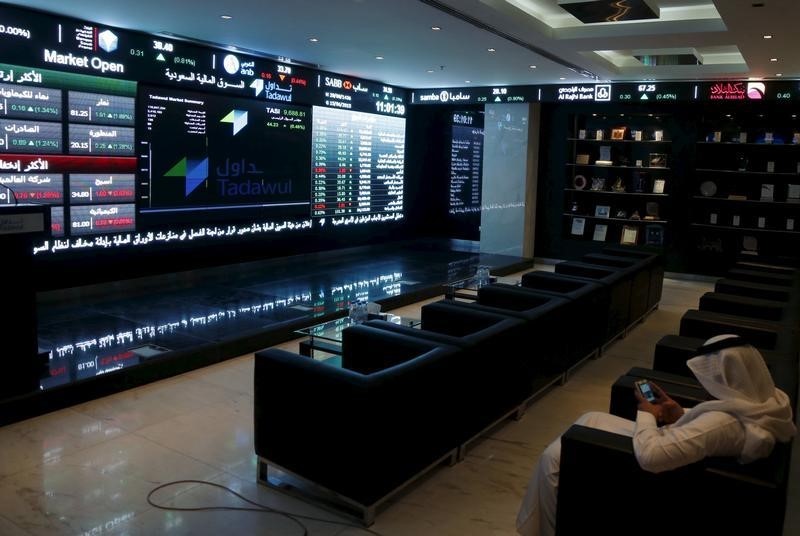
Saudi Arabia's Tadawul All Share fell 0.45% as decliners outpaced advancers 166 to 159, with losses concentrated in Insurance, Telecoms & IT and Financial Services. In commodities, June crude fell 1.08% to $105.73 a barrel, Brent slipped 0.59% to $109.79, while June gold rose 1.67% to $4,637.90. The article also notes a JPM downgrade on Meta, but the main body is a broad Saudi market wrap rather than a company-specific earnings story.
The market is signaling that the marginal concern is no longer near-term execution but the duration of capex intensity: investors are discounting future free cash flow rather than current earnings quality. That usually hurts high-multiple growth platforms first, but the second-order effect is broader—when one mega-cap reassesses spend upward, peers get forced into a capital arms race to avoid losing AI/data-center/cloud relevance. The real read-through is that supply-chain winners may be better positioned than the platforms themselves over the next 6-12 months, especially hardware, networking, power, and industrial buildout names with pricing leverage. The tighter lens here is cost of capital. If the market starts treating incremental capex as lower-return, management teams with weaker balance sheets will face faster multiple compression than the leader, because they cannot flex investment without signaling competitive weakness. That creates a bifurcation: the platform can absorb the spend shock, but adjacent software and digital-ad buyers may see longer payback periods and delayed monetization, which is where consensus typically underestimates the earnings risk. The downside move is likely to persist for several sessions if rates stay sticky and investors continue rotating away from long-duration equities. The commodity and FX tape matters more than the headline suggests. Softer crude alongside a firmer gold bid points to a risk-off allocation shift, while a stable USD/SAR keeps Gulf liquidity conditions neutral for now; that reduces the chance of immediate regional spillover but doesn’t help sentiment for cyclical spend-linked names. If oil weakness extends, it lowers inflation pressure and could eventually ease discount rates, but in the next few days it mainly reinforces the rotation out of capex-heavy growth into defensives and cash-generative cyclicals. The contrarian point: the selloff may be overdone if investors are extrapolating capex to the left tail without separating maintenance spend from optionality spend. If management is investing ahead of a step-function in product demand, the market could reverse sharply once evidence of monetization shows up in the next 1-2 earnings cycles. The key tell will be whether peers validate the same spend trajectory or whether this is a one-off signal of discipline.
AI-powered research, real-time alerts, and portfolio analytics for institutional investors.
Request DemoOverall Sentiment
mildly negative
Sentiment Score
-0.10
