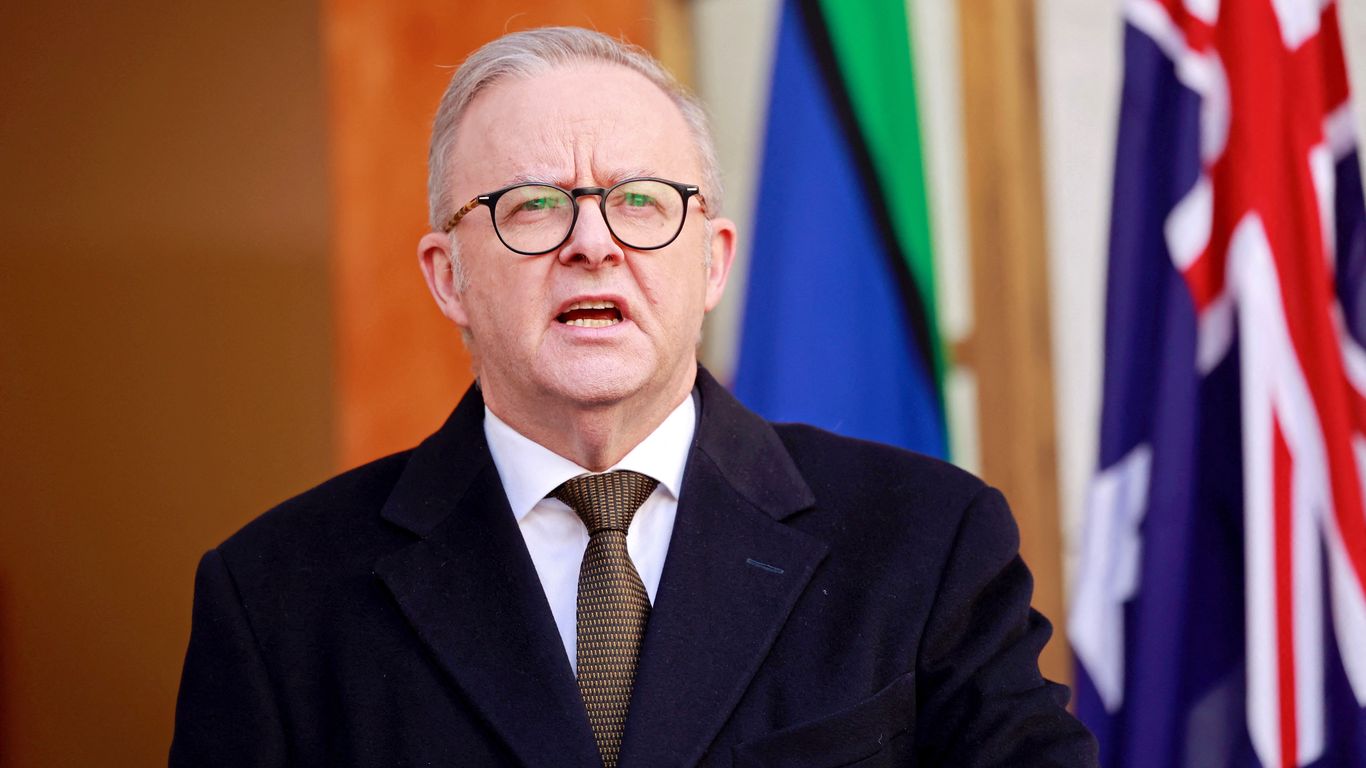
Australia's Prime Minister Anthony Albanese announced the nation will formally recognize a Palestinian state in September, aligning with similar pledges from Canada and France ahead of the UN General Assembly. This diplomatic move, presented by Albanese as crucial for regional stability and ending the Gaza conflict, occurs amidst differing international stances, notably from the U.S., whose Secretary of State Marco Rubio has previously criticized such recognition before hostage releases, and strong opposition from Israeli Prime Minister Benjamin Netanyahu, who views it as rewarding Hamas. The decision highlights evolving geopolitical dynamics and a growing international push for a two-state solution in the Middle East.
Australia's announced intention to formally recognize a Palestinian state in September signals a significant, coordinated diplomatic shift among key Western nations, including Canada and France. This move, framed by Prime Minister Anthony Albanese as essential for a two-state solution and ending the conflict in Gaza, creates a clear divergence from the positions of Israel and the United States. Israeli Prime Minister Benjamin Netanyahu has explicitly condemned such recognition as a reward for terrorism, while U.S. Secretary of State Marco Rubio has previously labeled similar unilateral moves as "clumsy" and "irrelevant" prior to a hostage release. The timing, aligned with the UN General Assembly, suggests a calculated effort to increase international pressure. While the associated market impact score is low at 0.1, indicating minimal immediate financial market disruption, the development heightens geopolitical risk by creating friction between historically aligned allies and potentially altering the diplomatic landscape of the Middle East conflict.
AI-powered research, real-time alerts, and portfolio analytics for institutional investors.
Request DemoOverall Sentiment
neutral
Sentiment Score
0.00
