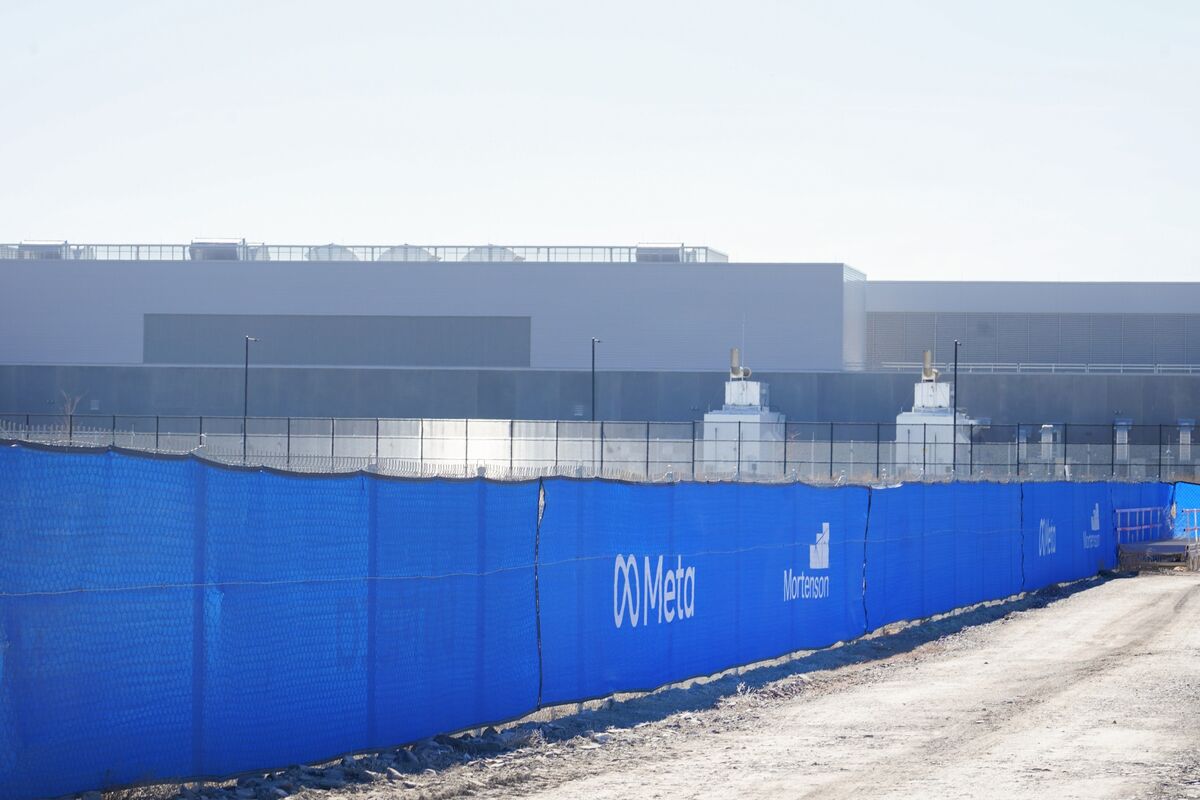
The largest U.S. tech firms now plan to spend up to $725 billion this year on capex, largely for AI data center equipment. Alphabet and Meta both raised full-year capex guidance, and Microsoft gave its first 2025 estimate at $190 billion, matching Alphabet, while Amazon left guidance unchanged at $200 billion. The report underscores accelerating AI infrastructure investment, with Amazon noting a March-quarter spending surge that reduced free cash flow.
The market is entering a second-order capex cycle: the near-term winners are not the hyperscalers themselves but the upstream bottlenecks that turn capital into deployed compute. Power generation, grid equipment, switchgear, liquid cooling, and advanced packaging all see duration in orders well beyond a single earnings season, while the hyperscalers face an increasingly visible trade-off between AI intensity and free cash flow discipline. That tension matters because once capex becomes the dominant use of cash, the market starts valuing growth not on revenue acceleration but on payback periods, and any slip in monetization can trigger a sharper multiple reset. Relative positioning still looks asymmetric. The two names with the cleanest narrative support are the ones signaling willingness to keep leaning in, while the one holding spending steady may be the most exposed to investor scrutiny if AI capex fails to translate into measurable enterprise demand over the next 2-3 quarters. The key second-order effect is competitive pressure on smaller cloud and software vendors: as the largest platforms subsidize inference capacity and bundle AI features into existing distribution, mid-tier players risk margin compression before they can prove pricing power. The contrarian miss is that this is not automatically bullish for the whole semiconductor complex. If spending concentrates further into infrastructure and networking rather than broad-based compute, the winners narrow to a smaller set of supplier names, while the rest of the AI basket can lag even in a strong capex tape. Also, if the macro backdrop softens, management teams may keep guidance elevated for optics but slow actual deployment into 2H, which would hit equipment vendors first and the equity narratives second.
AI-powered research, real-time alerts, and portfolio analytics for institutional investors.
Overall Sentiment
mildly positive
Sentiment Score
0.25
Ticker Sentiment
