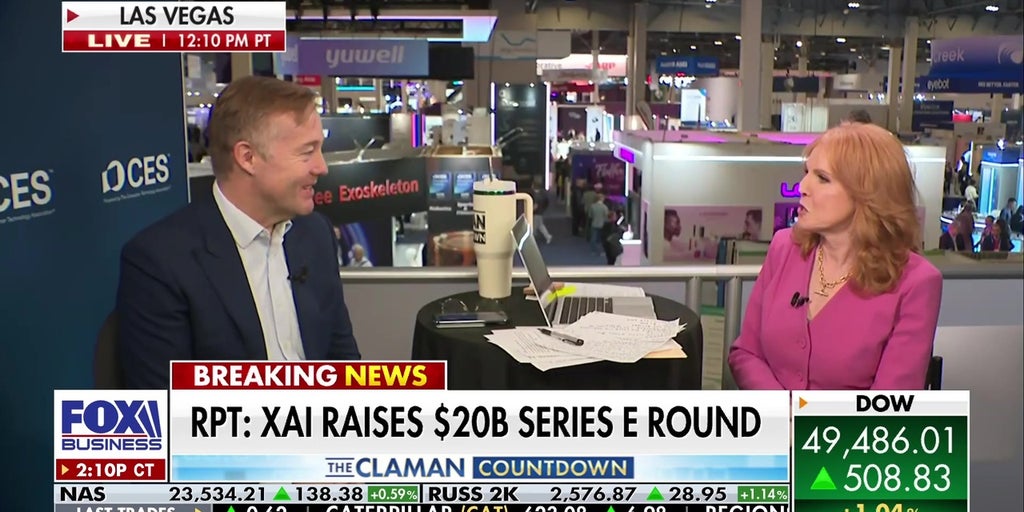
The text is a television programming schedule listing show names and times for Fox Business Channel and Fox News Channel; it contains no corporate results, economic data, policy announcements, or other market-relevant information. There are no figures, quotes, or developments that would inform investment decisions or move markets.
Market structure: predictable, appointment-driven linear news (Fox Business/News blocks) benefits from politically loyal, high-engagement audiences that sustain CPMs and retransmission fees; expect FOXA to capture stable ad dollars while national ad spend to streaming faces fragmentation. Losers: pure-play streaming platforms (NFLX, DIS) where ad yields and ARPU growth are under pressure; forecast near-term ad CPM divergence of ~+0–5% for loyal news channels vs -5–15% YoY for fragmented streaming ad units over next 4–12 months. Competitive dynamics: stable scheduling increases pricing power for networks with live news/sports — bargaining leverage on carriage fees remains a 1–3 year revenue defense. Supply/demand: supply of high-quality live inventory is contracting relative to demand for targeted reach, supporting CPM floors in linear despite secular declines.
Risk assessment: tail risks include rapid regulatory action on platform liability or retransmission fee disputes that could swing revenue ±10–20% in a quarter, and a political-event-driven ratings surge or collapse (election, major trial) creating >20% volatility. Immediate (days): ratings snapshots and ad sales cadence; short-term (weeks–months): quarterly ad bookings and carriage negotiations; long-term (years): secular cord-cutting 5–8% annual decline offset by retransmission and political cycles. Hidden dependencies: distributor balance sheets (DISH, CHTR) and ad tech performance (GOOGL, META) can amplify revenue moves. Catalysts: upcoming quarterly EPS, political calendar, and ad-buying seasonality.
Trade implications: direct play — establish 2–3% long FOXA ahead of next quarter (30–45 days) targeting 12–18% upside if CPMs hold, stop-loss 8%. Pair trade — long FOXA 2% / short NFLX 1.5% to express linear-ad resilience vs streaming monetization risk over 6–12 months; close if relative P/L hits ±10%. Options — buy a 3–6 month FOXA call spread (ATM to +10–15% width) to limit premium spend; hedge with a 6-month NFLX put spread if volatility <40%. Rotate 3–6% portfolio weight into media/advertising (CMCSA, GOOGL) and reduce pure-play streaming exposure by 15–25%.
Contrarian angles: consensus underestimates value of live news during volatile political cycles — linear networks can reprice ads quickly, creating episodic upside that is not captured in current multiples. Reaction may be underdone: analysts often assume steady secular decline; a 6–12 month ratings bump can compress multiples higher by 8–15%. Historical parallels: linear resilience around 2016/2020 elections suggests episodic 10–30% revenue swings; unintended consequence — concentrated ad dollars could invite regulatory scrutiny or accelerate ad-tech price wars, which would reverse gains rapidly.
AI-powered research, real-time alerts, and portfolio analytics for institutional investors.
Request DemoOverall Sentiment
neutral
Sentiment Score
0.00
