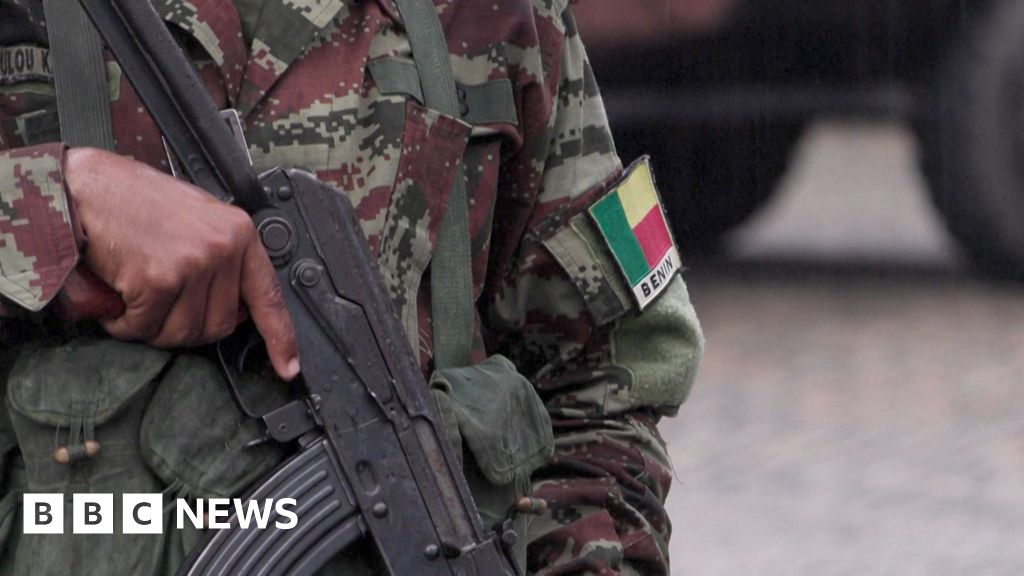
An attempted coup in Benin that began with attacks on President Patrice Talon’s residence and national media collapsed after loyalist forces, backed by Nigerian air strikes and an immediate Ecowas deployment of ground troops from Ghana, Nigeria, Ivory Coast and Sierra Leone, reasserted control; at least one civilian was killed, some officers rescued and the alleged coup leader, Lt. Col. Pascal Tigri, remains at large. The swift, forceful regional intervention—reflecting lessons from the failed 2023 Niger response—signals Ecowas’s increased willingness to use military means to defend constitutional order, which could deter further contagion of successful coups but also raises short-term security and political risks. Unlike recent Sahel putsch states, Benin’s stronger economic performance and public resistance to a violent takeover, even as tensions persist over opposition exclusion from upcoming elections and a favored successor in Finance Minister Romuald Wadagni, make continuity more likely and limit downside for investors relative to its neighbors.
An attempted coup in Benin involved early-morning attacks on President Patrice Talon’s residence and the national TV/radio station but collapsed after loyalist forces reasserted control; Nigerian air strikes and an immediate Ecowas deployment of ground troops from Ghana, Nigeria, Ivory Coast and Sierra Leone were authorised, at least one civilian (the wife of Talon’s key military adviser) was killed, two abducted senior officers were rescued and the alleged leader Lt Col Pascal Tigri remains at large.
Ecowas’s rapid, forceful response reflects lessons from its slower reaction to Niger’s 2023 putsch and signals a greater regional willingness to use military means to defend constitutional order, which could raise the expected deterrent effect against future successful coups but also increases short-term risks of escalation and uncertainty across West African markets already shaken by multiple coups since 2020 and withdrawals of Mali, Burkina Faso and Niger from the bloc.
Benin’s domestic context differs from recent Sahel putsch states: public opinion in Cotonou showed no appetite for violent change despite genuine grievances over opposition exclusion from upcoming elections, Talon has promised to step down next April and has positioned Finance Minister Romuald Wadagni as a favored successor, and Benin’s recent track record of stronger economic growth and improving services makes political continuity more likely and limits downside relative to its neighbors; however investors should monitor the unresolved security threat (plotters at large), electoral-rule disputes and any broader contagion of instability.
AI-powered research, real-time alerts, and portfolio analytics for institutional investors.
Request DemoOverall Sentiment
mixed
Sentiment Score
0.00
Ticker Sentiment
