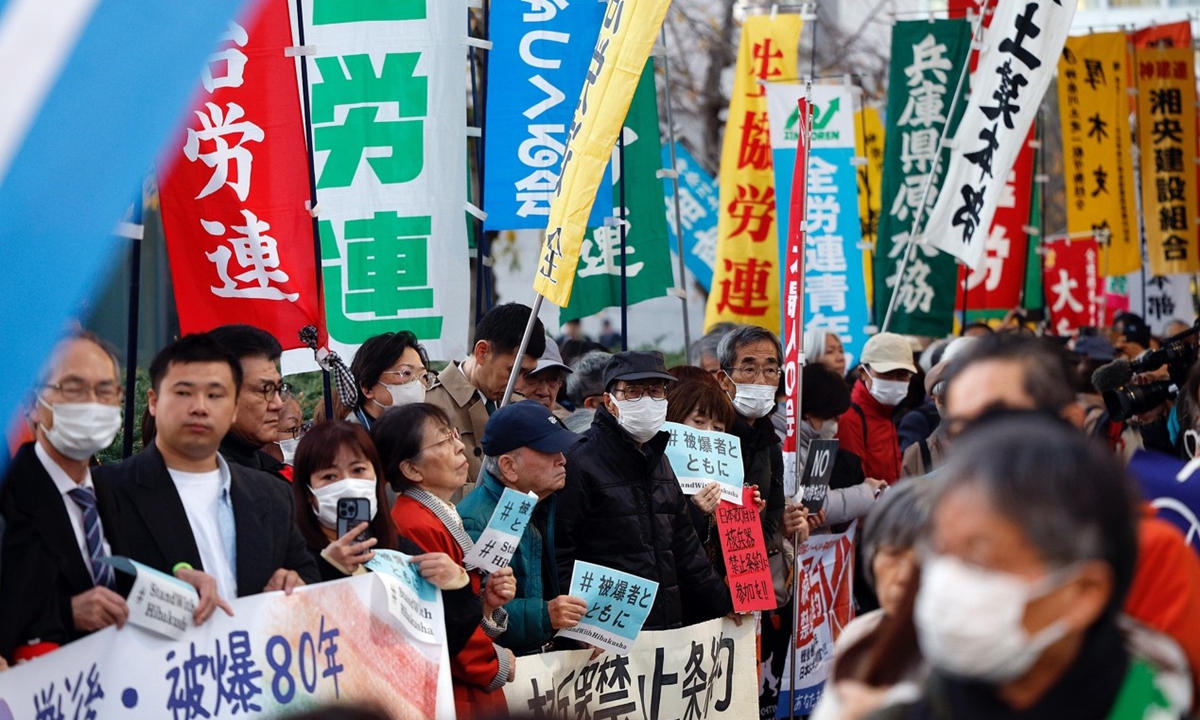
A senior security adviser to Japanese Prime Minister Sanae Takaichi was reported to have privately argued that Japan should possess nuclear weapons, prompting strong criticism domestically and sharp rebukes from China and Russia that warned of regional destabilization and breaches of international law and the NPT framework. The Takaichi administration has signaled a potential review of Japan's Three Non-Nuclear Principles, while Japanese officials and opposition parties have publicly disavowed the suggestion and called for accountability; the episode raises the prospect of heightened geopolitical risk in Northeast Asia and potential diplomatic and defense-policy ramifications that investors should monitor for FX, regional risk premia and defence-sector exposure.
Market structure: A credible shift in Japanese doctrine would be a structural positive for defense primes and aerospace contractors: expect incremental procurement upside for domestic names (Mitsubishi Heavy 7011.T, Kawasaki 7012.T, NEC 6701.T) and continued wins for US suppliers (LMT, NOC, RTX). Equities in Japan (EWJ) could face political-risk discounting while defense, specialty metals (titanium, specialty steel) and classified-systems suppliers see pricing power; JGBs may reprice if fiscal deficit expectations rise by >10–20% over 1–3 years to fund capex.
Risk assessment: Tail risks include a misstep that triggers sanctions or regional escalation—low probability but high impact (USD/JPY gap moves >3% intraday, Nikkei -8–15% shock). Near term (days–weeks) expect FX and volatility moves; medium (3–12 months) depends on cabinet decisions and Diet votes; long-term (1–3 years) depends on budget shifts (scenario: defense budgets +10–30%). Hidden dependencies: US nuclear posture, alliance signaling, and export-control regimes that could accelerate procurement cycles.
Trade implications: Tactical plays are FX and defense exposure plus political-risk hedges: buy protection on USD/JPY (1M puts ~2% OTM) and accumulate 3–5% active exposure to LMT/NOC with 6–12 month timeframes; use EWJ puts or short EWJ (2–3% net) to express Japan-policy risk. Options: buy 3–6 month call spreads on LMT/NOC to cap premium; implement small GLD (1–2%) or JPY strength option as crisis insurance.
Contrarian angle: Consensus assumes only minor rhetoric risk; underappreciated is accelerated procurement from allies and supply-chain reshoring benefiting semiconductors, radars, missiles and specialty metals—names in those supply chains may rerate before headline budget votes. The market may overprice Japan-equity political risk while underpricing incremental contract flow to global primes; look for M&A targets among tier-2 suppliers trading <6x EV/EBITDA that could become acquisition targets if budgets rise.
AI-powered research, real-time alerts, and portfolio analytics for institutional investors.
Request DemoOverall Sentiment
moderately negative
Sentiment Score
-0.40
