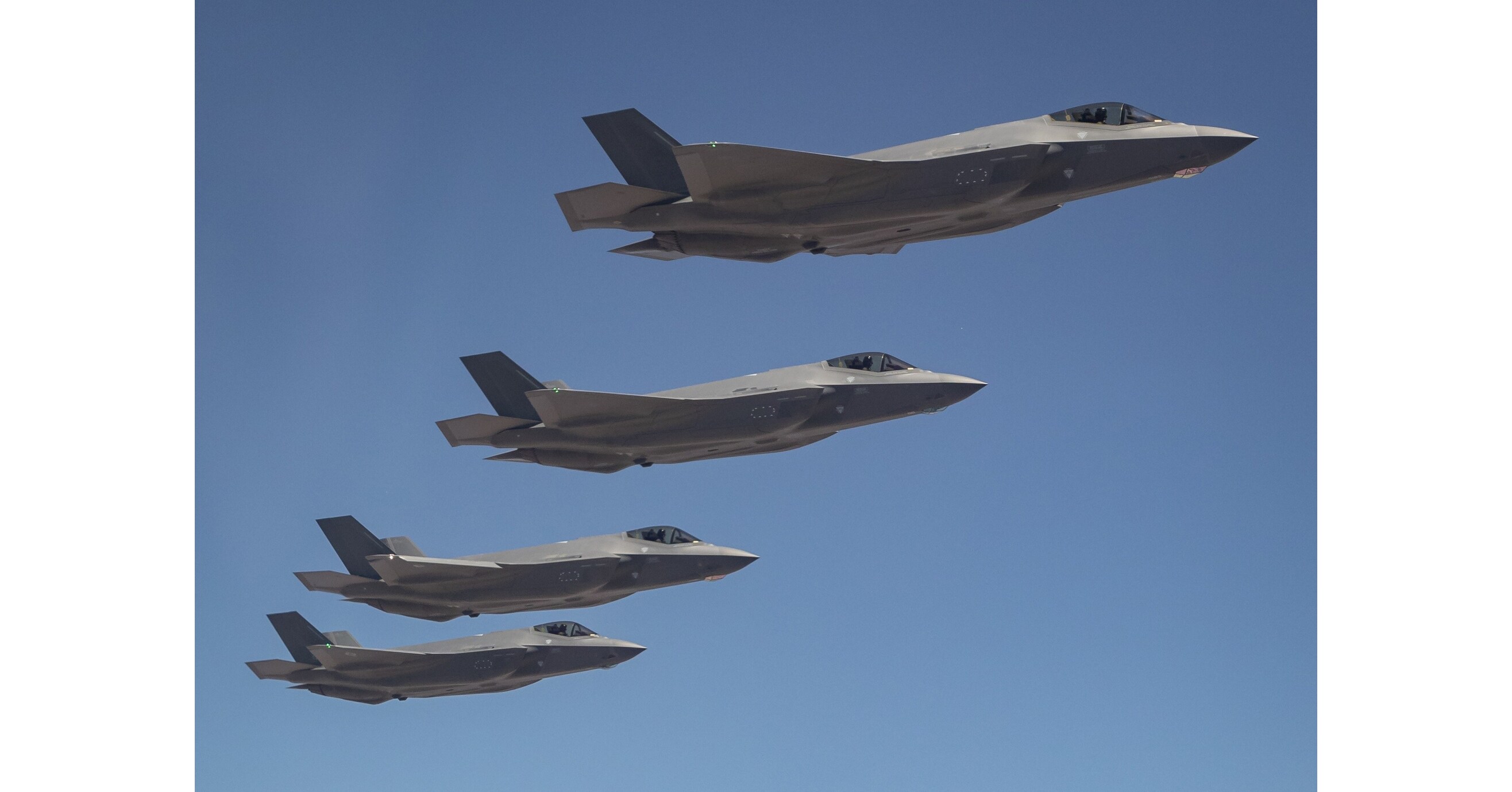
Lockheed Martin delivered a record 191 F-35 aircraft in 2025 (up from the prior record of 142), sustained a global fleet nearing 1,300 jets and reached one million flight hours while completing the advanced TR-3 software release. The program finalized Lots 18-19 agreements with the JPO for up to 296 aircraft valued at $24 billion and secured an Air Vehicle Sustainment Contract, alongside fleet growth from customers (Italy +25, Denmark +16) and documented combat employment, signaling stronger multi-year production and sustainment revenue visibility for the company.
Market structure: Lockheed Martin (LMT) is the clear near-term winner — 191 F-35 deliveries in 2025 and a $24bn Lots 18–19 agreement for up to 296 jets materially increases booked backlog and sustainment runway (revenue visibility for 2–4 years). Suppliers with high F-35 exposure (RTX for F135 engines, NOC for center fuselages, select Tier-1 avionics suppliers) should see aftermarket and spare-parts upside; competitors without comparable stealth platforms face pricing pressure and longer-term market-share erosion. Cross-asset: stronger defense cashflows are modestly hawkish for Treasury issuance (watch 5–10y yields +10–30bp if FY26 capex ramps) and support USD via safer asset demand; titanium/aluminum orders may lift specific commodity pockets by mid-2026.
Risk assessment: Tail risks include a major mishap or software vulnerability that grounds the fleet (low probability, high impact) or allied political reversals delaying purchases (medium probability). Near-term (days–weeks) risks are execution/earnings misses; short-term (3–12 months) are supplier bottlenecks raising unit costs; long-term (2–5 years) hinge on sustainment margin compression and counter-platform developments. Hidden dependencies: Pentagon funding cadence and foreign military sales approvals drive timing; a 90+ day delay in milestone payments would meaningfully hit LMT cash conversion.
Trade implications: Favor LMT and high-exposure suppliers (RTX, NOC) using 6–18 month horizons; prefer buying LMT equities or call spreads rather than outright leverage because much of the upside is now priced in. Implement relative-value: long LMT vs short GD (General Dynamics) to express F-35-specific alpha while hedging sector risk; use LEAPS or calendar call spreads to monetize a steadier delivery ramp and sustainment tail. Key catalysts to time positions: FY2026 US defense budget release (expected within 1–3 months), LMT quarterly results, and FMS approvals from major customers.
Contrarian angles: Consensus overlooks sustainment margin risk — sustainment contracts can be lucrative but also competitive and inflation-sensitive; if sustainment opex growth outpaces pricing, EPS upside will be muted. The market may underappreciate capacity strain: sustaining 190+ annual deliveries requires industrial scaling that can push costs higher in 12–24 months, creating a window where suppliers miss estimates. Historical parallel: F-35 ramp phases in prior blocks showed delivery-driven backlog gains but episodic supplier margin squeezes; watch for similar patterns and price-in by selling short-dated calls if premiums rich.
AI-powered research, real-time alerts, and portfolio analytics for institutional investors.
Request DemoOverall Sentiment
moderately positive
Sentiment Score
0.45
Ticker Sentiment
