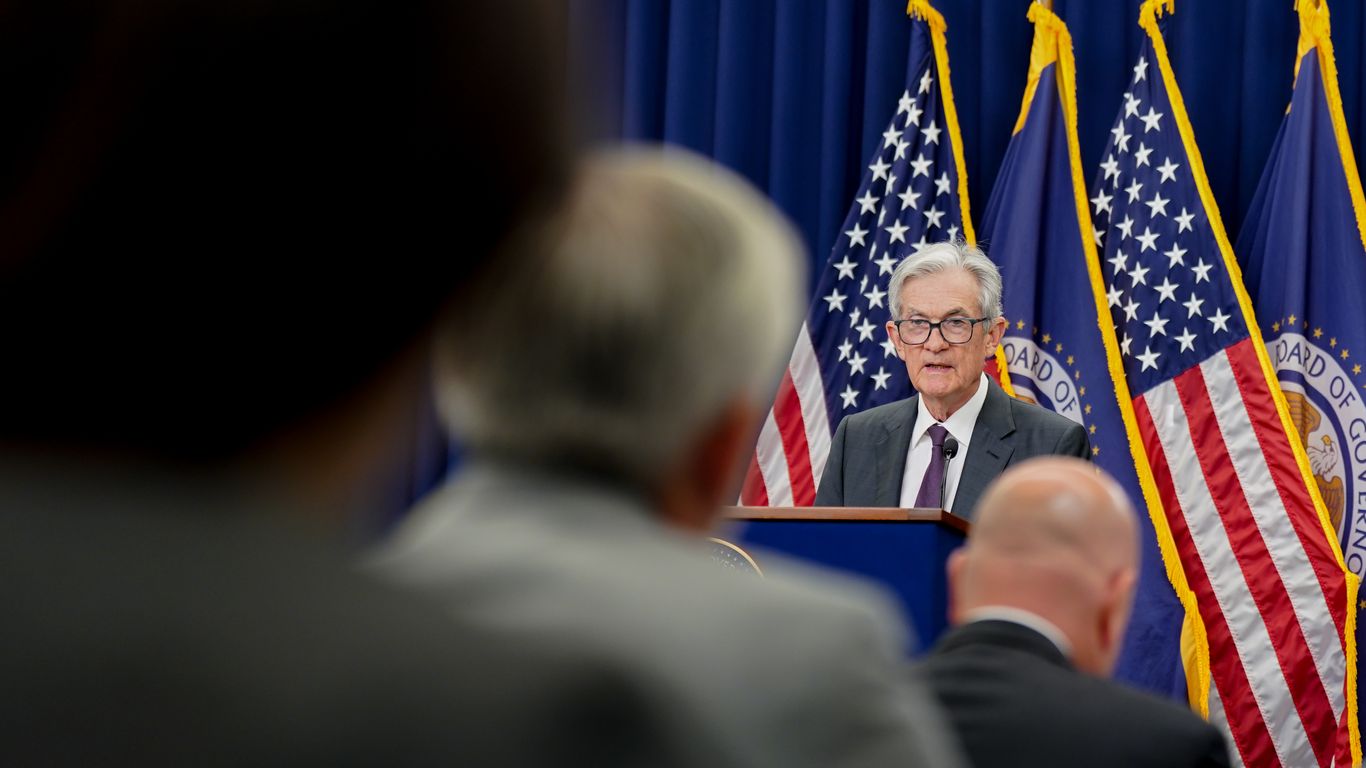
Federal Reserve Chair Jerome Powell and the majority of the Fed assert the U.S. economy is stable and not overly constrained by current interest rates, with the labor market in balance, making rate cuts unlikely without clear evidence of economic damage. This view is supported by recent data showing solid personal income and outlays growth, a PCE Price Index ticking up to 2.6%, and low unemployment claims. However, two governors dissented for the first time since 1993, arguing the labor market is weaker than it appears and advocating for a neutral policy stance implying lower rates.
A significant schism has emerged within the Federal Reserve, creating uncertainty over the future path of monetary policy. The majority, led by Chair Jerome Powell, maintains a hawkish stance, arguing the economy is resilient and not being unduly restrained by interest rates currently just below 4.5%. This view is supported by recent data showing a 0.3% rise in personal income and outlays, a persistent PCE Price Index ticking up to 2.6%, and low initial jobless claims of 218,000. Powell explicitly rejects the notion of underlying labor market weakness and has signaled a high bar for rate cuts, requiring clear evidence of economic damage, while also noting potential future inflation from tariffs. In stark contrast, a dissenting faction, marked by the first split vote since 1993, argues that policy is excessively tight. Governor Christopher Waller, a notable dissenter, points to 'private-sector payroll growth is near stall speed' as a key warning sign, advocating for a neutral policy rate closer to 3% to avoid triggering a downturn. This fundamental disagreement on the interpretation of economic data, particularly the labor market's health, makes the Fed's next moves less predictable.
AI-powered research, real-time alerts, and portfolio analytics for institutional investors.
Overall Sentiment
mixed
Sentiment Score
0.00
