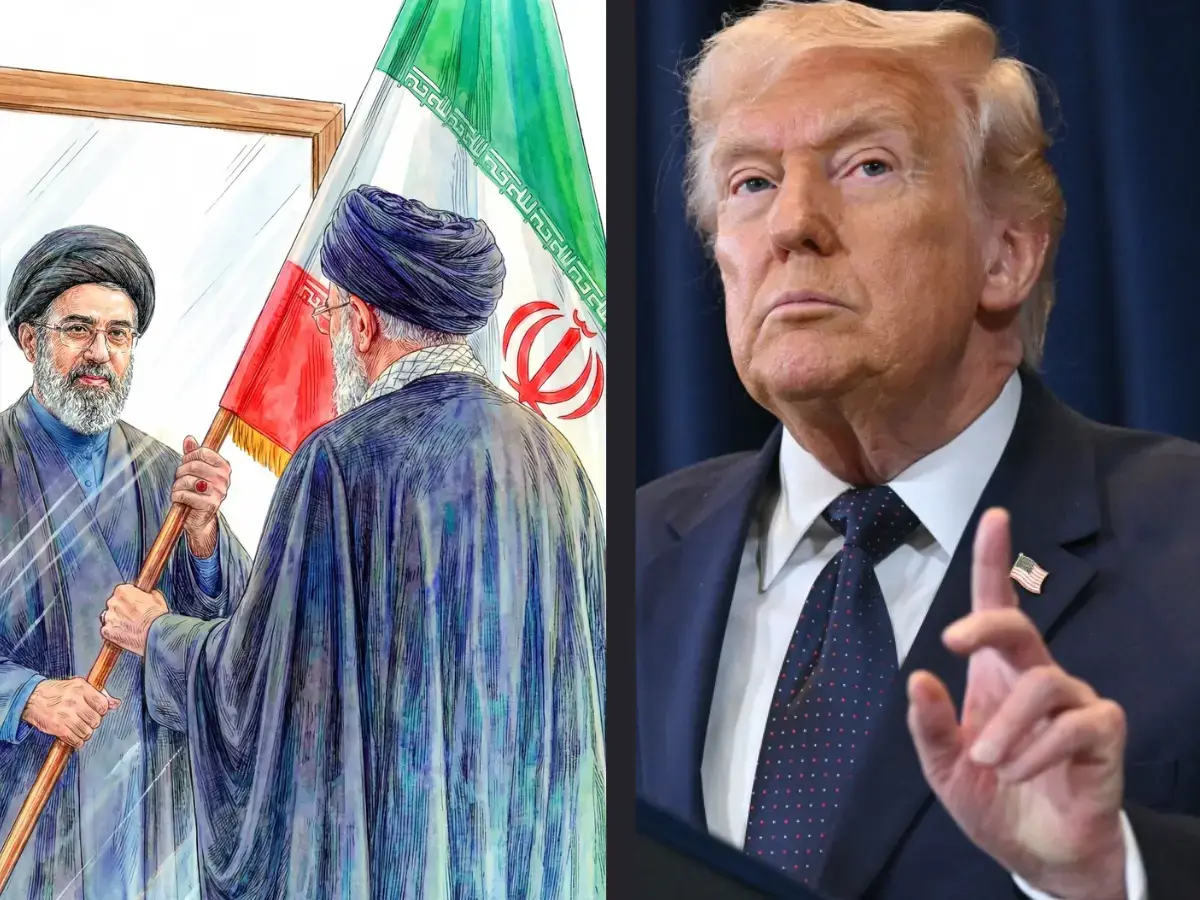
Key event: US President Trump's 48-hour ultimatum (April 5–6, 2026) threatening strikes on Iranian power plants and demanding the Strait of Hormuz be opened; Iran's IRGC Navy says it is preparing a 'new Persian Gulf order' and parliament speaker warned the region will 'burn.' Market implication: heightened risk of disruption to Strait of Hormuz and Iranian energy infrastructure, likely prompting risk-off flows, safe-haven demand and upside pressure on oil prices and shipping/war-risk premiums. Monitor oil benchmarks, regional sovereign credit spreads, shipping insurance rates and FX for immediate volatility and potential spillovers to global markets.
Market pricing is likely to overshoot on headline escalation and underprice the logistics and insurance knock‑on effects that raise real landed fuel costs. A short interruption or a credible threat to chokepoints typically lifts tanker charter rates and the VLCC/Tanker owners within 48–72 hours, while the realized impact on refinery margins unfolds over 2–8 weeks as cargoes are rerouted and regional differentials widen. Expect Brent sensitivity of roughly $10–30/bbl if physical flows are meaningfully disrupted for more than 7–14 days; a multi‑week closure pushes the dynamic from a volatility event into a structural re‑balancing that favours resource owners and strategic storage plays.
Second‑order winners include owners of tonnage and insurers who can reprice risk immediately — these beneficiaries see cash flows re‑rate before majors report higher oil revenue. Conversely, refiners and high‑fuel‑intensity sectors (airlines, shipping integrators) can suffer margin compression within a single quarterly cycle; medium‑term credit stress for smaller Gulf counterparties is a nontrivial tail risk if sanctions or payment frictions increase. The highest probability reversals are diplomatic de‑escalation, SPR releases and rapid insurance market normalization — all of which can shave 60–80% of the premium on energy/transport equities within 2–6 weeks.
Actionable positioning should balance short‑dated volatility trades around likely diplomatic windows and longer‑dated directional exposure to producers and defense contractors if escalation persists. Size trades to scenario probabilities: use options to express asymmetric views, pair trades to hedge commodity or systemic beta, and keep explicit stop/take‑profit bands tied to Brent moves and charter rate shifts.
AI-powered research, real-time alerts, and portfolio analytics for institutional investors.
Request DemoOverall Sentiment
strongly negative
Sentiment Score
-0.62
