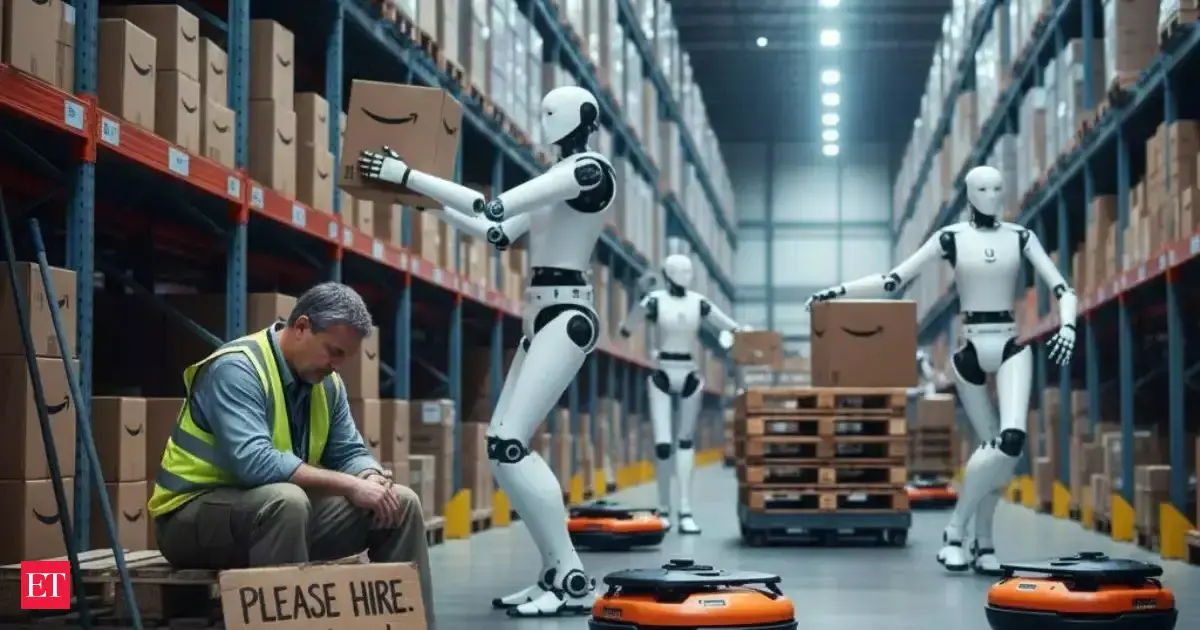
Amazon plans to replace over 500,000 jobs with robots within a decade, aiming to avoid 160,000 US hires by 2027 and save approximately 30 cents per item, reflecting a broader industry shift towards automation for efficiency. This trend is echoed by UPS's $9 billion automation investment targeting a 12% operating margin boost by 2026 and Walmart's AI integration, signaling significant cost reductions and productivity gains across logistics and retail. While automation is projected to displace millions of jobs, it is also expected to create new roles and contribute substantially to global GDP, necessitating significant reskilling efforts and highlighting a transformative period for labor markets and corporate profitability.
Amazon's internal strategy documents reveal plans to replace over 500,000 jobs with robots within a decade, aiming to avoid hiring 160,000 US workers by 2027, which could save approximately 30 cents per item. This reflects a broader industry shift, with UPS's $9 billion "Network of the Future" targeting a 12% operating margin boost by 2026 through automation, and Walmart integrating AI-driven sensors to streamline tasks. These initiatives underscore a significant drive towards operational efficiency and cost reduction across logistics and retail sectors.
While automation is projected to displace 92 million jobs globally by 2030, the World Economic Forum anticipates a net growth of 78 million new jobs, emphasizing job transformation over outright elimination. Goldman Sachs estimates 50% of jobs could be automated by 2045, yet also notes technology's historical role in creating new occupations, with Oxford Economics suggesting a 30% increase in robot installations could add $5 trillion to global GDP. This indicates a significant economic restructuring requiring extensive reskilling for 59% of the global workforce.
Despite the aggressive push, advanced automation faces practical challenges, as evidenced by incidents involving Tesla's robotaxis, Waymo's self-driving cars, and Amazon's Prime Air drones. Companies like Amazon acknowledge that human intervention remains critical, with robots excelling in precision while humans retain advantages in dexterity, creativity, and complex problem-solving. This transition is not smooth, with Gartner highlighting a widening skill gap as companies struggle to find workers for increasingly complex roles.
AI-powered research, real-time alerts, and portfolio analytics for institutional investors.
Request DemoOverall Sentiment
mixed
Sentiment Score
0.00
Ticker Sentiment
