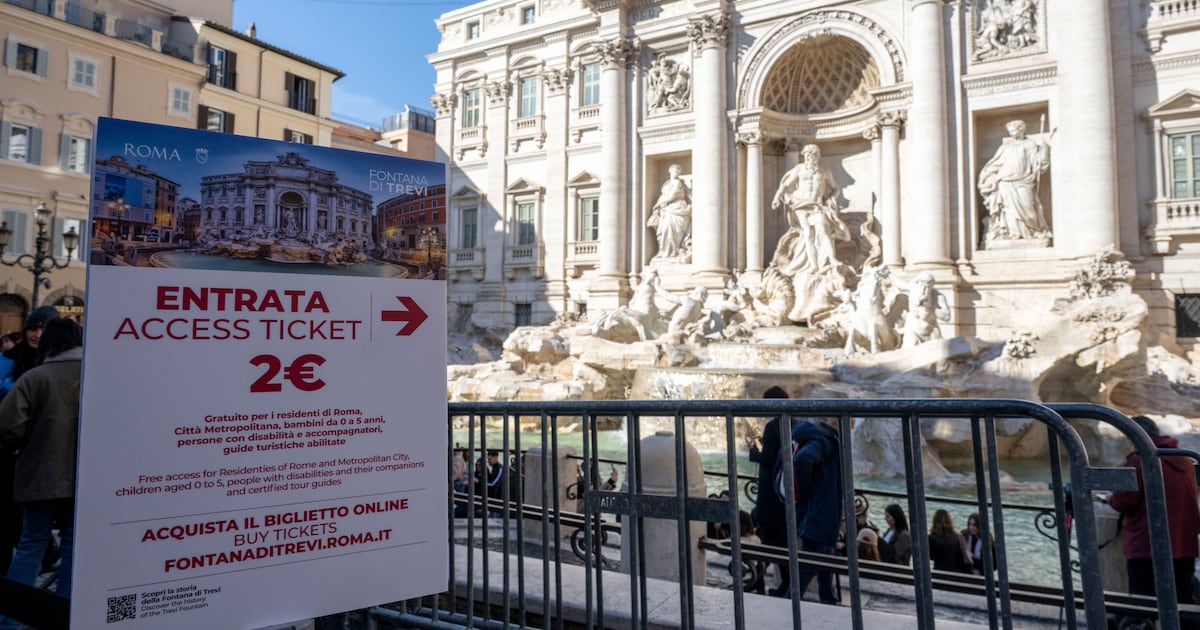
Rome has introduced a €2 fee to walk down the steps to the Trevi Fountain basin, effective from Monday and enforced on weekdays 11:30 a.m.–10 p.m. and weekends 9 a.m.–10 p.m., exempting Rome residents, people with disabilities and companions, and children under six. The measure, aimed at reducing overtourism at a site that drew over 10 million visitors in 2025, is likely to generate modest incremental revenues while primarily representing a crowd-management and regulatory action with minimal market or investment implications.
Market structure: A €2 access fee is a price signal that small, targeted demand-management levies are politically and operationally feasible in top tourist nodes; winners are digital/ticketing platforms, premium tour operators and higher-end hotels that can monetize improved visitor experience, losers are low-margin street vendors and businesses dependent on impulse footfall. Supply constraints (physical space, policing) remain fixed; a small price reduces congestion but is unlikely to materially lower total annual tourist volumes — this is quality-over-quantity pricing that increases willingness-to-pay for curated experiences.
Risk assessment: Tail risks include rapid tourist backlash, legal challenges or contagion of punitive tourism taxes that depress visits (low prob, high impact). Immediate (days) FX/market moves will be immaterial; short-term (weeks/months) winners are OTA/ticketing flows ahead of summer bookings, long-term (quarters) is re-pricing of urban tourism economics across Europe. Hidden dependencies: municipal revenue use (maintenance vs general budget) and enforcement intensity determine economic lift; catalyst set includes similar policies in Barcelona/Venice within 3–12 months.
Trade implications: Favor platforms and premium lodging that capture per-visitor spend and booking fees; expect ticketing revenues to grow ~5–10% in nodes adopting fees. Cross-asset: modest positive for EUR if Italy’s tourism receipts per visitor rise; negligible sovereign bond effect unless policy scales nationally.
Contrarian angle: Consensus will underweight the structural precedent: the market may underestimate a multi-city roll-out that shifts spending from informal vendors to listed platforms over 12–36 months. Reaction is underdone — temporary visitor friction is outweighed by durable yield enhancement for curated experiences; unintended consequences include growth of regulation-compliant private guided-tour supply that favors scale players.
AI-powered research, real-time alerts, and portfolio analytics for institutional investors.
Request DemoOverall Sentiment
neutral
Sentiment Score
0.00
