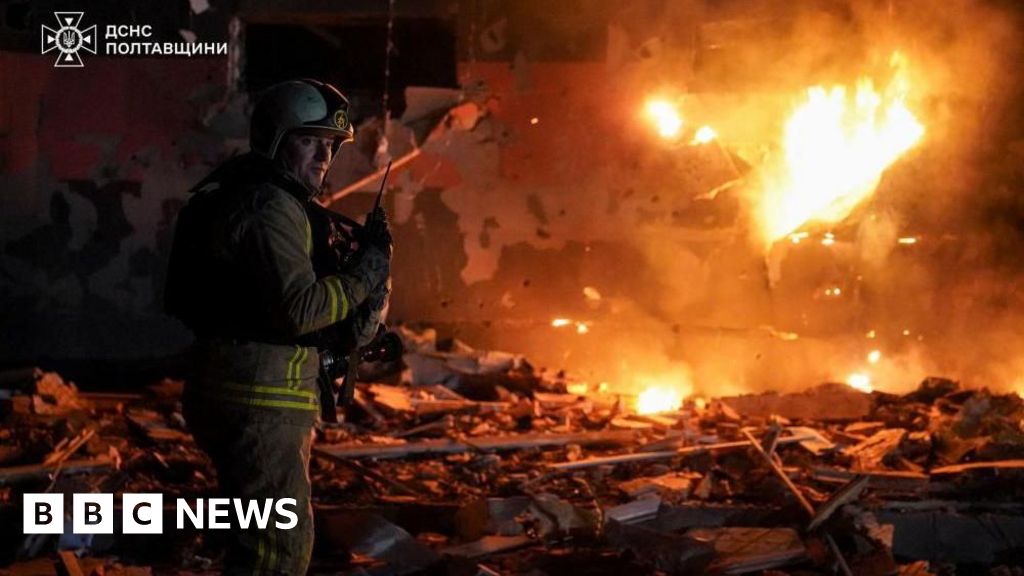
At least five people were killed in a massive overnight Russian strike that used 7 ballistic missiles, 23 cruise missiles, 4 air‑launched guided missiles and 392 drones (Ukraine reported intercepting 25 missiles and 365 drones), with damage across 11 regions. The attack damaged energy infrastructure and disconnected Moldova's Isaccea–Vulcanesti power link, raising regional energy‑security risks and potential upside pressure on power/energy prices; combined with strained Ukrainian air‑defence capacity and US attention focused on Iran, expect elevated risk premia and risk‑off positioning.
Competing demands for high-end air-defence and intercept munitions across multiple theaters materially changes procurement dynamics: manufacturers that can rapidly scale production (existing missile motor lines, subassembly capacity, vertically integrated suppliers) gain multi-quarter visibility into follow-on orders and aftermarket spares. Expect procurement commitments to shift from single large platform buys to shorter, higher-margin replenishment contracts and accelerated buys for interceptors and air-defence radars over the next 3–12 months, pressuring lead times for semiconductors, RF components and propulsion sub-suppliers.
Regional energy-infrastructure attacks raise the marginal value of resiliency assets — hardened substations, synchronous interconnectors, fast-ramping storage and microgrids — turning previously long-dated capex plans into near-term spend opportunities. Many of these projects require 12–36 months to execute but carry predictable, contracted cashflows once financed by EU/US reconstruction and security assistance packages, creating an asymmetric return profile for specialist industrials and EPC contractors with onshore European footprints.
Financial second-order effects: insurance/reinsurance loss expectations and sovereign risk premia in adjacent emerging markets will rise, compressing risk appetite near-term and widening credit spreads for small, cross-border power importers. Near-term market moves will be driven by headlines (days–weeks), procurement and budget reallocations (months), and capex cycle reallocation into resilience (1–3 years); any credible diplomatic de-escalation or a rapid surge in Western munitions deliveries would materially reverse defence-equipment upside within weeks to months.
AI-powered research, real-time alerts, and portfolio analytics for institutional investors.
Request DemoOverall Sentiment
strongly negative
Sentiment Score
-0.75
