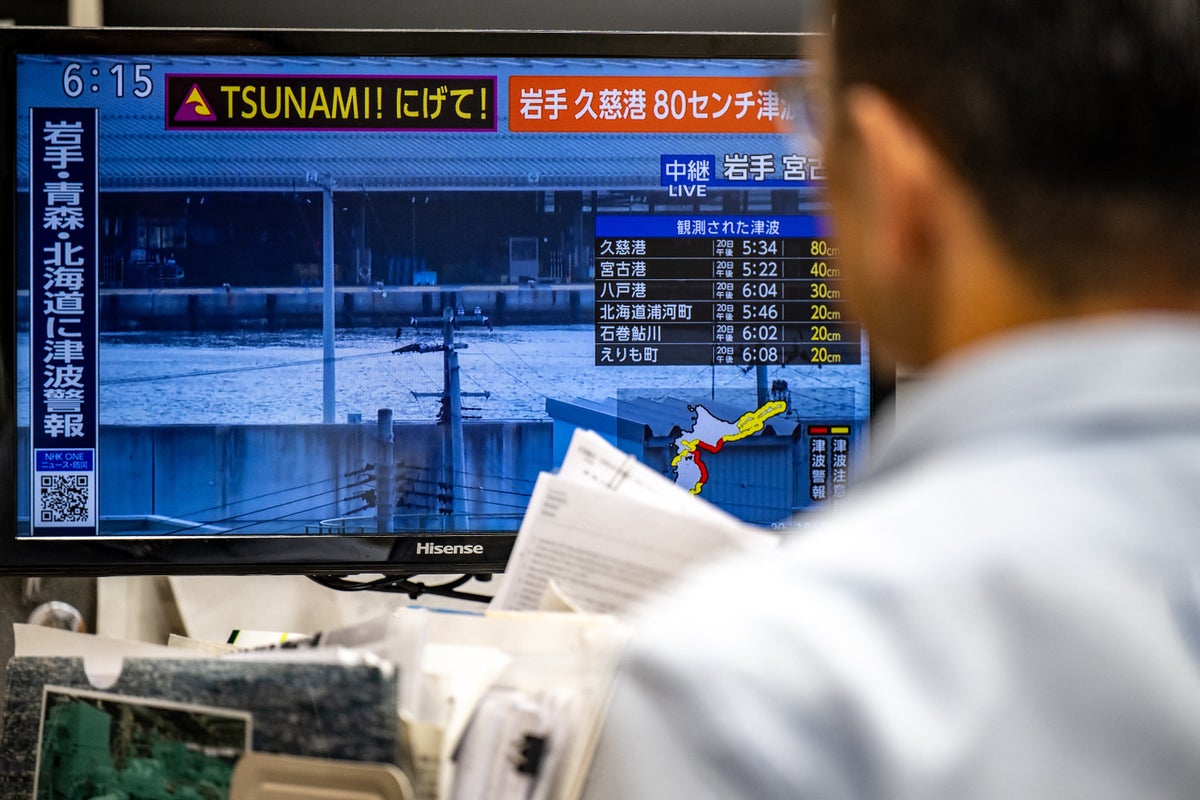
A magnitude 7.7 earthquake struck off Japan’s Honshu coast, triggering a tsunami warning and a government-issued megaquake advisory after the Japan Meteorological Agency said the probability of a magnitude 8.0+ quake in the coming days is about 1%. No injuries, deaths, or significant damage were reported, but aftershocks above magnitude 5.0 continue and coastal evacuation readiness remains elevated. The event is a market-wide risk headline for Japan given the non-trivial chance of larger seismic activity and potential tsunami disruption.
The marketable event here is not the quake itself but the temporary repricing of tail risk around Japan’s east coast logistics corridor. The biggest near-term beneficiaries are not “disaster” names broadly, but firms with hard optionality on emergency response, backup power, mobile communications, satellite imagery, and engineering inspection capacity; these businesses can see an abrupt utilization spike without needing physical asset damage. More interestingly, the first-order macro hit is likely small, but the second-order effect is a brief de-risking of Japan cyclicals and coastal infrastructure-dependent supply chains as risk managers cut exposure before clarity on follow-on seismic activity emerges. The key catalyst window is days, not months: the probability of a larger follow-on event decays quickly if aftershock intensity and offshore pressure signals fade. If a second large event does not materialize within 72–120 hours, the trade should mean-revert hard because the market will have paid up for a low-probability scenario. The real tail risk is not domestic equity damage from modest physical destruction; it is temporary port, rail, power, and telecom disruption that could ripple into auto, electronics, and industrial exports, even if the underlying facilities remain intact. Consensus will likely overweight the visible tsunami headline and underweight operational continuity risk. In practice, Japan’s stronger building standards reduce catastrophic equity damage but do not eliminate earnings volatility from precautionary shutdowns, inventory delays, and inspection costs. That makes this a better volatility and relative-value event than a directional macro short: the asymmetry sits in the next few sessions, while the broader equity impact should be limited unless the seismic sequence escalates.
AI-powered research, real-time alerts, and portfolio analytics for institutional investors.
Request DemoOverall Sentiment
neutral
Sentiment Score
-0.10
