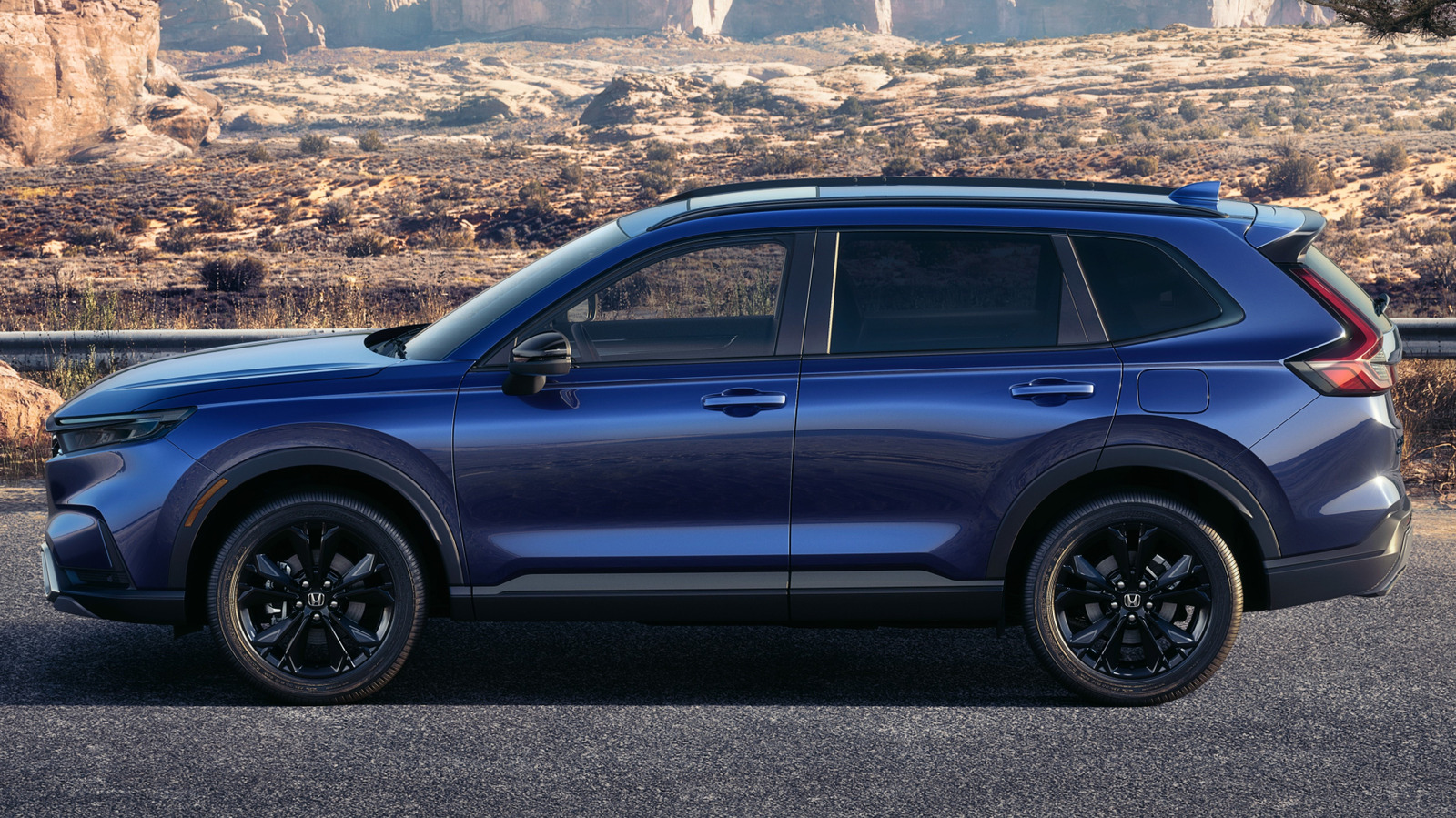
Consumer Reports' latest compact-SUV evaluations place the 2026 Subaru Forester Hybrid at the top of the class and rate the Subaru Forester, 2025 Toyota RAV4 Plug-in Hybrid, and 2025/2026 Mazda CX-5 ahead of Honda's 2026 CR-V (including the new TrailSport Hybrid) on overall metrics. Key differentiators include predicted reliability (Mazda CX-5 leads; the CR-V's score was ~25% lower than the CX-5), owner-satisfaction (Subaru holds a double-digit edge), driving experience (CR-V strong but outscored by select rivals), and pricing spreads (e.g., 2026 CX-5 $31,485 incl. destination; AWD Forester $31,445 vs similarly equipped CR-V $33,870). A small Honda recall — 388 CR-V e:FCV units for potential fuel-cell leaks — is noted and could modestly affect sentiment toward Honda.
Market structure: CR's testing tilts incremental share and pricing power toward Toyota (RAV4 PHEV), Subaru (Forester/Forester Hybrid) and Mazda (CX‑5) vs. Honda's CR‑V. Price and value matter — Subaru's AWD Forester entry at $31,445 vs. CR‑V ~$33,870 (∆≈$2,425) gives Subaru immediate retail advantage; expect 0.5–1.5 percentage point compact‑SUV share reallocation to these rivals over 12 months if incentives remain stable. Margin pressure on Honda's compact crossover franchise will force deeper incentives or slower mix shift to higher‑margin trims.
Risk assessment: Tail risks include recall escalation (Honda FCV recall could widen from 388 → >5,000 units), regulatory subsidy changes for hybrids/PHEVs in next 3–12 months, and a supply shock to hybrid components (inverters, power electronics). Immediate (days): headlines/recalls can move retail sentiment; short term (weeks–months): incentives and sales/holdback adjustments; long term (quarters–years): product cycles (Mazda CX‑5 redesign) and residual‑value shifts that stress captive finance arms. Hidden dependency: owner satisfaction drives resale values — a 5–10% residual decline compresses captive finance margins and used‑car wholesales.
Trade implications: Implement relative‑value trades: long TM and Subaru exposure, short HMC to capture expected share/margin divergence over 3–12 months; overweight parts suppliers specializing in hybrid systems (DENSO/DNZOY, AISIN/AINOF) for 6–18 months. Option tactics: buy 3–6 month TM call spreads (slightly ITM to 20% OTM) and 3–6 month HMC protective puts (10–15% OTM) to asymmetrically express conviction while capping capital. Entry window: 0–6 weeks; trim at 6–12 months or if compact‑SUV sales share moves opposite by >1.5 ppt.
Contrarian angles: Market may under‑price Honda's actual road‑test strength — CR still praises CR‑V driving dynamics — so an aggressive short could be crowded and vulnerable to product redemption (midcycle fixes) or marketing that stabilizes share. Conversely, consensus may be overly bullish on Toyota/Subaru sustaining premium pricing; if resale values hold, supplier names may outperform autos. Historical parallel: mid‑cycle redesign winners (e.g., Mazda CX‑5 relaunch) can steal share quickly; monitor order‑to‑delivery lead times and incentive stacks for true signal of durable share shifts.
AI-powered research, real-time alerts, and portfolio analytics for institutional investors.
Request DemoOverall Sentiment
mildly negative
Sentiment Score
-0.22
