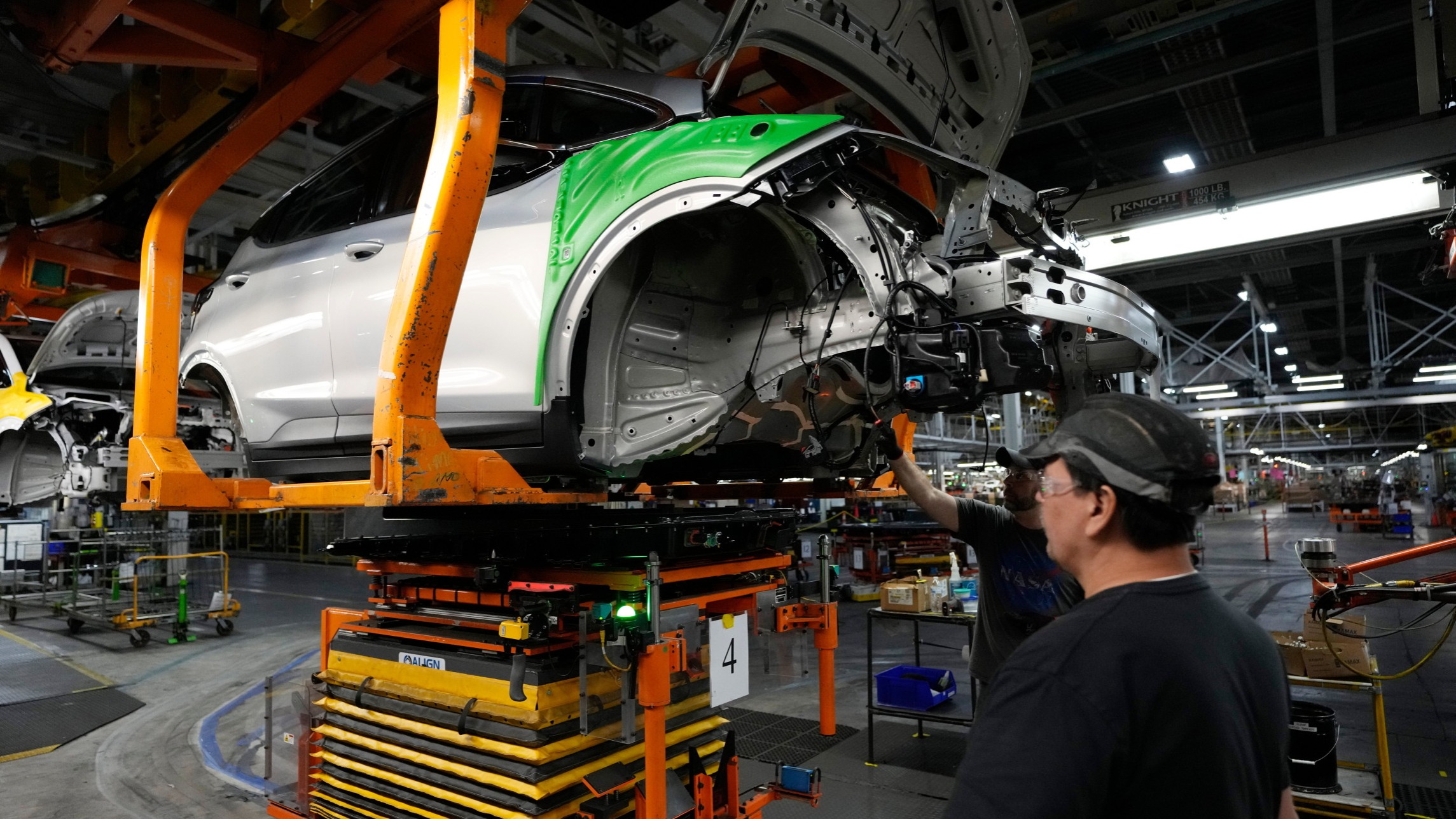
The White House this month repealed federal greenhouse gas emissions standards, a sharp reversal from the 2009 launch when President Obama announced the rules alongside leaders of the 10 largest automakers. Announced by President Trump with only EPA Administrator Lee Zeldin at his side, the rollback signals a change in U.S. regulatory posture that heightens policy uncertainty for automakers and investors exposed to emissions rules and EV transition planning, potentially affecting compliance costs and product strategy.
Market structure: Repeal of federal GHG standards is a near-term win for legacy ICE OEMs (Ford F, GM) and integrated oil majors (XOM, CVX) because regulatory compliance costs and mandated EV mix risk are reduced, improving margins by an estimated 50–150 bps industry-wide over 12–24 months. EV supply-chain winners (battery makers ALB, LAC, CATL-equivalents) face demand downside: a 5–15% downward revision to incremental battery demand curves is plausible if states do not fully substitute for federal rules.
Risk assessment: Tail risks include rapid state-level re-regulation (CA/EU equivalency), successful litigation reversing repeal within 6–18 months, or a policy U-turn after elections — each could trigger a 20–40% re-rating of affected names. Hidden dependencies: many OEM capex commitments to EV platforms are sunk; thus production may continue despite policy, muting long-term effects; monitor 3–6 month battery offtake announcements and OEM capex schedules for inflection points.
Trade implications: Favor short-duration tactical overweight to energy and legacy autos and underweight to pure-play battery miners and loss-making EV OEMs; expect strongest P/L within 3–9 months as order books and inventory adjust. Use options to express views: directional exposure to energy via call spreads (3–6 month) and hedged put positions on lithium names to limit downside if policy reverses.
Contrarian angle: The market may underprice persistent non-federal pressure (state rules, corporate procurement, EU standards) that could keep EV demand growth intact beyond 2026, meaning long-term winners remain EV leaders (TSLA, battery tech licensors). Unintended consequence: fragmented regulation raises compliance cost for smaller OEMs, consolidating share to large-cap integrated players — favor balance-sheet-strong incumbents over small EV pure-plays.
AI-powered research, real-time alerts, and portfolio analytics for institutional investors.
Request TrialOverall Sentiment
mildly negative
Sentiment Score
-0.25
