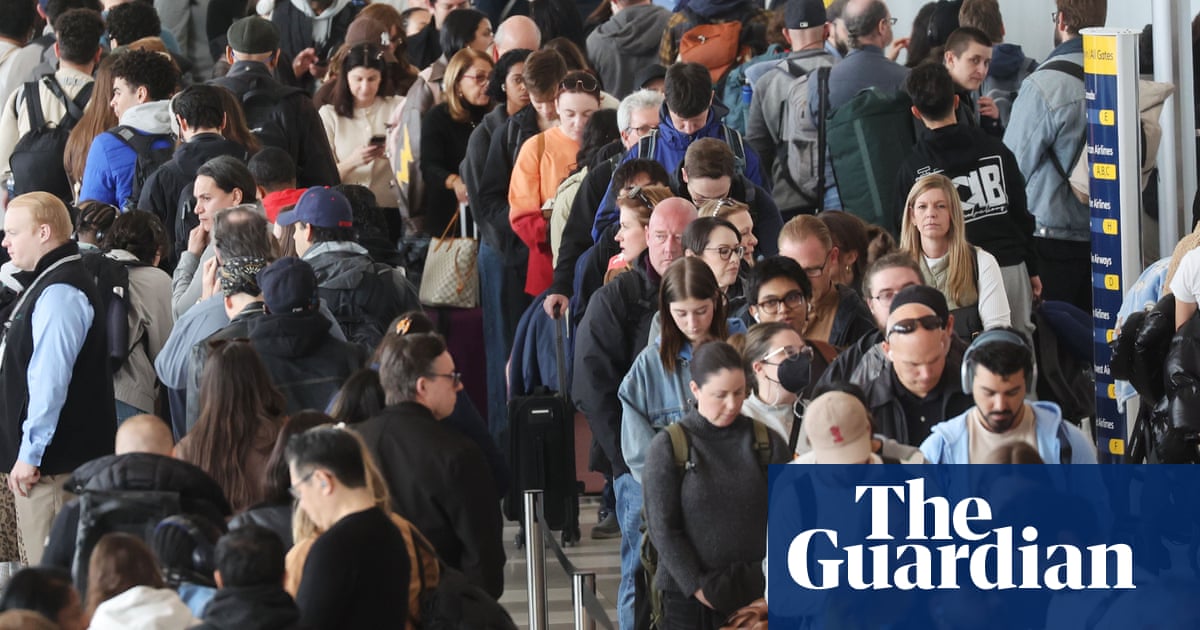
$1bn in TSA paychecks will have been missed by Friday as the DHS partial shutdown enters its sixth week and the agency reports being shut down for 50% of the fiscal year, driving caller-out rates from ~4% to 40–50% and record airport wait times. TSA warns a 4–6 month training pipeline means new TSOs won’t be available before the 2026 FIFA World Cup (under 80 days away), creating serious operational risk for airlines and airports; FEMA’s Disaster Relief Fund has only $3.6bn remaining, raising additional emergency-response concerns.
Checkpoint friction and frontline attrition create a persistent, idiosyncratic supply shock to airport throughput that is asymmetric across carriers: operators that run tight turnarounds and short-haul frequency schedules will see outsized operational costs (overtime, re‑accommodation, aircraft misconnects) while network carriers with hub buffers can absorb some of the disruption. Expect a measurable short‑term capacity drawdown — not just delayed flights — which raises per‑flight unit costs and forces tactical yield management (fewer seats sold at promo fares, more protective holds for premium passengers).
This operational squeeze is also a capital allocation lever: airport authorities and carriers will accelerate procurement of automation, queue‑management software and outsourced screening services to reduce reliance on volatile payroll dynamics. That drives a 6–18 month procurement/implementation window for security and automation vendors, creating a durable growth runway for niche hardware/software suppliers and systems integrators even if funding is resolved politically.
The primary catalyst is political (stopgap funding vs prolonged lapse) so the risk profile is binary and short‑dated: markets will snap back quickly on a funding fix, but structural labor loss implies a multi‑month recovery in capacity even after dollars flow. Contrarian angle — consumer leisure travel demand has strong price elasticity; airlines can and historically do pass through friction costs, so hit to creditworthiness is second‑order unless the lapse extends beyond a single quarter.
AI-powered research, real-time alerts, and portfolio analytics for institutional investors.
Request DemoOverall Sentiment
strongly negative
Sentiment Score
-0.62
