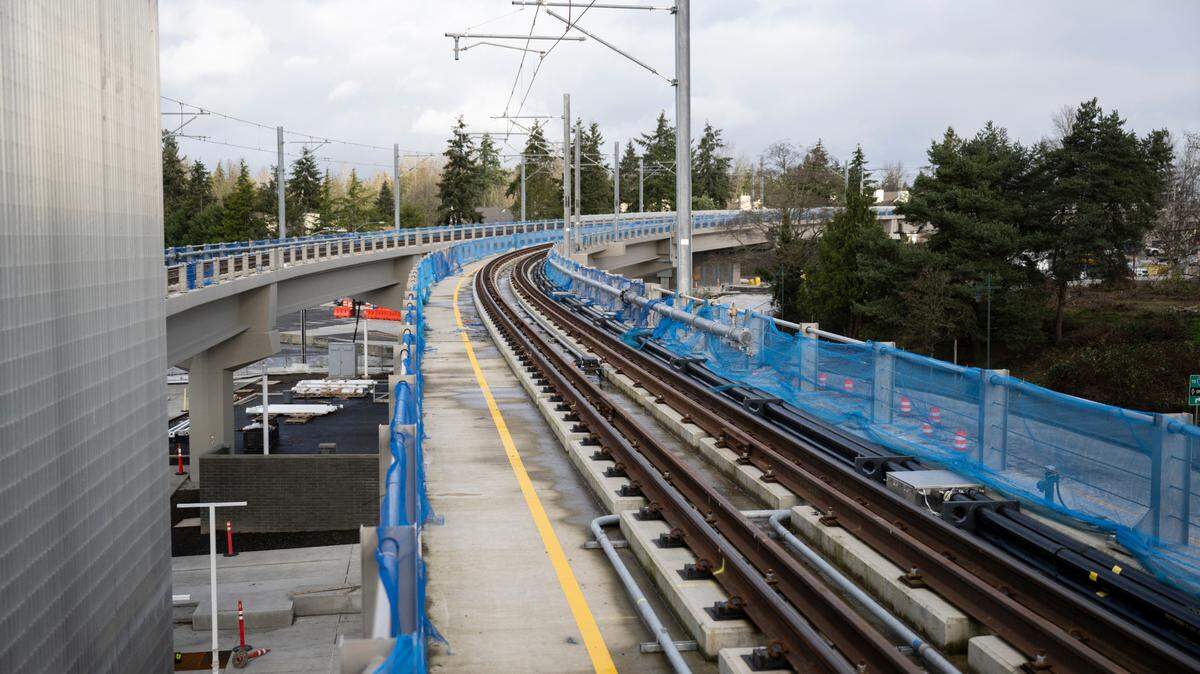
Sound Transit’s proposal keeps the $5 billion to $6 billion Tacoma Dome Link Extension on track for 2035, but the T Line extension to Tacoma Community College would be delayed two years to 2043. The Sounder extension south from Lakewood remains partially funded for planning only, with no funding or timeline for final design and construction. The plan is aimed at closing a $34 billion ST3 funding gap and will be voted on May 28.
The headline implication is not the delay itself, but the repricing of political credibility around large public-capex programs. When a transit authority starts stretching its financial plan by nearly a decade, vendors, contractors, and landholders with exposure to “future project” cash flows effectively face a longer-duration option with lower delta: the project survives, but the probability-weighted timing shifts materially to the right. That usually compresses near-term speculative activity around stations, easements, and development entitlements, while preserving eventual value for the few assets tied to the most protected corridor.
Second-order, this is a relative-value event inside the Pacific Northwest public-works ecosystem. The Tacoma Dome corridor appears insulated, so engineering and right-of-way firms with active design/construction backlog there are less exposed than names reliant on broader ST3 acceleration. By contrast, the Sounder and T Line deferrals increase the odds that local transit-oriented development and commuter-serving retail assumptions get reset, which can weigh on submarket absorption and delay cap-rate compression in outlying Pierce County nodes.
The bigger macro read is that fiscal triage is now explicit: agencies are prioritizing optics of “delivery” over completeness. That tends to be negative for long-duration, lower-visibility beneficiaries such as land banks and small-cap contractors whose thesis depends on later phases being pulled forward. It is mildly positive for operators that can win discrete, funded packages as the board increasingly slices megaprojects into smaller, more financeable scopes. A 2035/2043 framing also pushes meaningful revenue recognition and employment spillovers beyond the current administration cycle, which reduces the chance of a fast re-rating in local cyclicals.
Contrarian take: the market may overfocus on delay and underweight the political commitment embedded in the board’s refusal to cancel projects outright. Deferrals of this sort often reduce execution risk by forcing scope discipline and lowering near-term cost inflation, which can improve eventual project economics if funding is later restored. The key is whether the next 6-12 months produce a financing mechanism; absent that, the trade is not about cancellation but about time value decay in every adjacent beneficiary.
AI-powered research, real-time alerts, and portfolio analytics for institutional investors.
Request DemoOverall Sentiment
mildly negative
Sentiment Score
-0.15
