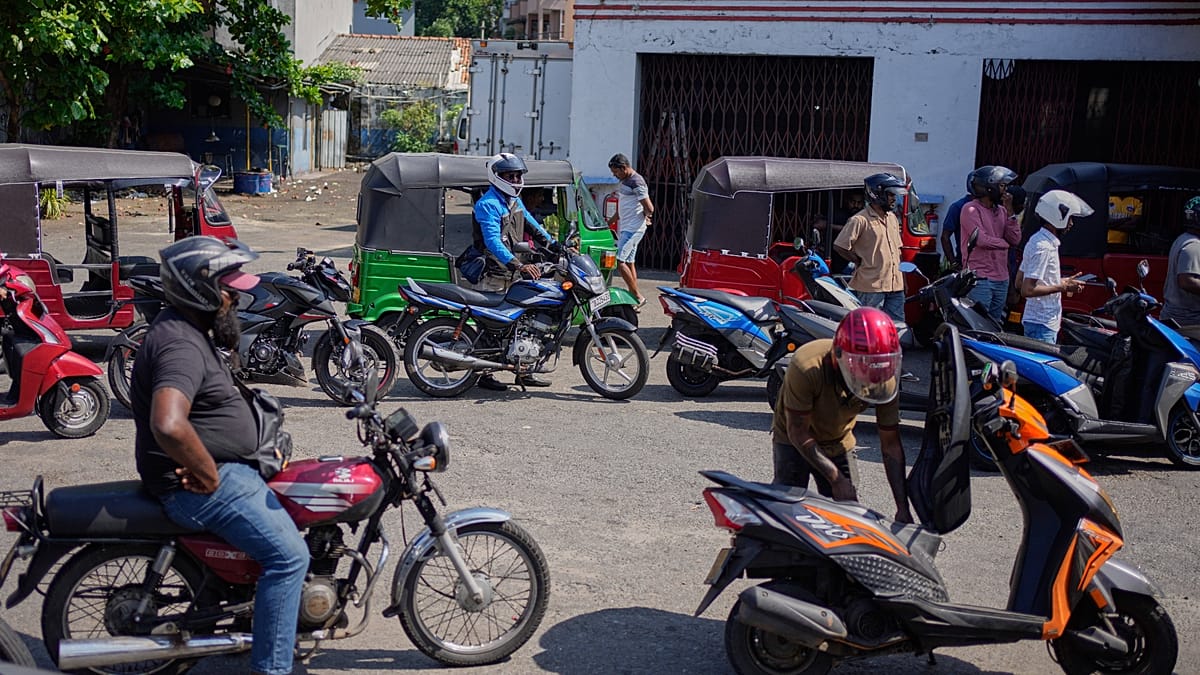
Strait of Hormuz tensions entering their fourth week have prompted fuel rationing and demand-reduction measures across multiple tourism-dependent economies: Sri Lanka (introduced fuel purchase limits and a four-day work week; ~2.05M foreign tourists in 2024), Egypt (retail and restaurant closing hours shortened for a month from 28 March; 19M international arrivals in 2025, +20% YoY) and Thailand (airport taxis serving Suvarnabhumi down from ~6,000 to ~2,500). Expect near-term pressure on regional travel & leisure revenues, higher operational costs for transport/logistics, and upside risk to local fuel prices and shipping/insurance premia, creating sector-level headwinds.
Rerouting hydrocarbon flows around chokepoints materially raises tanker-days and bunkering demand; a conservative estimate is a 10–20% increase in voyage time for Middle East-to-Asia routes, which should quickly lift spot VLCC and Suezmax TC rates and lift owner earnings within weeks. That boost is a supply-side margin capture — owners benefit almost immediately because the incremental cost is borne by charters; expect time-charter equivalents to reprice before refinery crude slates adjust.
The tourism-driven demand shock will compress discretionary consumption in small open economies, amplifying FX pressure and raising short-term sovereign/emerging market funding needs over the next 1–6 months. A slower visitor season also reduces aviation and ground-transport utilization, which disproportionately damages high fixed-cost operators (airlines, airport services, local taxi fleets) and increases per-unit fuel intensity for survivors.
Refinery and logistics second-order effects are asymmetric: refiners with conversion capacity for middle distillates (diesel/jet) will see margin tailwinds as product flows tighten, while transport-reliant retailers face margin squeezes and higher inventory carrying costs as inland distribution slows. If the disruption persists beyond a quarter, expect accelerated capital allocation toward alternative supply routes, larger strategic inventories at key bunkering hubs, and opportunistic redeployment of container tonnage away from costlier loops.
Immediate catalysts that would reverse trends are rapid de-escalation, coordinated SPR releases, or a diplomatic shipping-security corridor; upside tail risk is escalation to direct attacks on commercial shipping, which would extend these dynamics into years and materially reprice insurance and capital costs for shipping and aviation.
AI-powered research, real-time alerts, and portfolio analytics for institutional investors.
Request DemoOverall Sentiment
moderately negative
Sentiment Score
-0.35
