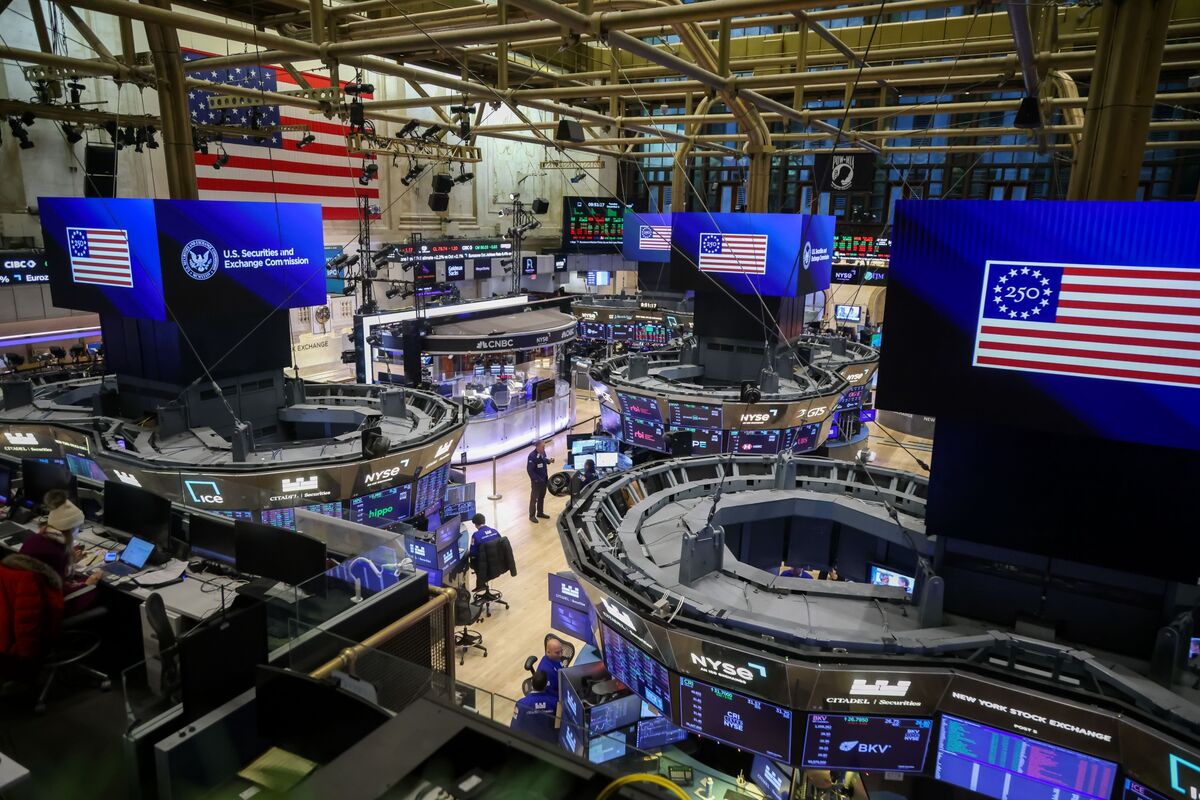
US equities traded mixed after a weaker-than-expected payrolls print raised odds of a near-term Fed rate cut while a report that Microsoft scaled back AI demand expectations pressured tech names. As of 9:45 a.m. in New York the S&P 500 was down 0.1%, the Dow was up 0.1% and the Nasdaq 100 fell 0.4%, reflecting sector-specific weakness amid shifting interest-rate expectations and investor positioning ahead of policy moves.
Market structure: The immediate winners are fixed-income (lower yields if payroll weakness persists), defensive sectors (staples, utilities) and commodity/gold on a softer dollar; losers are AI-dependent enterprise software and cloud spenders—MSFT is the poster child and likely to pressure XLK near term. The payroll miss increases odds of a near-term Fed cut (markets are repricing ~25bp next meeting), which mechanically steepens bond/FX flows (yields down, dollar softer) and raises equity multiple sensitivity to growth surprises.
Risk assessment: Tail risks include a deeper demand shock (enterprise capex freeze) or AI regulatory/competition shock that could erase >30% of near-term TAM for some vendors; an upside tail is faster-than-expected catch-up spend. Time horizons: days—rates and positioning; weeks—earnings/guidance revisions (MSFT, NVDA, AMZN); quarters—actual AI adoption and capex trends. Hidden dependencies: channel inventory and secondary GPU markets can transmit MSFT weakness to chip prices; corporate subscription timing can mask real demand.
Trade implications: Direct plays: favor long duration (Treasuries/TLT) and defensive rotation immediately; tactically short-idiosyncratic MSFT exposure via limited-risk options or small outright shorts. Pair trades: express dispersion—long AI hardware (NVDA) vs short AI software/cloud consolidators (MSFT/AMZN) for 1–3 month alpha. Options: use bear-put spreads on MSFT and buy protection on tech ETFs (QQQ) ahead of the Fed and next earnings windows.
Contrarian angles: The market may be over-interpreting one vendor's demand re-calibration as structural AI slowdown; historically (2019 cloud mid-cycle lull) reacceleration followed within 3–6 months. If upcoming payrolls rebound or MSFT reiterates guidance, tech can snap back—crowded short positions could fuel rapid reversals, so use size limits and explicit stops.
AI-powered research, real-time alerts, and portfolio analytics for institutional investors.
Request DemoOverall Sentiment
mixed
Sentiment Score
0.00
Ticker Sentiment
