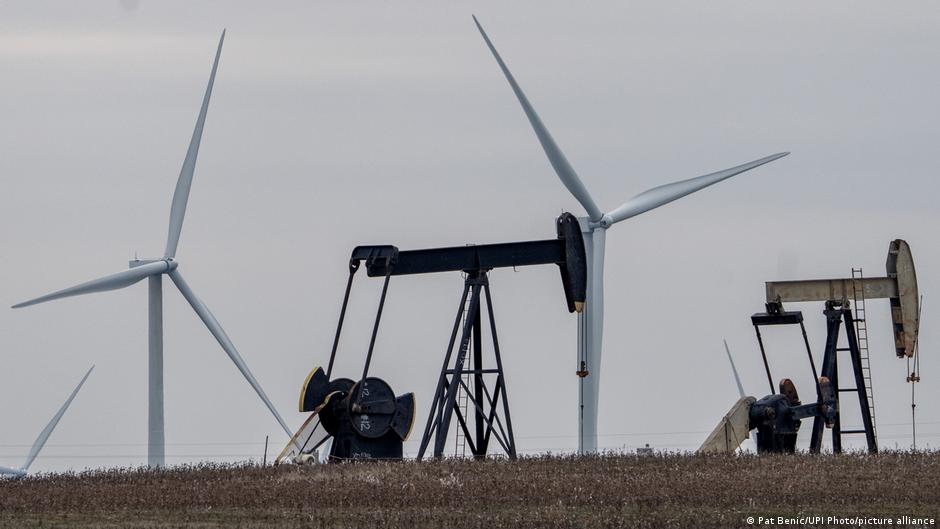
At COP30 in Belém ministers from roughly 80 countries led by Colombia pushed to include a roadmap to rapidly and equitably phase out oil, coal and gas in the final agreement, and the COP Presidency circulated a draft with options such as annual progress checks, a joint fossil‑fuel roadmap and a three‑year plan for climate finance. Negotiators warned the ambition gap remains large—current pledges still put the world on track for about 2.6–2.8°C warming—and developing countries say they need roughly $310 billion a year by 2035 for adaptation, with the draft proposing to triple the current $40 billion adaptation goal while wealthier donors’ contributions remain disputed (Germany pledged €60m). With likely pushback from oil producers, trade tensions over measures like the EU carbon border mechanism, and the absence of the U.S., the summit’s uncertain outcome nevertheless has clear implications for energy‑sector valuations, sovereign financing needs and carbon‑exposed trade flows if stronger phase‑out or finance commitments are agreed.
COP30 in Belém has seen an emergent coalition led by Colombia and roughly 80 countries push to include a rapid, equitable roadmap to phase out oil, coal and gas in the final agreement; the COP Presidency circulated a draft containing options such as annual progress checks, a joint fossil‑fuel roadmap and a three‑year plan for developed‑country finance. The article highlights that current national pledges still leave the world on track for 2.6–2.8°C warming by 2100 and that greenhouse gas emissions remain at record highs, creating pressure for stronger, faster actionable measures. Financing is a parallel flashpoint: the UN Environment Programme estimates adaptation needs of about $310 billion per year by 2035, the draft proposes tripling the $40 billion adaptation goal, and Germany pledged €60 million ($69 million) at the conference — amounts that fall well short of modeled needs. Political frictions increase implementation risk, with likely pushback from oil producers such as Saudi Arabia and Iran, concerns from China and India about unilateral measures like the EU's CBAM, and the U.S. officially absent from this summit; the provided signals reflect a mildly negative sentiment score of -0.28 and a modest market impact score of 0.35, indicating policy outcomes could meaningfully reprice carbon‑exposed assets and sovereign financing needs.
AI-powered research, real-time alerts, and portfolio analytics for institutional investors.
Request DemoOverall Sentiment
mildly negative
Sentiment Score
-0.28
