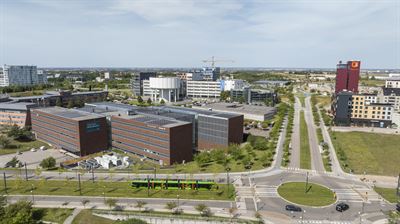
Wihlborgs has secured a six-year renewal with Ericsson for 12,000 sqm at Bricks (Nya Vattentornet 3) effective 1 January 2027 and signed a six-year lease with a government agency for 1,000 sqm starting May 2026, rendering the property fully leased. The moves underscore improved occupancy and long-term cash‑flow stability for Wihlborgs, which highlights sustainability and service upgrades in the Mobilvägen cluster; the company reports a property book value of SEK 63 billion and annual rental value of SEK 4.9 billion.
Market structure: The immediate winners are Wihlborgs (Wihlborgs Fastigheter; ticker WIHL.ST) via lower vacancy and steadier cashflow, plus Ericsson (ERIC-B/ERIC.ST) and the government agency for continuity of operations. Competing small landlords in Lund face pricing pressure as Wihlborgs can demand fewer concessions; expect modest upward pressure on achievable rents in Ideon over 12–24 months. Credit implications are positive for Wihlborgs’ bond spreads (potentially -10–30bps) while macro FX/commodities impact is negligible.
Risk assessment: Key tail risks are tenant consolidation/sublease by Ericsson or government budget cuts, and cap‑rate volatility if Swedish 10y rises >100bps (could erase leasing gains). Near term (days–months) effect is muted; by Jan 2027 (lease effective) occupancy risk declines materially. Hidden dependencies: Wihlborgs’ value is sensitive to Nordic rate moves and concentration risk in Lund; catalysts include Riksbank rate decisions and Wihlborgs’ quarterly leasing updates over the next 6–12 months.
Trade implications: Favours selective long exposure to WIHL.ST to capture occupancy-driven NOI upside; prefer buy-and-hold 2–3% portfolio weight with a 6–12 month horizon. Relative trade: long WIHL.ST vs short structurally weaker, highly levered Swedish office peers (e.g., SBB.ST) sized 2:1 to exploit balance‑sheet divergence. Options: use a 9–12 month call spread on WIHL.ST (buy ATM, sell +15% strike) to cap premium; set stop-loss −15% or unwind if Swedish 10y moves +100bps.
Contrarian angles: The market may over-interpret a single renewal as broad office recovery — consensus may underprice concentration and hybrid work risk. Conversely, if rates fall 50–100bps, cap‑rate compression could lift NAV by ~8–20%, an underappreciated upside. Historical parallels (science/tech clusters post‑COVID) show durable premium if service offering and location are maintained; watch for higher capex/service commitments eroding short‑term cashflow.
AI-powered research, real-time alerts, and portfolio analytics for institutional investors.
Request DemoOverall Sentiment
mildly positive
Sentiment Score
0.30
