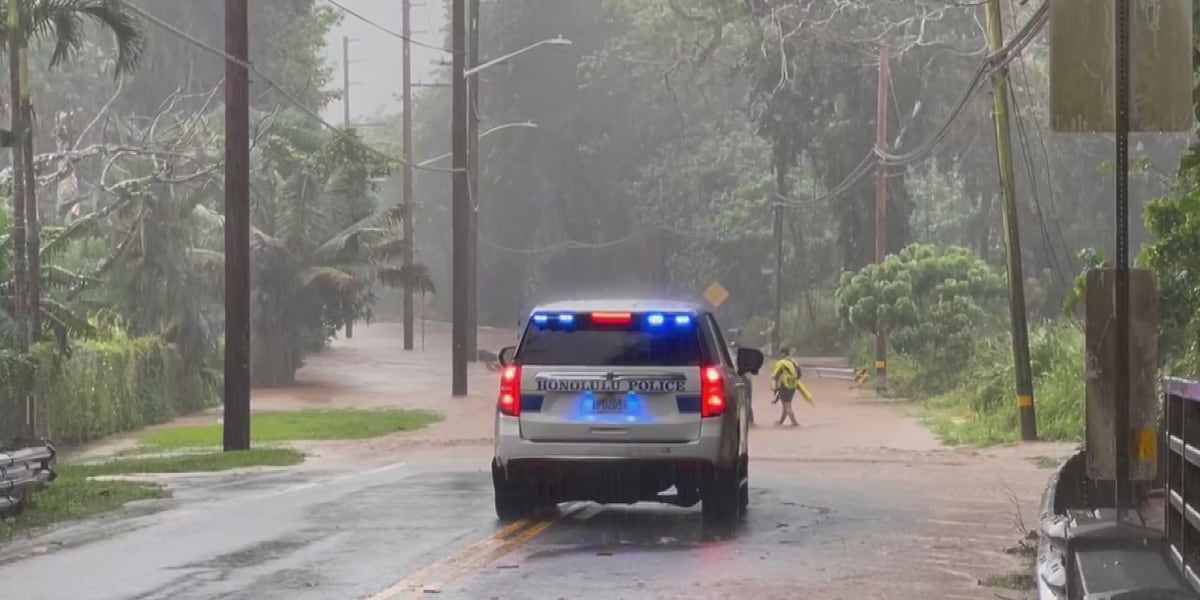
Governor Josh Green has requested a presidential major disaster declaration seeking up to a 90% federal cost-share after Kona low flooding caused widespread destruction on Oahu (notably Waialua) and displaced homes. FEMA and state teams are conducting joint damage assessments while the city is deploying debris-hauling, water tankers, reserve personnel, and contingency budget measures; shelters remain open and testing/cleanup is expected to continue through the week. Officials warned of public-health risks from sewage-contaminated floodwaters (enterococcus, staph) and a boil-water advisory remains in effect for the North Shore.
The immediate economic impulse is concentrated, short-duration demand for rentals, debris hauling, potable water, and remediation services — a 2–8 week spike in pump, generator and roll-off utilization followed by 3–12 months of reconstruction demand for lumber, roofing, plumbing and HVAC. Operational bottlenecks (ports, truck drivers, local labor) will amplify price moves for physical services more than for finished-goods retailers; incremental revenue for rental and waste operators is near-term and high-margin versus distributed sales through national home-improvement chains. Fiscal mechanics create a visible timing mismatch: a federal major disaster declaration materially reduces net state/county exposure but only after damage assessments and paperwork (7–30 days). That window forces short-term liquidity management by local governments and could widen local muni spreads transiently even if ultimate federal cost-share approaches 90%. Watch for municipal cash draws, short-term notes or emergency appropriations in the coming 2–6 weeks as the primary catalyst for credit-market moves. Insurance and reinsurance effects will be driven by claim frequency rather than a single headline severity number — expect brokers and specialty reinsurers to push for higher pricing at the next renewal cycle (6–12 months). This favors publicly traded brokers and capacity providers in the medium term while local primary carriers with concentrated coastal portfolios see the biggest underwriting sensitivity. Key reversals: (1) fast federal approvals and upfront FEMA advances within 10–14 days will compress muni/credit dislocations; (2) a smoother logistical response (off-island equipment arriving in <7 days) will limit upside for rental names. The path to sustained profit for construction-materials suppliers is slower (3–9 months) and depends on labor availability and permitting cadence.
AI-powered research, real-time alerts, and portfolio analytics for institutional investors.
Request DemoOverall Sentiment
moderately negative
Sentiment Score
-0.60
