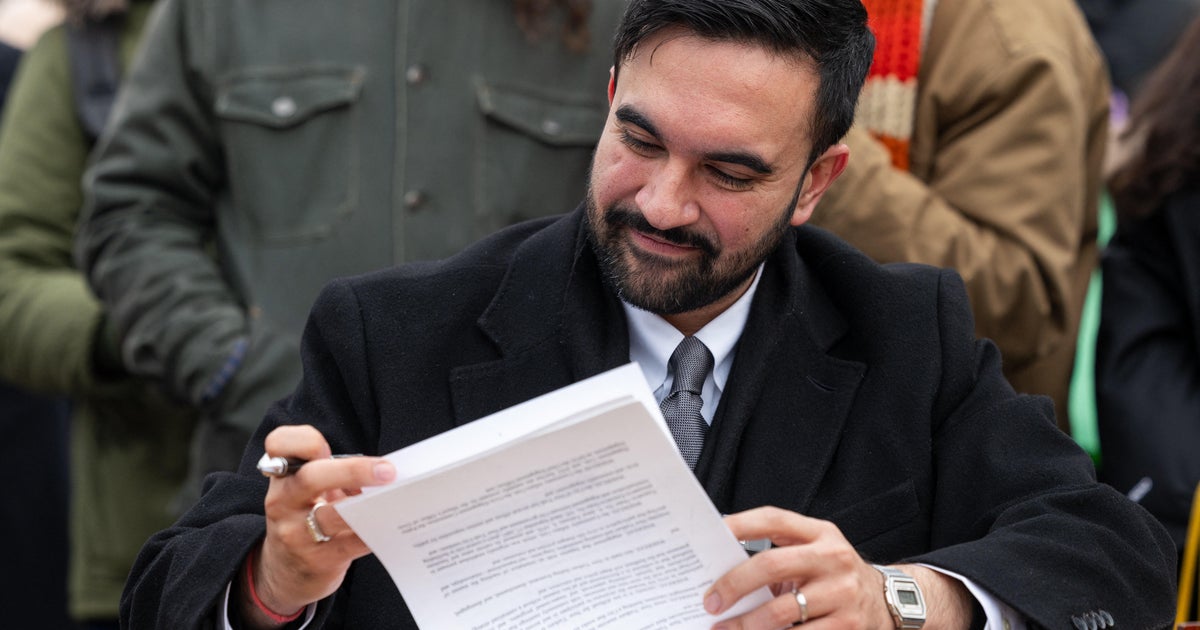
New York City Mayor Zohran Mamdani signed an executive order directing the Office of Mass Engagement and other city agencies to hold 'Rental Ripoff' hearings in all five boroughs within his first 100 days, inviting tenant testimony on issues from shoddy building conditions to hidden fees and promising a detailed findings report. Mamdani also appointed Dina Levy as commissioner of the Department of Housing Preservation and Development, signaling a more activist municipal stance on tenant protections and potential enforcement actions that could raise regulatory risk for landlords, property managers and REITs with significant NYC exposure.
Market structure: Mamdani’s citywide “Rental Ripoff” hearings signal an intensified regulatory focus on landlord conduct and building conditions in NYC — a concentrated negative for owners with material NYC multifamily exposure (public names include SL Green (SLG), Vornado (VNO), and Equity Residential (EQR)) and a modest positive for contractors/repair suppliers who will see near-term capex demand. Pricing power for NYC landlords could compress if enforcement leads to fines, disclosure requirements, or rent-adjacent fees being banned; expect 3–12% incremental NOI pressure in the worst-affected portfolios over 12–24 months if material policy changes follow. Cross-asset: limited macro shock, but expect idiosyncratic volatility in stocks and credit spreads of NYC-focused REITs and slight widening in NY muni credit spreads on headline risk.
Risk assessment: Tail risks include city-imposed rent freezes, large-scale fines, or expedited tenant litigation that could impair cash flows — low probability but high impact (20–40% valuation impairment for highly-levered, NYC-centric landlords). Near-term (0–3 months) risk is reputational/headline-driven; medium-term (3–12 months) risk is regulatory proposals and enforcement; long-term (12+ months) is structural policy change altering returns to ownership. Hidden dependencies: state preemption law and court challenges may blunt reforms; also owner willingness to invest in remediation could raise capex and temporarily boost related sectors. Catalysts: the city’s 100-day report, introduced legislation, and major tenant class-action filings.
Trade implications: Implement small, hedgeable shorts in NYC-concentrated landlords (SLG, VNO, EQR) while hedging market beta via VNQ or a broad REIT long (UDR) — target gross exposure 1–3% of portfolio, horizon 3–9 months. Use 3–6 month put spreads on SLG/VNO (buy 1x 6-month 20% OTM put, sell 1x 35% OTM put) to limit premium; pair-trade long UDR or VNQ vs short SLG to capture relative weakness. Rotate 1–2% allocation into building services/materials suppliers (private or equities/ETFs in construction/materials) to capture remediation spending if hearings produce enforcement.
Contrarian angles: Markets may overprice structural harm — NYC policy is often constrained by state law and political compromise; if the 100-day report is mostly rhetorical, short squeezes could reverse quickly. Historical parallels (local tenant protection headlines in 2019–2020) produced transient repricing but limited long-term yield destruction for diversified REITs; opportunistic buyers may acquire distressed assets if owners sell. Unintended consequences include landlords accelerating capex or divesting in bulk, creating M&A arbitrage opportunities — be ready to switch from short to long on material sell-offs.
AI-powered research, real-time alerts, and portfolio analytics for institutional investors.
Request DemoOverall Sentiment
neutral
Sentiment Score
0.00
