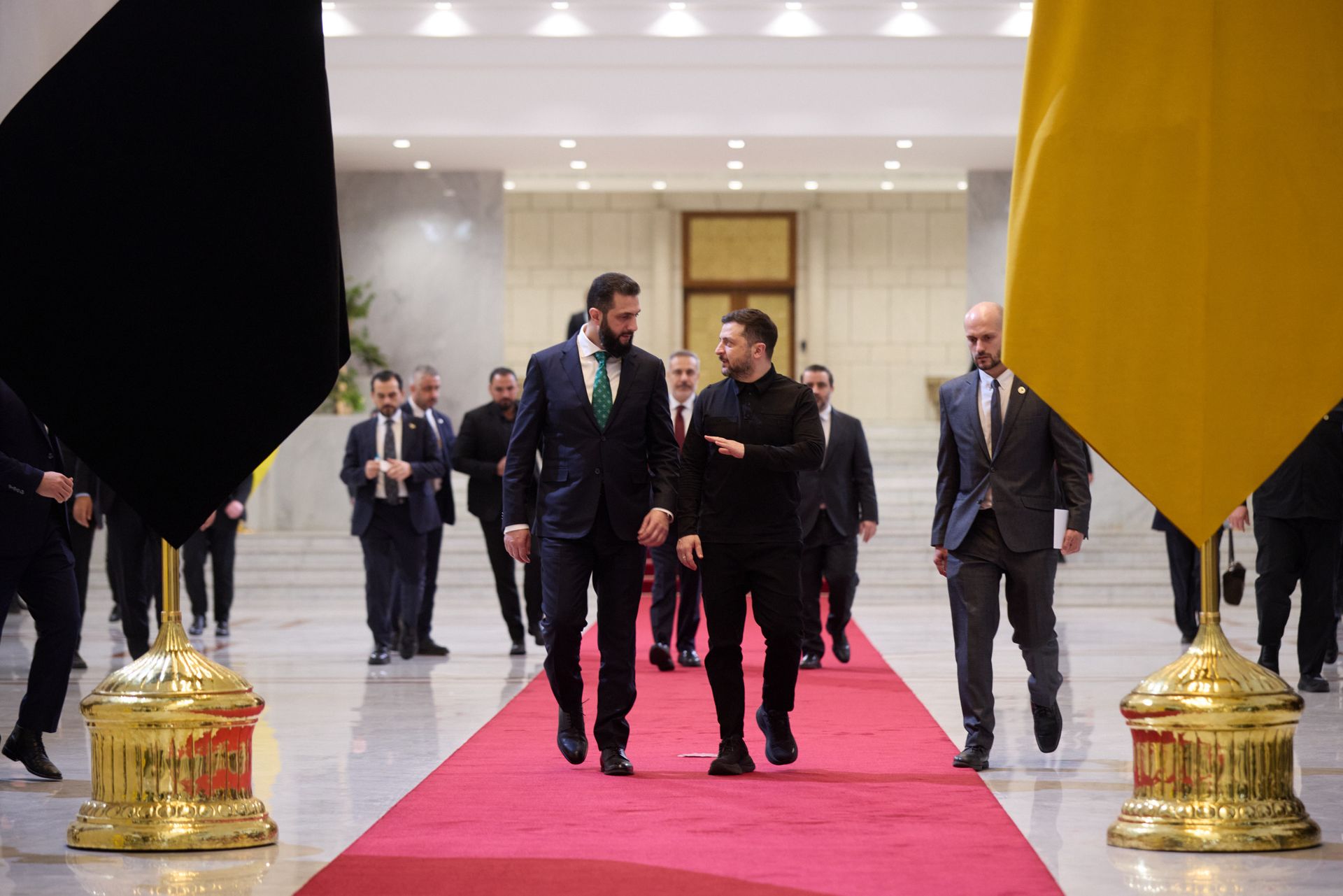
Zelensky arrived in Damascus on April 5 and met Syrian President Ahmad al-Sharaa to discuss regional developments related to Iran, security and defense cooperation, and energy and infrastructure projects. Talks included a trilateral Ukraine–Syria–Turkey meeting and reference to gas infrastructure and potential joint gas-field development; Kyiv has also announced 10-year defense partnerships with Qatar, Saudi Arabia and the UAE and sent specialists to counter Iranian Shahed drones. These diplomatic moves strengthen Ukraine's regional ties and could modestly influence regional energy and defense sector sentiment and cooperation.
Zelensky’s outreach in the Levant is an accelerant to two underpriced demand pools: short-term procurement of interceptors and counter-drone systems, and medium-term gas/infrastructure partnerships that bypass Western-centric project sponsorship. Expect defense primes to see an incremental 5–15% revenue tailwind over 6–18 months from aftermarket interceptors, seeker upgrades, and integration contracts as partner states export surplus interceptors or fund rapid buys; lead-times for missile manufacture and seeker electronics keep much of this revenue locked into multi-quarter backlogs.
A second-order effect is the reorientation of reconstruction and energy capex away from purely Russian/Iranian contractors into Turkey/GCC/Ukraine-aligned firms — this creates a multi-year pipeline of EPC work that favors Turkish contractors and European majors willing to tolerate higher political risk. That pipeline implies differentiated credit and equity outcomes: mid-cap contractors with flexible mobilization capacity can take share quickly, while large integrated majors capture optionality on gas field development but face headline volatility and sanction/legal frictions.
Main downside catalysts are rapid de-escalation with Iran (which would collapse urgency for interceptors) or explicit US/EU sanctioning of any projects involving Syria, which would abruptly reprice political-risk premia and freeze banking corridors. Monitor 30–90 day windows for formal procurement announcements, GCC sovereign FDI commitments, and US sanctions guidance — those three items will be the clearest short- to medium-term catalysts that validate or reverse the trade thesis.
AI-powered research, real-time alerts, and portfolio analytics for institutional investors.
Request DemoOverall Sentiment
neutral
Sentiment Score
0.00
