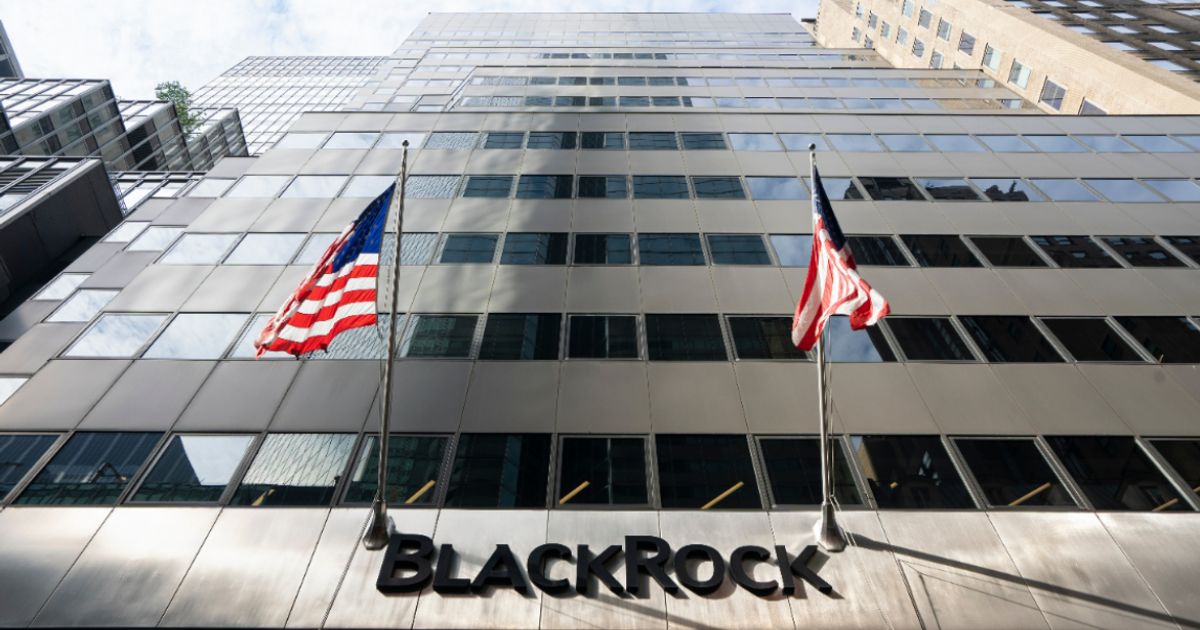
BlackRock beat fourth-quarter estimates with revenue of $7.01 billion versus a $6.75 billion consensus and adjusted EPS of $13.16 versus $12.44, finishing 2025 with record $14 trillion AUM after $698 billion of net inflows (including $342 billion in Q4). Full-year revenue rose 19%, adjusted diluted EPS was $48.09, organic base fees grew 9% for the year (12% annualized in Q4), and the firm returned $5 billion to shareholders while the board raised the quarterly dividend 10% to $5.73 and authorized 7 million more shares for repurchase. Management flagged continued M&A and fundraising initiatives (GIP, HPS, Preqin; $400 billion private-markets fundraising target by 2030) and highlighted growth in ETFs, systematic equities, private markets, outsourcing and tech/subscription services, underpinning a positive outlook for fee growth and scale benefits.
Market structure: BlackRock’s $698B net inflows in 2025 (Q4 $342B) and $14T AUM strengthen incumbent scale advantages—iShares, Aladdin, private-market distribution—forcing margin pressure on smaller active managers (IVZ, AMG) and custody/servicing peers (STT) as market share shifts to low-cost, multi-product platforms. Increased cash-management and outsourcing demand suggests higher short-duration product issuance and greater corporate demand for liquidity solutions, pressuring money-market spreads and raising repo activity; equity ETF flows can amplify directional beta and compress implied vol in large-cap indices.
Risk assessment: Immediate (days) upside is priced after a ~5% move; short-term (weeks–months) risks include integration costs from GIP/HPS/Preqin and GAAP EPS noise from acquisition accounting; long-term (years to 2030) execution risk centers on the aggressive $400B private fundraising target and macro-driven AUM sensitivity (a 10% market drawdown could cut fee revenue ~mid-single-digit %). Tail risks: regulatory scrutiny of private-market fees/leverage, failed fundraises, or major Aladdin outage; hidden dependency: recurring-fee growth still materially levered to public market performance and successful tech monetization.
Trade implications: Direct: establish a 2–3% long in BLK for a 6–12 month horizon (target +12–18%, stop -8%) to capture continued flow momentum and buyback/dividends; options: use a 9-month call spread ~10–15% OTM cap cost ≤2% notional to limit downside. Pair: long BLK vs short STT or IVZ (1.5% / 1.5%) to express scale differential over 3–9 months; rotate into B2B data/tech vendors (MSCI) and reduce allocation to small active managers by 50%.
Contrarian angles: Consensus underestimates integration and fundraising execution risk—market cheered headline AUM but may underprice multi-year private-markets fundraising shortfalls and higher acquisition goodwill impairments. The rally could be overdone near-term; if quarterly inflows slip below $150B or organic base-fee growth drops under 6% next two quarters, sentiment will reverse sharply. Historical parallel: past BLK re-ratings followed sustained organic-fee beats, not one-year flow spikes; regulatory intervention in private markets would be a non-linear downside.
AI-powered research, real-time alerts, and portfolio analytics for institutional investors.
Request DemoOverall Sentiment
strongly positive
Sentiment Score
0.75
Ticker Sentiment
