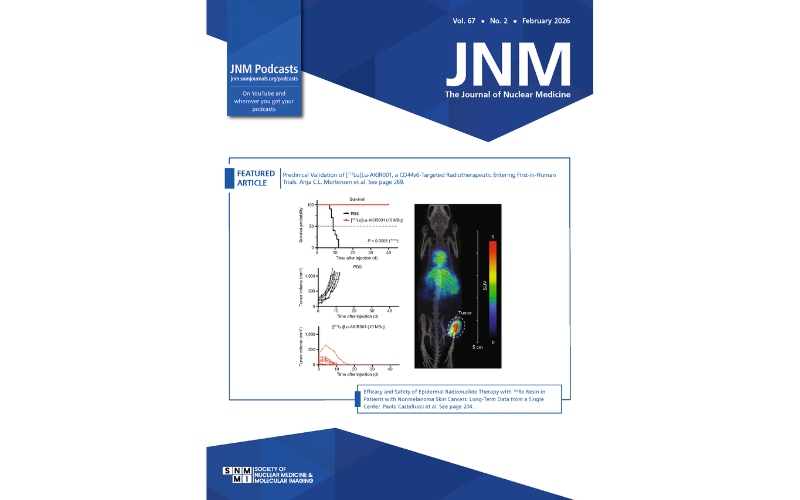
Akiram Therapeutics’ preclinical study of lead radiotherapeutic AKIR001 was selected as the featured article in the February 2026 Journal of Nuclear Medicine, with data showing selective tumor uptake, favorable dosimetry and clear antitumor effects in models targeting CD44v6. The recognition bolsters scientific validation as AKIR001 enters a first-in-human Phase 1 trial (NCT06639191) sponsored by Karolinska University Hospital for CD44v6-positive cancers, supporting the program’s clinical progression and potential orphan/first-in-class positioning.
Market structure: Recognition of AKIR001 tightens focus on CD44v6 as a novel radiotherapeutic target, benefiting radioligand developers, isotope suppliers and hospital nuclear medicine units. Winners: public radiopharma developers with Lu-177 platforms (greater commercial optionality) and specialty suppliers; losers: small oncology firms lacking isotope partnerships and legacy chemo suppliers facing slower share gains. Expect modest pricing power for differentiated radiotherapeutics if Phase 1 shows clear dosimetry/safety — a 5–20% re‑rating for credible platforms over 6–12 months is plausible.
Risk assessment: Tail risks include clinical toxicity (radiation-induced organ damage), regulatory rejection, or a supply shock in Lu‑177 production; any of these could trigger >50% drawdowns in small-cap developers within weeks. Immediate risks (days–weeks): headline-driven volatility and funding moves; short-term (3–12 months): enrollment/data readouts; long-term (12–36 months): commercial reimbursement and manufacturing scale. Hidden dependency: reimbursement and hospital radiochemistry capacity — efficacy alone won’t drive uptake without billing codes and supply chain scale.
Trade implications: Direct plays favor small-cap radioligand developers and Lu‑177 isotope producers; relative-value pairs can exploit divergence between platform owners (long) and discovery-only biotechs (short). Options: use term call spreads on established players to limit premium decay and buy puts on broad biotech ETFs as macro/regulatory hedges. Time entry to 1–3 months to let initial investor excitement settle; step into positions ahead of Phase 1 safety/dosimetry readouts expected over next 6–12 months.
Contrarian angles: Consensus likely underestimates execution barriers — manufacturing and reimbursement could delay commercialization 12–24 months, compressing near-term upside. The market may be underpricing the value of isotope supply contracts; companies owning vertical supply (isotope + conjugation) could be worth 30–50% more than peers if they sign supply deals. Historical parallel: early PSMA radioligand excitement (2018–22) produced big winners only after durable reimbursement paths; expect a two‑year structure before broad adoption.
AI-powered research, real-time alerts, and portfolio analytics for institutional investors.
Request DemoOverall Sentiment
mildly positive
Sentiment Score
0.30
