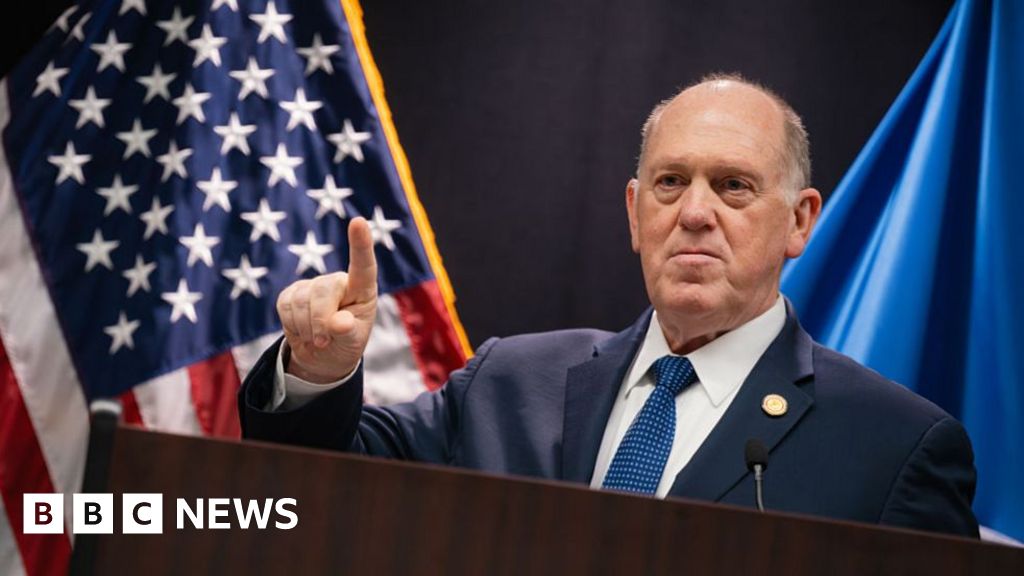
Federal 'Operation Metro Surge' in Minneapolis, overseen by DHS and newly dispatched Border Tsar Tom Homan, involves roughly 3,000 immigration, border-patrol and other DHS officers (mayor estimates 3,000–4,000) and has been linked to the fatal shootings of two US citizens, triggering protests and a state request to enjoin the operation. The incidents have spurred bipartisan scrutiny, calls to restrict ICE tactics, and maneuvering in Congress that resulted in DHS funding being pulled from a short-term spending package, creating policy and operational uncertainty for federal deployments though with limited direct market implications.
Market structure: Short-term winners are large, diversified defense/primes (RTX, LHX, GD) that can reallocate work if DHS spending shifts; direct losers are mid/small-cap analytics/security vendors with concentrated ICE/DHS revenue (notably PLTR and niche subcontractors) and local Minneapolis municipal services. The standoff and potential DHS funding delay compress near-term cashflow for contractors reliant on DHS invoices; pricing power shifts toward primes with broader DoD/Intelligence warranties. Cross-asset: expect shallow flight-to-quality — 2–10bp rally in 10y Treasuries and a 1–3% bid in GLD if escalation persists; USD moves muted unless a broader government funding fight emerges.
Risk assessment: Tail risks include a partial DHS funding cutoff or court injunction within 30–90 days causing 10–30% short-term revenue hits for ICE-dependent vendors, and a broader political backlash that triggers legislative restrictions on ICE tactics over 3–12 months. Hidden dependencies: subcontractor cascades, repo of sensitive data contracts, and reputational contagion to primes via supply chains. Key catalysts — DHS appropriations votes and congressional hearings — will occur in the next 2–8 weeks and can reprice equity vol by 20–40% for affected names.
Trade implications: Tactical plays: small, tactical longs in diversified primes (RTX, LHX) sized 1–2% each; short or buy 90-day ATM puts on PLTR sized 0.5–1% notional with a 12% stop; pair trade long RTX / short PLTR to capture relative resilience. If DHS funding remains excluded after 21 days, increase Treasury duration exposure (TLT) by 2–3% and buy GLD 1–2% as tail-hedge. Avoid municipal exposure concentrated in Minneapolis until legal injunctions resolve (30–90 days).
Contrarian angles: Consensus underestimates idiosyncratic red-lines — markets may underprice contract-specific reputational risk (PLTR downside >20% on restrictive legislation). Conversely, panic selling of large primes is likely overdone; historically (2018–2021) primes reallocated work and weathered political cycles with <10% permanent revenue loss. Unintended consequence: stricter oversight could centralize spending to larger primes and recurring software integrators, favoring RTX/GD/LHX over small specialists.
AI-powered research, real-time alerts, and portfolio analytics for institutional investors.
Request DemoOverall Sentiment
moderately negative
Sentiment Score
-0.25
