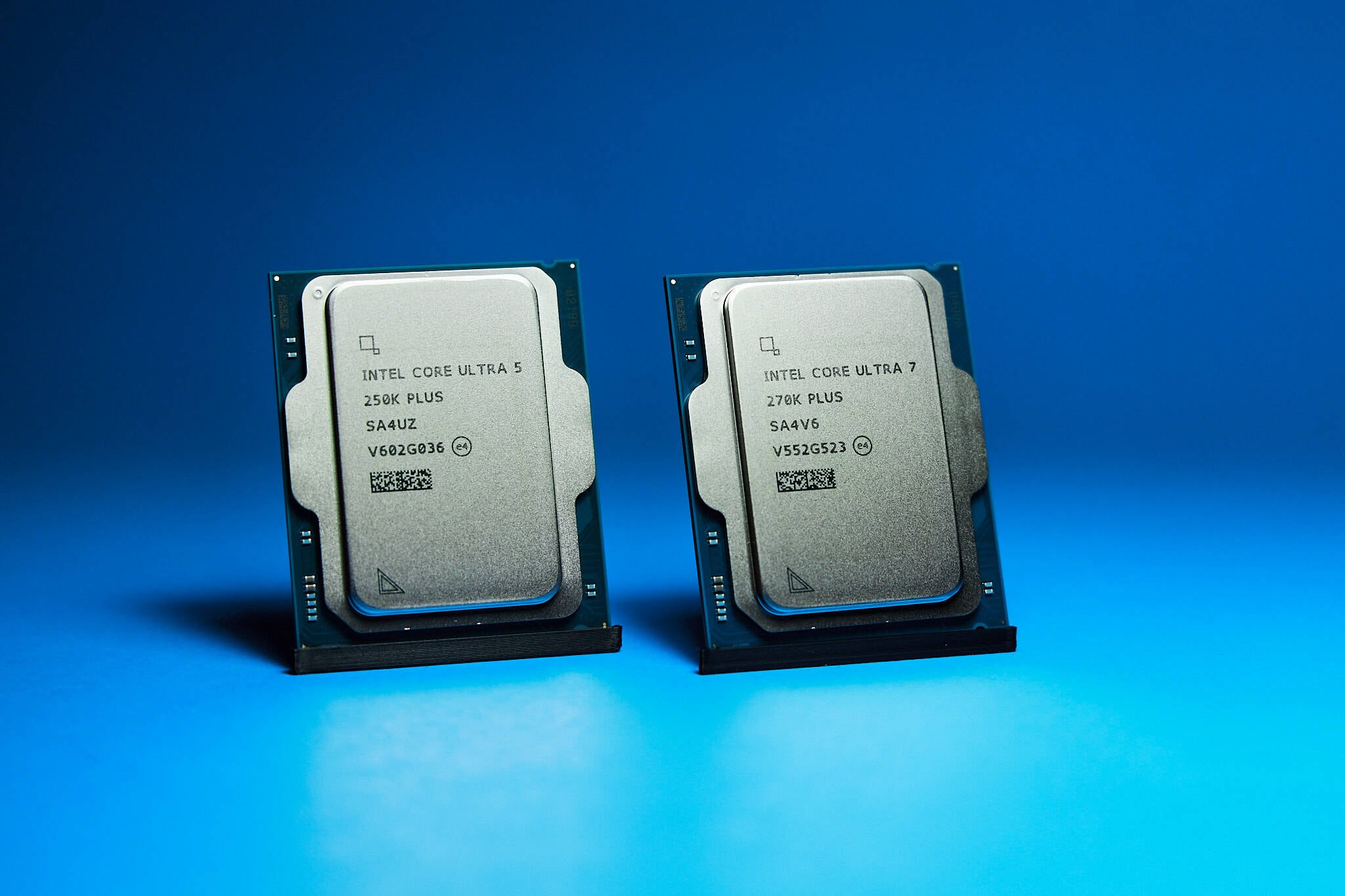
Intel launched the Core Ultra 200S Plus line with the Ultra 5 250K at $199 (18 cores: 6P+12E) and the Ultra 7 270K Plus at $299 (24 cores: 8P+16E). Intel claims an 83–103% multi-threaded advantage vs AMD's 9600X/9700X in rendering/synthetic workloads, a ~4% average gaming edge vs the Ryzen 7 9700X, and its BOT software delivers ~8% average gaming uplift (up to >22% in some titles). Hardware upgrades include +900 MHz die-to-die fabric frequency, ~+100 MHz sustained boost in key states, and native DDR5 support to 7,200 MT/s (8,000 MT/s via XMP), positioning these SKUs as a compelling value play that could pressure AMD on price-sensitive desktop segments. Expect this to be a stock-moving product update at the individual/sector level (roughly 1–3% directional impact for affected equities).
Intel's deliberate shift to a value-first desktop SKU strategy is a tactical lever that can move share in the DIY/OEM midmarket faster than architectural leadership alone. The immediate margin tradeoff is real, but the second-order play is load-bearing: lowering the entry price point compresses the all-in PC build cost and can expand addressable demand among price-sensitive buyers, which historically shows up as higher unit volumes within 2–9 months rather than instant revenue uplift.
Software-level performance plumbing (the platform and binary optimization layer) is an asymmetric moat in the short run: it increases perceived performance without a silicon redesign, but its ceiling is adoption-dependent and fragile — anti-cheat, dev buy-in, and patch cadence can limit scale. If Intel converts a subset of heavyweight studios/OEMs in the next 6–12 months, gaming performance perception will shift disproportionately vs. raw IPC metrics, pressuring competitors to match with their own toolchains or risk being labeled 'slower' in consumer-facing benchmarks.
On the supply side, demand reallocation matters: higher adoption of faster memory profiles and larger DIMM counts will temporarily boost DRAM/ODM revenues and premium DDR5 ASPs, but persistent CPU price pressure could redirect wallet share away from high-margin discrete GPUs and toward memory/CPU bundles. For the foundry and packaging ecosystem, continued reliance on third-party fabs combined with Intel's packaging choices creates a steady, near-term volume tailwind for foundries while keeping a cap on Intel's gross-margin expansion for multiple quarters.
AI-powered research, real-time alerts, and portfolio analytics for institutional investors.
Request DemoOverall Sentiment
moderately positive
Sentiment Score
0.40
Ticker Sentiment
