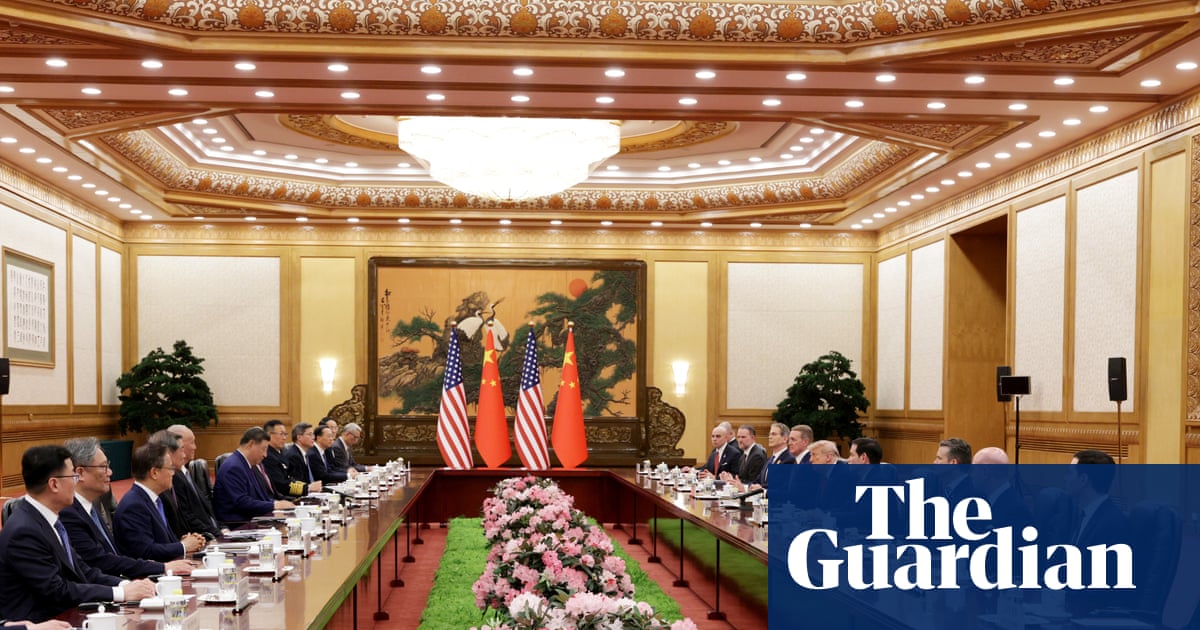
The article highlights the absence of women at the Trump-Xi bilateral meeting in Beijing, framing it as a symbolic display of patriarchal power rather than a policy development. Commentators contrast the all-male table with Obama-era US-China summits that included senior women such as Susan Rice, Hillary Clinton, and Liu Yandong. The piece is primarily political and sociocultural commentary, with limited direct market relevance.
The market implication is not the optics itself, but the signaling function: when leadership rituals in major-power diplomacy become more exclusionary, it tends to reinforce a top-down governance style that prizes loyalty over institutional breadth. That usually matters first in sectors where regulatory outcomes are negotiated through elite networks rather than transparent process — notably financials, platform companies, and China-exposed multinationals. For C, the indirect risk is not a revenue shock, but a higher probability of policy decisions being filtered through political relationships, which can widen dispersion between firms with deep government ties and those without. For META, the second-order effect is reputational rather than fundamental in the near term. The company is already vulnerable to governance and content-politics scrutiny; being visibly adjacent to elite power networks can sharpen criticism from regulators and employees in the U.S. and EU, especially if broader geopolitical tension elevates suspicion of big tech as a geopolitical tool. That said, this is more likely a headline-volatility input than a durable earnings driver, unless it feeds into antitrust or data-localization rhetoric over the next 3-6 months. The contrarian read is that the article likely overstates direct tradable impact and understates how quickly such narratives fade unless they are paired with concrete policy moves. The actionable edge is therefore in relative-value positioning, not outright directional bets: names with the highest dependence on discretionary policy goodwill can de-rate modestly if the political narrative hardens, while firms with diversified end-markets should be insulated. The best horizon is days to a few weeks for sentiment-driven dislocation; beyond that, only policy follow-through would justify a larger move.
AI-powered research, real-time alerts, and portfolio analytics for institutional investors.
Request DemoOverall Sentiment
neutral
Sentiment Score
-0.05
Ticker Sentiment
